
The General Court confirms that the sign representing the crest of the football club AC Milan cannot be registered internationally as a trade mark designating the Union for stationery and office supplies
The high degree of aural similarity and average visual similarity of that sign with the earlier German word mark MILAN gives rise to a likelihood of confusion on the part of consumers which excludes their simultaneous protection in the Union
An international registration of a trade mark designating the European Union has the same effect as the registration of a European Union trade mark and is subject to the same opposition procedure as European Union trade mark applications.
In February 2017, the Italian football club AC Milan filed an application for international registration designating the European Union with the European Union Intellectual Property Office (EUIPO) under the EU Trademark Regulation for the following figurative sign concerning, inter alia, stationery and office supplies:
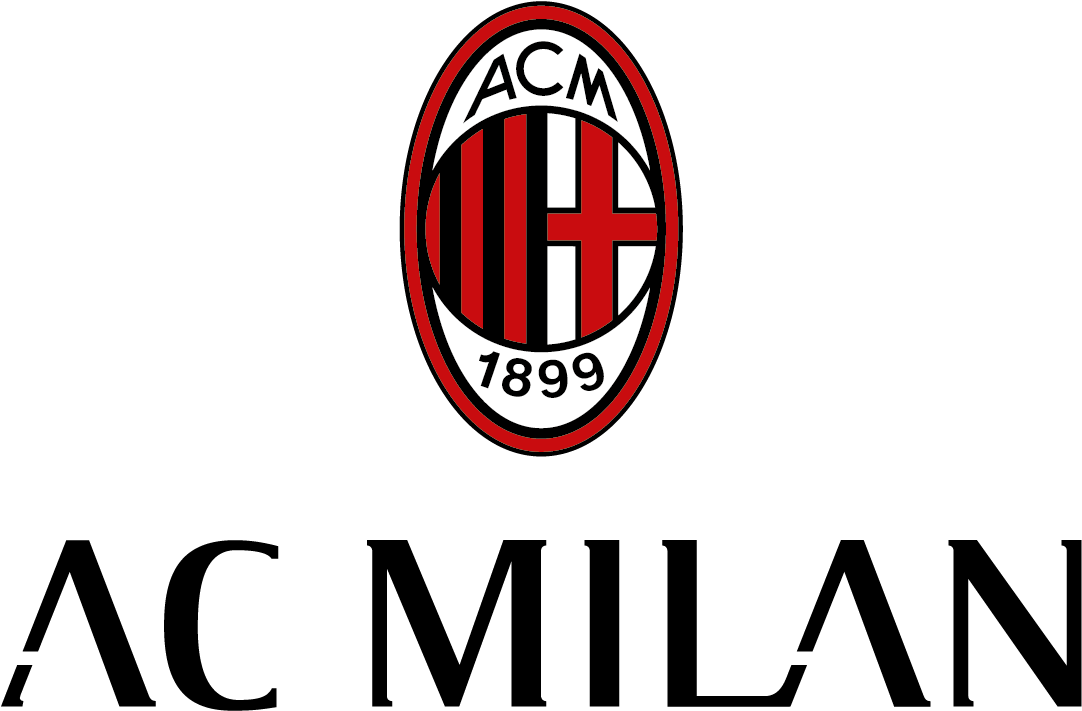
In April 2017, the German company InterES Handels- und Dienstleistungs Gesellschaft mbH & Co KG filed an opposition against the registration applied for on the basis of the German word mark MILAN, filed in 1984 and registered in 1988, designating, inter alia, and in substance, goods identical and similar to those referred to in the aforementioned application of AC Milan. The German company considers that, because of the similarity of the mark applied for with its earlier mark, registration of the former would be liable to give rise to a likelihood of confusion on the part of the German public.
By decision of 14 February 2020, EUIPO upheld the opposition in its entirety.
AC Milan brought an action against EUIPO’s decision before the General Court of the European Union.
In its judgment, the General Court dismisses the action in its entirety.
In the first place, the Court notes, on the basis of a series of items of evidence, in particular invoices and advertising material written in German, that the earlier mark has been put to genuine use in Germany.
In the second place, the Court notes that the earlier mark was used on the German market, first, as registered and, secondly, in an amended form characterised, in particular, by the addition of a figurative element representing the head of a bird, similar to a bird of prey. In that context, the Court emphasises that, while it is true that the additional figurative element is not insignificant in character, it cannot be regarded as dominant and capable of altering the distinctive character of the word element constituting the earlier mark as registered.
In the third place, the Court considers that, although the figurative element of the mark applied for will not be ignored by the relevant public, particularly in view of its size and position, the attention of the relevant public will not, however, be focused on that element. The attention of that public will be drawn to the word element consisting of the letters ‘ac’ and the word ‘milan’, since those letters are reproduced in capital letters and in a stylised font, and the element which they form considerably exceeds the figurative element in length. Consequently, the Court considers that the element ‘ac milan’ constitutes the dominant element of the mark applied for.
In that context, the Court finds that, while part of the relevant public may perceive the word element ‘ac milan’ in the mark applied for as a reference to that football club in the city of Milan (Italy), the conflicting signs, which have a high degree of aural similarity, both refer to the city of Milan.
As regards AC Milan’s argument based on the reputation of the mark applied for in Germany linked to the reputation of that football club, the Court notes that only the reputation of the earlier mark, and not that of the mark applied for, must be taken into account in order to assess whether the similarity of the goods designated by the two marks is sufficient to give rise to a risk of confusion.
Consequently, the Court finds that the similarities of the two signs at issue are, taken as a whole, sufficient to conclude that there is a likelihood of confusion.
More information
Publicaciones relacionadas:
 The CJEU upholds a Murcian farmer’s claim against the King of Morocco for a mandarin variety
 Successive amendments to the Polish Law on the National Council of the Judiciary are liable to infringe EU law
 Finland’s guarantee in favour of the airline Finnair is compatible with EU law
 A Member State may refuse to recognise a driving licence that was merelyrenewed in a Member State
 CJEU Judgment: Germany systematically and persistently exceeded limit values for nitrogen dioxide between 2010 and 2016
Leave a Reply