• Skip to primary navigation
  • Skip to main content
  • Skip to primary sidebar
  • Skip to footer
  • Bluesky
  • Facebook
  • Instagram
  • Twitter
  • YouTube
CDE Almería – Centro de Documentación Europea – Universidad de Almería

CDE Almería - Centro de Documentación Europea - Universidad de Almería

Centro de Documentación Europea de la Universidad de Almería

  • HOME
  • WHAT´S ON
    • EU NEWS
    • Activities
    • EU Calls and Awards
    • Radio Program «Europe with You»
  • DOCUMENTATION
    • EU Media Collection
      • Web Space
      • MEDIATHEQUE REPOSITORY
  • Europe on the net
    • Institutions
    • EU Representation in Spain
    • European information network of Andalusia
  • ABOUT US
    • Presentation
    • Services
    • People
    • Contact
  • Spanish
  • English

Chemical safety: EU rules ensure high levels of protection for citizens and the environment and contribute to efficient functioning of the Single Market

Inicio » EU News » Chemical safety: EU rules ensure high levels of protection for citizens and the environment and contribute to efficient functioning of the Single Market

28 de June de 2019

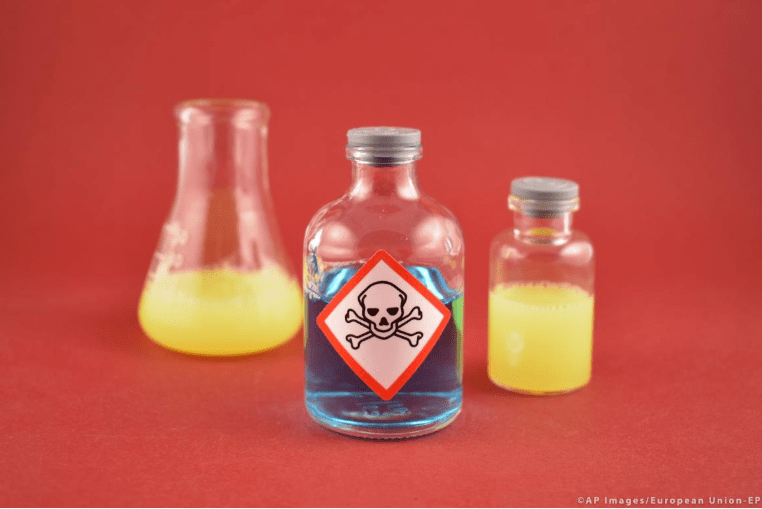
tres frascos de cristal sobre fondo rojo con etiquetas de calavera

The European Commission has published a review of the EU chemicals legislative framework, which addresses some 40 pieces of sectoral chemicals legislation, including specific rules on chemicals found in pesticides or cosmetics, or rules on the labelling, classification and packaging of chemicals. 

The report, which complements the 2018 review of the EU’s REACH Regulation, confirms that the rules in place provide a high level of protection against harmful chemicals for our citizens and the environment and that they contribute to an efficient functioning of the Single Market.

The EU has one of the most comprehensive legal frameworks in the world, which offers a global benchmark for chemical risk management. The EU has already significantly reduced our citizens’ exposure to harmful chemicals by banning or restricting the use of certain substances and is continuously looking to limit the risk posed by harmful chemicals. EU chemicals legislation has also been instrumental in ensuring free circulation of substances, mixtures and articles through harmonisation of standards and requirements.

The report also identifies certain areas for improvement in the implementation and application of the rules, including the need for the simplification and streamlining of hazard and risk assessment processes, providing better consumer information, and supporting implementation of the legislation by the Member States. The results of the report will be further discussed on 27-28 June 2019 during a High Level Conference on “EU Chemicals Policy 2030”. These discussions will provide valuable input towards a common long-term vision and objectives of EU chemicals policy, in line with Sustainable Development Goals and the New Strategic Agenda 2019-2024 to build a climate-neutral, green, fair and social Europe. The full report can be found here.

 Also, the Commission and the European Chemicals Agency (ECHA) are taking action to make sure that REACH registration dossiers are compliant with EU legal requirements. The new Action Plan launched yesterday envisages a significant increase in the number of compliance checks carried out on registration dossiers.

Background

REACH is the most comprehensive and ambitious chemical legislation in the world. Over the past 12 years, the EU has significantly reduced citizens’ exposure to harmful chemicals by requiring industry to provide data and risk management measures to demonstrate the safe use of chemicals in a registration dossier.

According to the second REACH review and other recent reports, a third of REACH registration dossiers do not fully comply with EU standard information requirements. To address this gap, the Commission requested ECHA to identify the main reasons of non-compliance and develop solutions.

For more information

Complete Press release

REACH Evaluation Joint Action Plan
ECHA press release

ECHA online. 

Publicaciones relacionadas:

medio ambiente /economía circularCommission delivers on Circular Economy Action Plan Pharmaceuticals in the environment: Commission defines actions to address risks and challenges Figura en miniatura de un señor con un maletín sobre un mapa de EuropaFair labour mobility: provisional agreement reached on the modernised rules on social security coordination CO2 emissions from cars: facts and figures cinco bombillas cuelgan del techo€750 million in EU funding made available for clean energy infrastructure


EU News Environment,  Security

“This is a space for debate. All comments, for or against publication, that are respectful and do not contain expressions that are discriminatory, defamatory or contrary to current legislation will be published”.

Reader Interactions

Leave a Reply Cancel reply

Your email address will not be published. Required fields are marked *

This site uses Akismet to reduce spam. Learn how your comment data is processed.

Primary Sidebar

Footer

  • CDE Almería
  • Biblioteca Nicolás Salmerón – Universidad de Almería
  • Planta: 1ª, Despacho: 1.05.0B.
  • Ctra. Sacramento s/n. Almería (Spain)
  • Teléfono: (+34) 950 015266

HOME
NEWS
DOCUMENTATION
EUROPE ON THE NET
ABOUT US

  • LEGAL NOTICE
  • PRIVACY POLICY
  • COOKIE POLICY
  • ACCESSIBILITY
  • SITEMAP

Copyright © 2026 CDE Almería · Creative Commons LicenseThis work is licensed under a Creative Commons Attribution-NonCommercial 4.0 International License.

<p>El Centro de Documentación Europea de la Universidad de Almería utiliza cookies propias y de terceros para facilitar al usuario la navegación en su página Web y el acceso a los distintos contenidos alojados en la misma. Asimismo, se utilizan cookies analíticas de terceros para medir la interacción de los usuarios con el sitio Web. Pinche el siguiente enlace si desea información sobre el uso de cookies y como deshabilitarlas. </p>

Politica de privacidad

El Centro de Documentación Europea de la Universidad de Almería utiliza cookies propias y de terceros para facilitar al usuario la navegación en su página Web y el acceso a los distintos contenidos alojados en la misma. Asimismo, se utilizan cookies analíticas de terceros para medir la interacción de los usuarios con el sitio Web. Pinche el siguiente enlace si desea información sobre el uso de cookies y como deshabilitarlas. <a href="/politica-de-cookies" rel="noopener" target="_blank">Más información</a>

Cookies estrictamente necesarias

Las cookies estrictamente necesarias tiene que activarse siempre para que podamos guardar tus preferencias de ajustes de cookies.

Básicamente la web no funcionara bien si no las activas.

Estas cookies son:

  • Comprobación de inicio de sesión.
  • Cookies de seguridad.
  • Aceptación/rechazo previo de cookies.
Cookies de terceros

Esta web utiliza Google Analytics, Google Tag Manager y Yandex Metrika para recopilar información anónima tal como el número de visitantes del sitio, o las páginas más populares.

Dejar estas cookies activas nos permite mejorar nuestra web.

Política de cookies

Pinche el siguiente enlace si desea información sobre el uso de cookies y como deshabilitarlas. Más información