• Skip to primary navigation
  • Skip to main content
  • Skip to primary sidebar
  • Skip to footer
  • Bluesky
  • Facebook
  • Instagram
  • Twitter
  • YouTube
CDE Almería – Centro de Documentación Europea – Universidad de Almería

CDE Almería - Centro de Documentación Europea - Universidad de Almería

Centro de Documentación Europea de la Universidad de Almería

  • HOME
  • WHAT´S ON
    • EU NEWS
    • Activities
    • EU Calls and Awards
    • Radio Program «Europe with You»
  • DOCUMENTATION
    • EU Media Collection
      • Web Space
      • MEDIATHEQUE REPOSITORY
  • Europe on the net
    • Institutions
    • EU Representation in Spain
    • European information network of Andalusia
  • ABOUT US
    • Presentation
    • Services
    • People
    • Contact
  • Spanish
  • English

Celebrado en Kiev el VIII Diálogo sobre Derechos Humanos

Inicio » EU News » Institutional Affairs » Celebrado en Kiev el VIII Diálogo sobre Derechos Humanos

28 de April de 2023

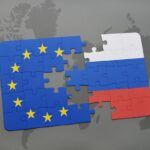
The European Union and Ukraine held the eighth Human Rights Dialogue in Kyiv yesterday. Both sides remain committed to continuing their annual dialogue, despite Russia’s ongoing large-scale armed aggression against Ukraine, and will continue their active efforts to prevent and address any human rights violations, including in the temporarily occupied and liberated territories of Ukraine.

The parties discussed violations of international human rights and humanitarian law violations in the context of Russia’s full-scale invasion and war of aggression, such as arbitrary killings, arbitrary detention, enforced disappearance, torture and ill-treatment of detainees, deportation and forced transfer of civilians (especially children) to Russia and Russian temporarily occupied territories, war-related sexual and gender-based violence, ‘filtration’, penal colonies in the temporarily occupied territories of Ukraine.

The parties paid special attention to consideration of the impact of Russia’s war of aggression on the rights with respect to health, work, education, water and sanitation, and adequate housing. Discussions focused on the massive destruction, lossesand damages to infrastructure directly affecting the provision of basic services and the enjoyment of human rights. They stressed the importance of international support to Ukrainian recovery.

Geopolitical consequences of Russia’s war of aggression against Ukraine

Both sides expressed concerns regarding human rights violations in the temporarily occupied areas by Russia. In particular, the parties discussed restrictions on civic and political rights, especially forcing Ukrainian citizens to change citizenship and/or obtain a Russian passport, restrictions on the freedom of expression, freedom of the media, freedom of assembly, freedom of religion or belief, forced mobilisation, as well as restrictions on access for international and non-governmental organisations.

During the dialogue, the EU and Ukraine expressed their commitment to ensuring full accountability for war crimes and the other most serious crimes committed in connection with Russia’s war of aggression against Ukraine, including through the establishment of a dedicated tribunal for the prosecution of the crime of aggression. Some specific points such as support to the investigations of the International Criminal Court,international cooperation in the investigation and prosecution processes, victim-centered and trauma sensitive responses, the establishment of a registry of damages and of a compensation mechanism were discussed. The parties also focused on sanctions and the use of Russia’s frozen and immobilised assets for Ukraine’s reconstruction and for the purposes of reparation.

Furthermore, discussions also revolved around policy developments in human rights. EU welcomed Ukraine’s efforts in fulfilling accession criteria, notably the stability of institutions guaranteeing democracy, the rule of law, human rights, notwithstanding the ongoing war. Specific areas included law enforcement reform, prevention of torture and ill-treatment, labour rights, freedoms of expression, association and assembly, the elections and electoral framework, rights of persons with disabilities and persons belonging to ethnic, linguistic, religious, and national minorities, rights of LGBTI persons, gender equality, women’s rights, and the rights of the child.

European Parliament adopts three resolutions on respect for Human Rights in Russia, Afghanistan and Nigeria

This year’s dialogue was marked by an atmosphere of cooperation and a common aspiration for progressive and decisive steps in the field of human rights.

The next meeting of the human rights dialogue between Ukraine and the EU is expected to take place in 2024.

Source: EEAS
Publicaciones relacionadas:

MEPs want special court to try Russian crimes in Ukraine Learn Law playing at the Ludoteca Jurídica of the University of Almeria Fighting trafficking in human beings Russia-EU tensions and Parliament’s views Council adds the violation of restrictive measures to the list of EU crimes

EU News,  Institutional Affairs,  Law annual dialogue,  dialogue,  European Union,  Human Rights,  Kyiv,  russia,  ukraine

“This is a space for debate. All comments, for or against publication, that are respectful and do not contain expressions that are discriminatory, defamatory or contrary to current legislation will be published”.

Reader Interactions

Leave a Reply Cancel reply

Your email address will not be published. Required fields are marked *

This site uses Akismet to reduce spam. Learn how your comment data is processed.

Primary Sidebar

Footer

  • CDE Almería
  • Biblioteca Nicolás Salmerón – Universidad de Almería
  • Planta: 1ª, Despacho: 1.05.0B.
  • Ctra. Sacramento s/n. Almería (Spain)
  • Teléfono: (+34) 950 015266

HOME
NEWS
DOCUMENTATION
EUROPE ON THE NET
ABOUT US

  • LEGAL NOTICE
  • PRIVACY POLICY
  • COOKIE POLICY
  • ACCESSIBILITY
  • SITEMAP

Copyright © 2026 CDE Almería · Creative Commons LicenseThis work is licensed under a Creative Commons Attribution-NonCommercial 4.0 International License.

<p>El Centro de Documentación Europea de la Universidad de Almería utiliza cookies propias y de terceros para facilitar al usuario la navegación en su página Web y el acceso a los distintos contenidos alojados en la misma. Asimismo, se utilizan cookies analíticas de terceros para medir la interacción de los usuarios con el sitio Web. Pinche el siguiente enlace si desea información sobre el uso de cookies y como deshabilitarlas. </p>

Politica de privacidad

El Centro de Documentación Europea de la Universidad de Almería utiliza cookies propias y de terceros para facilitar al usuario la navegación en su página Web y el acceso a los distintos contenidos alojados en la misma. Asimismo, se utilizan cookies analíticas de terceros para medir la interacción de los usuarios con el sitio Web. Pinche el siguiente enlace si desea información sobre el uso de cookies y como deshabilitarlas. <a href="/politica-de-cookies" rel="noopener" target="_blank">Más información</a>

Cookies estrictamente necesarias

Las cookies estrictamente necesarias tiene que activarse siempre para que podamos guardar tus preferencias de ajustes de cookies.

Básicamente la web no funcionara bien si no las activas.

Estas cookies son:

  • Comprobación de inicio de sesión.
  • Cookies de seguridad.
  • Aceptación/rechazo previo de cookies.
Cookies de terceros

Esta web utiliza Google Analytics, Google Tag Manager y Yandex Metrika para recopilar información anónima tal como el número de visitantes del sitio, o las páginas más populares.

Dejar estas cookies activas nos permite mejorar nuestra web.

Política de cookies

Pinche el siguiente enlace si desea información sobre el uso de cookies y como deshabilitarlas. Más información