
The EU wants to update the existing rules for defective products to better protect consumers and keep up with the development of new technologies.
The existing Product Liability Directive was adopted almost 40 years ago. In September 2022, the European Commission published a proposal to adapt the guidelines to address the technological advantages newer products may have.
The aim of the revised directive is to set uniform rules for Eu countries, ensure proper functioning of the digital and circular economy and help victims of defective products get fairer compensation.
Scope of the revised liability rules
To better reflect the changes in the digital and green world, the existing definition of a product needs to be expanded to include software updates, artificial intelligence or digital services, for example robots, drones or smart-home systems.
At the same time, the revised rules exclude open-source or free software from the scope as such software relies on improvements from users. This means the developers cannot be held liable for damage, which may be caused by other users.
As the EU is committed to being more sustainable, products should be designed to be more durable, reusable, reparable and upgradable. Liability rules should also be modernised for circular economy business models to ensure that they are clear and fair for companies that substantially modify products.
Damage
Currently, the directive only recognises physical damage as a legitimate reason to claim compensation. Under the new rules, it will be possible to seek compensation for medically recognised psychological damage, which requires therapy or medical treatment.
Compensation can also be claimed for the destruction or irreversible corruption of data, such as the deletion of files from a hard drive. However, the loss must exceed €1,000.
Liability
According to the Commission’s proposal, the liability period should be 20 years.
Parliament wants to extend the liability period to 30 years in some cases where damage is visible after a longer period of time.
Under the revised directive, there should always be someone in the EU who can be held liable for the damage that was caused by a defective product, even if the product was made outside the EU. This can either be the importer of the product or a representative of the manufacturer. If there is no liable business, consumers could still be compensated via national schemes.
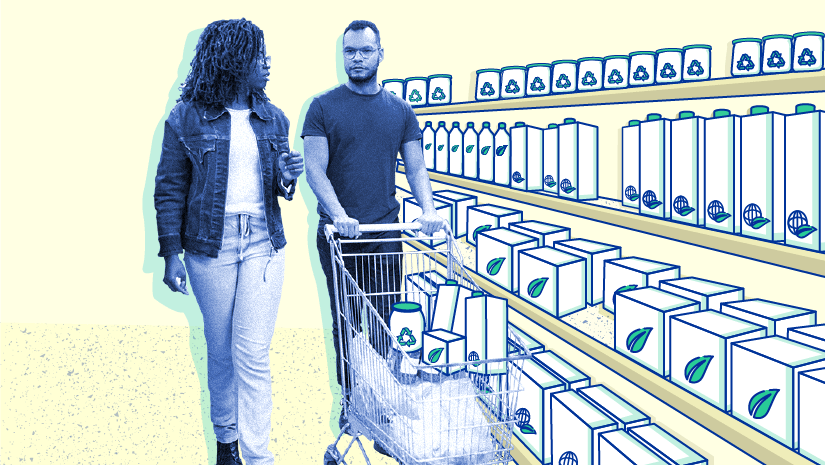
Green transition: new EU rules to protect consumers
|
Clearer compensation procedure
Parliament aims to simplify the procedure of proving a product was defective, caused damage and there is reasonable ground to claim compensation.
MEPs want national consumer protection authorities to provide guidance and information for compensation claims in an easily accessible and understandable manner.
Consumers who suffered harm can apply to national courts to order the manufacturers to disclose evidence that may help with their compensation claim.
In the current directive, the minimum damage threshold to claim compensation is €500. Parliament suggests cancelling the threshold so consumers could prove defectiveness as a possible cause of damage for any product.
Defectiveness
Parliament believes that a product should be considered defective when it is not safe for the average consumer.
The defects may be related to a product’s design, technical features and instructions, its foreseeable use, effects that other products might have on the defective product, considering its lifespan, or its capacity to learn continuously.
Next steps
Following a joint report by Parliament’s legal affairs committee and the internal market and consumer protection committee, Parliament approved its position on the revised rules in October 2023. This will serve as the basis for negotiations with EU countries on the final shape of the legislation.
Read more on how the EU wants to boost consumer protection
Artificial intelligence liability rules
The EU is also working on rules concerning artificial intelligence liability, which would complement the revised Product Liability Directive and better address damage caused by wrongful behaviour of AI systems, such as breaches of privacy or damage caused by safety issues.





Leave a Reply