• Skip to primary navigation
  • Skip to main content
  • Skip to primary sidebar
  • Skip to footer
  • Bluesky
  • Facebook
  • Instagram
  • Twitter
  • YouTube
CDE Almería – Centro de Documentación Europea – Universidad de Almería

CDE Almería - Centro de Documentación Europea - Universidad de Almería

Centro de Documentación Europea de la Universidad de Almería

  • HOME
  • WHAT´S ON
    • EU NEWS
    • Activities
    • EU Calls and Awards
    • Radio Program «Europe with You»
  • DOCUMENTATION
    • EU Media Collection
      • Web Space
      • MEDIATHEQUE REPOSITORY
  • Europe on the net
    • Institutions
    • EU Representation in Spain
    • European information network of Andalusia
  • ABOUT US
    • Presentation
    • Services
    • People
    • Contact
  • Spanish
  • English

Addressing the risks of Artificial Intelligence

Inicio » Noticias UE » Addressing the risks of Artificial Intelligence

12 de February de 2020

Artificial intelligence and automated processes may involve certain risks for consumers that the European Parliament wants to address.
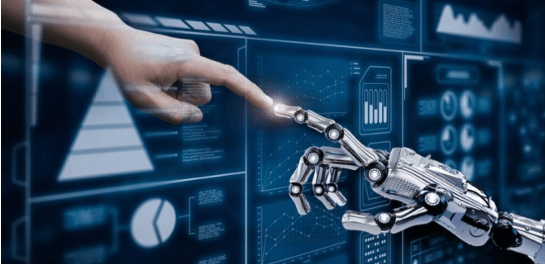
Artificial Intelligence and its risks

As learning algorithms can process data sets with precision and speed beyond human capacity, artificial intelligence (AI) applications have become increasingly common in finance, healthcare, education, the legal system and beyond. However, reliance on AI also carries risks, especially where decisions are made without human oversight. Machine learning relies on pattern-recognition within datasets. Problems arise when the available data reflects societal bias.

The development of AI and automated decision-making processes also presents challenges for consumer trust and welfare. When consumers are interacting with such a system, they should be properly informed about how it functions.

AI in decision-making processes

AI is increasingly involved in algorithmic decision systems. In many situations, the impact of the decision on people can be significant, such as access to credit, employment, medical treatment, or judicial sentences. Automated decision-making can therefore perpetuate social divides. For example, some hiring algorithms have been found to be biased against women.

The position of the Parliament

In a resolution adopted on 23 January, the internal market and consumer protection committee urges the European Commission to examine whether additional measures are necessary in order to guarantee a strong set of rights to protect consumers in the context of AI and automated decision-making.

The Commission should clarify how it will:

  • ensure that consumers are protected from unfair and discriminatory commercial practices as well as from risks entailed by AI-driven professional services
  • guarantee greater transparency in these processes
  • ensure that only high-quality and non-biased datasets are used in algorithmic decision systems.

Next steps

MEPs will vote on the  resolution in mid February. After that it will be transmitted to the Council and the Commission. The Commission should present its plans for a European approach to AI on 19 February.

More information

Full news

Publicaciones relacionadas:

Feasibility of a future European army Use of artificial intelligence by the police: MEPs oppose mass surveillance New technology is recognising affective states Figura en miniatura de un señor con un maletín sobre un mapa de EuropaFair labour mobility: provisional agreement reached on the modernised rules on social security coordination rescEU: EU establishes initial firefighting fleet for next forest fire season



EU News artificial intelligence,  European Parliament,  Security

“This is a space for debate. All comments, for or against publication, that are respectful and do not contain expressions that are discriminatory, defamatory or contrary to current legislation will be published”.

Reader Interactions

Leave a Reply Cancel reply

Your email address will not be published. Required fields are marked *

This site uses Akismet to reduce spam. Learn how your comment data is processed.

Primary Sidebar

Footer

  • CDE Almería
  • Biblioteca Nicolás Salmerón – Universidad de Almería
  • Planta: 1ª, Despacho: 1.05.0B.
  • Ctra. Sacramento s/n. Almería (Spain)
  • Teléfono: (+34) 950 015266

HOME
NEWS
DOCUMENTATION
EUROPE ON THE NET
ABOUT US

  • LEGAL NOTICE
  • PRIVACY POLICY
  • COOKIE POLICY
  • ACCESSIBILITY
  • SITEMAP

Copyright © 2026 CDE Almería · Creative Commons LicenseThis work is licensed under a Creative Commons Attribution-NonCommercial 4.0 International License.

<p>El Centro de Documentación Europea de la Universidad de Almería utiliza cookies propias y de terceros para facilitar al usuario la navegación en su página Web y el acceso a los distintos contenidos alojados en la misma. Asimismo, se utilizan cookies analíticas de terceros para medir la interacción de los usuarios con el sitio Web. Pinche el siguiente enlace si desea información sobre el uso de cookies y como deshabilitarlas. </p>

Politica de privacidad

El Centro de Documentación Europea de la Universidad de Almería utiliza cookies propias y de terceros para facilitar al usuario la navegación en su página Web y el acceso a los distintos contenidos alojados en la misma. Asimismo, se utilizan cookies analíticas de terceros para medir la interacción de los usuarios con el sitio Web. Pinche el siguiente enlace si desea información sobre el uso de cookies y como deshabilitarlas. <a href="/politica-de-cookies" rel="noopener" target="_blank">Más información</a>

Cookies estrictamente necesarias

Las cookies estrictamente necesarias tiene que activarse siempre para que podamos guardar tus preferencias de ajustes de cookies.

Básicamente la web no funcionara bien si no las activas.

Estas cookies son:

  • Comprobación de inicio de sesión.
  • Cookies de seguridad.
  • Aceptación/rechazo previo de cookies.
Cookies de terceros

Esta web utiliza Google Analytics, Google Tag Manager y Yandex Metrika para recopilar información anónima tal como el número de visitantes del sitio, o las páginas más populares.

Dejar estas cookies activas nos permite mejorar nuestra web.

Política de cookies

Pinche el siguiente enlace si desea información sobre el uso de cookies y como deshabilitarlas. Más información