
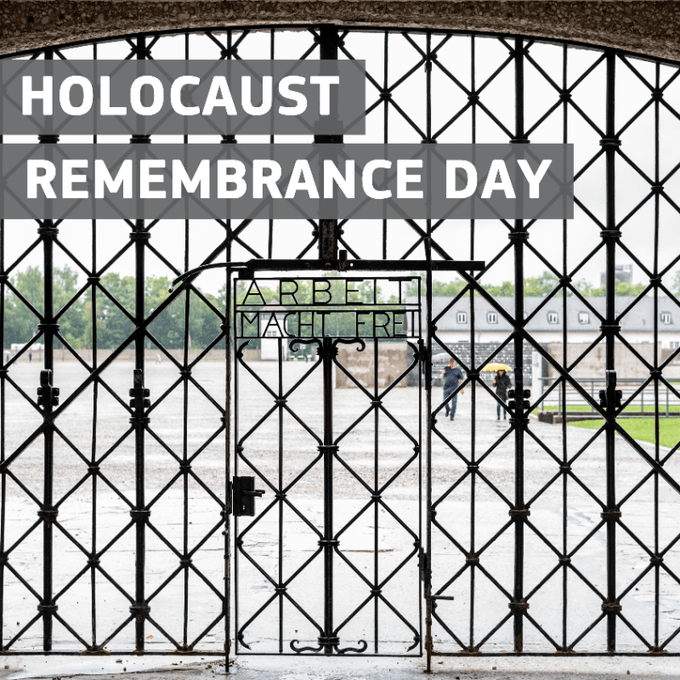
27 January marks the International Holocaust Remembrance Day and the 79th anniversary of the liberation of the Nazi concentration camp Auschwitz-Birkenau. On Thursday, Irene Shashar, a survivor of the Warsaw ghetto, addressed MEPs in a plenary session in Brussels to commemorate International Holocaust Remembrance Day.
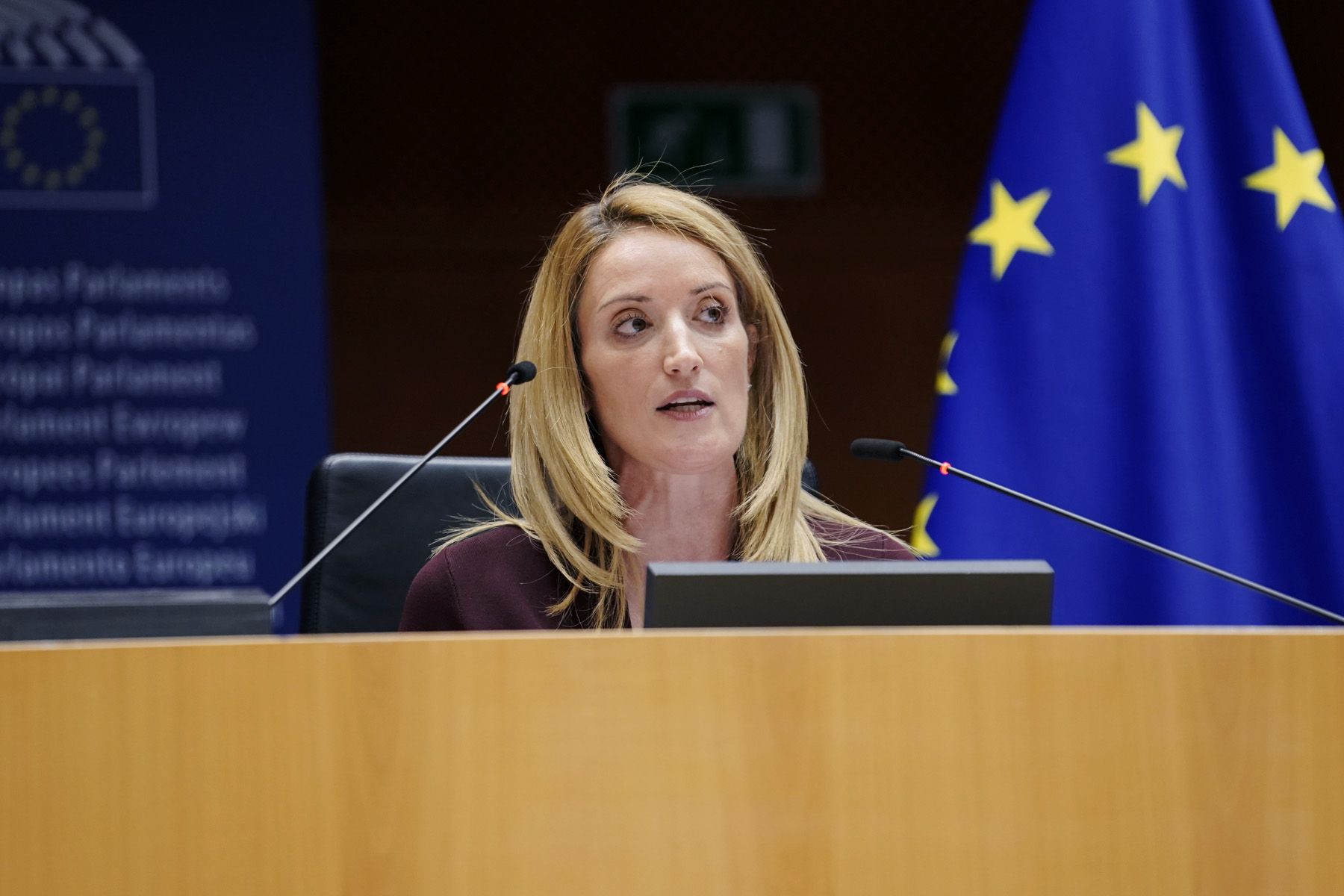
“We pay tribute today to the victims of the Holocaust and reaffirm our unwavering commitment against antisemitism, racism and other forms of hate. Europe remembers”, stressed European Parliament President, Roberta Metsola, opening the solemn sitting. Warning that the complicit silence of many made the Nazi horrors possible, she underlined that “the European Parliament is not a place of indifference – we speak against Holocaust deniers, against disinformation and against violence”.
“We will listen to your story. We will take your lessons with us. We will remember”, she concluded, before giving the floor to Ms Shashar.
During her speech, Irene Shashar described how she survived the horrors of Nazism in Warsaw as a “Holocaust Hidden Child”, fleeing through a sewer to the Aryan side of Warsaw where her mother’s friends supported them. Living in Israel today, she said, “I was blessed with the opportunity to have children and grandchildren. I did the very thing Hitler tried so hard to prevent. Hitler did not win!”
Speaking about the ongoing war and the terrorist attacks of 7 October, she said that she left her country “in the wake of violence, murder, rape, and terror” and asked MEPs for their solidarity and support to see the hostages be reunited with their families.
After 7 October “the resurgence of antisemitism means that the hate of the past is still with us”, Ms Shashar warned. “Jews are again not feeling safe living in Europe. After the Holocaust, this should be unacceptable. “Never Again” should truly mean never again.”
Referring to Europe, which was able to set aside old hatred and come together, she declared that her dream was that “my children, all children, live in a peaceful Middle East, one that is free of hate, especially towards us, the Jews. In my dream, Jews find safety and security anywhere they choose to call home. And antisemitism is finally a thing of the past.”
After Ms Shashar’s speech, MEPs observed a minute’s silence. The ceremony closed with a musical performance by Sheva Tehoval, soprano, and Marcelo Nisinman of “Kaddish” by Maurice Ravel.
Watch the ceremony here.
Irene Shashar
Born on 12 December 1937 as Ruth Lewkowicz, Irene Shashar survived the Warsaw ghetto. After her father was killed by the Nazis, she escaped the ghetto with her mother and was in hiding for the rest of war. She and her mother then moved to Paris. After her mother’s death, she moved to Peru where she was adopted by relatives. After studying in the US, she moved to Israel at the age 25 and became the youngest faculty member to hold a post at the Hebrew University. Today she lives in Modiin, Israel. In 2023, she published her biography “I won against Hitler”.
Background
The European Commission put forward the first-ever strategy on combatting antisemitism and fostering Jewish life on 5 October 2021, to support EU countries and civil society in their fight against antisemitism and fostering Jewish life in the EU. Holocaust remembrance is an essential pillar of efforts to ensure that we never forget our history.
The European Commission put forward a communication entitled “No place for hate: a Europe united against hatred” on 6 November 2023, stepping up the protection of public spaces, in particular Jewish places of worship, and the fight against hatred online. The Commission’s Coordinator on combatting antisemitism and fostering Jewish life will be upgraded to Envoy, who will have a specific mandate to deepen coordination, including through specific EU funded projects, and to maximise the potential of EU policies to combat hatred, online and offline.
The 2008 Framework Decision on Combating Racism and Xenophobia ensures that serious manifestations of racism and xenophobia are punishable by effective, proportionate and dissuasive criminal sanctions – this includes publicly condoning, denying or trivialising the Holocaust. The Commission is also taking important measures to stop the spread of disinformation about the Holocaust, online and offline.
To raise awareness and counter Holocaust distortion, the Commission has launched a global campaign to #ProtectTheFacts, together with the International Holocaust Remembrance Alliance (IHRA), UNESCO, OSCE, the Council of Europe and the United Nations.
In 2005, the United Nations General Assembly Resolution on the Holocaust Remembrance (60/7) designated 27 January as the international commemoration day in memory of the victims of the Holocaust. On 27 January 1945, the Allied Forces liberated the concentration and death camp of Auschwitz-Birkenau. The resolution urges every member of the United Nations to honour the memory of Holocaust victims and encourage the development of educational programs about Holocaust history, to prevent future acts of genocide. It calls for the active preservation of Holocaust sites such as Nazi death camps, concentration camps, forced labour camps and prisons.
The European Commission and EU Member States have committed to work against antigypsyism as part of the EU Roma Strategic Framework and the Council Recommendation on Roma. A first assessment report of the Member States’ National Roma Strategic Frameworks was adopted on 9 January 2023.
As part of the Citizens, Equality, Rights and Vales (CERV) Programme, in 2024 the European Commission will provide over €14 million of EU funding to support projects on European Remembrance. A particular priority will be given to projects that aim to strengthen Holocaust remembrance, education and research or combat Holocaust denial and distortion.
More information: European Parliament
Publicaciones relacionadas:
 International Day of Holocaust Remembrance
 CulturEU: Commission steps up support to the cultural sector
 The astronomical talks at the UAL: a beautiful cosmic experience
 Meet the 27 winners of this year’s Juvenes Translatores translation contest
 What are the European Capitals of Culture in 2023 and why should you visit them?
Leave a Reply