
On 23 July, the Council approved the 21st package of restrictive measures against Russia in response to its war of aggression against Ukraine. This package includes tough economic sanctions targeting the sectors that have the greatest impact on the Russian economy and on its ability to finance its war of aggression against Ukraine, and the largest number of individuals and entities added to the sanctions lists in the last four years – a total of 218, of whom 48 are individuals and 170 are entities.
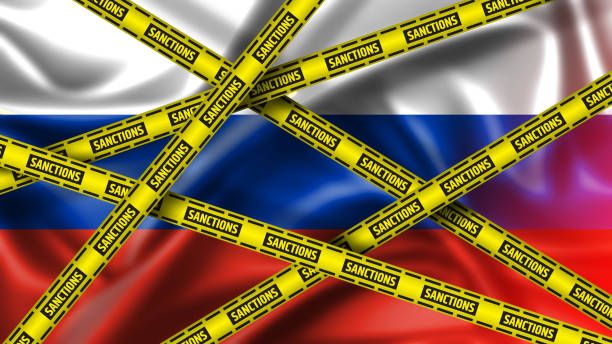
The package of measures announced last Thursday aims to further weaken Russia’s economy and war machine. It follows recent brutal Russian military attacks deliberately targeting civilian infrastructure, including energy, water and healthcare facilities, as well as cultural and religious sites, causing severe hardship to the civilian population.
The EU remains firmly determined to maintain and increase pressure on Russia to halt its brutal war of aggression and engage in meaningful negotiations leading to a just and lasting peace.
“With every round of sanctions, we are choking the Russian economy and its ability to prolong its illegal war. Our 21st sanctions package includes the highest number of sanctioned entities in four years. We are sanctioning more than 100 banks and cryptocurrency operators, more than 40 vessels in Russia’s clandestine fleet, and several oil refineries in Russia and Belarus. This includes more than 50 entities in the military-industrial sector, key players in the production of Russian long-range drones. Russia will only negotiate to end its illegal war and stop killing civilians if it is put under pressure to do so. Sanctions increase this pressure.” – Kaja Kallas, High Representative for Foreign Affairs and Security Policy and President of the Foreign Affairs Council
Restrictions on financial services and cryptocurrencies are being tightened.
The EU is significantly stepping up its measures against the Russian financial and banking sector, which it regards as an instrument of Russia’s war economy. The Council is imposing an asset freeze and a ban on the provision of funds to 94 banks and major financial institutions, as well as to a prominent figure in the Russian banking sector. In addition, it is extending the transaction ban to a further 33 Russian financial and credit institutions. It is also imposing a transaction ban on a Kyrgyz bank linked to the blocking of the SPFS (Financial Message Transfer System) and on three other non-Russian banks for circumventing the sanctions.
The EU has added four designations related to the A7 cross-border network, including its new connections with Africa. It also extends the ban on transactions to 14 crypto currency-related service platforms based in Georgia, Panama, the United Arab Emirates, the Marshall Islands, Kyrgyzstan and Belarus.
For the first time, the EU is considering the possibility of imposing a complete ban on crypto-asset services in third countries, as a strong deterrent against those countries that host platforms helping Russia to circumvent EU sanctions. This new instrument will enable the EU to ban any transaction between an EU operator and any cryptocurrency provider used by Russia.
Keeping the pressure on Russia’s revenue streams.
On energy matters,the package of measures suspends the automatic adjustment of the oil price cap mechanism until 15 July 2027. This aims to ensure that Russia’s profits from oil sales remain under control, despite the exceptional market situation caused by the closure of the Strait of Hormuz. The agreement provides for an interim review of the suspension to ensure that the mechanism remains necessary and proportionate. The EU is also continuing its fight against the parallel fleet, extending the scope of existing rules to include vessels that support it by supplying fuel and other services, and adding 41 further vessels to the 632 already subject to sanctions. These measures target non-EU tankers that form part of the parallel fleet, which circumvent the oil price cap mechanism, support the Russian energy sector in other ways, or transport military equipment for Russia or stolen Ukrainian grain. The EU has designated 8 entities and 1 individual active within the parallel fleet ecosystem, including companies operating on behalf of major Russian oil companies and, for the first time, a crew recruitment agency supporting the parallel fleet.
Furthermore, the EU is focusing its attention on the oil sector, in particular on refineries. It has designated 18 entities and one individual from the sector, including three refineries in Russia, a major Belarusian oil refinery and a company set up to sell Belarusian petroleum products in Russia. The package also provides for the possibility of banning transactions with listed refineries, both in Russia and in third countries, that process or refine Russian crude oil and petroleum products. In this context, the EU is imposing a ban on transactions — which will come into force in six months’ time — on a Georgian refinery that trades in and processes Russian oil in Kulevi. Furthermore, the EU has added five oil operators to the list of entities subject to the transaction ban for breaching the ban on purchasing Russian crude oil and petroleum products.
The EU is also putting pressure on Russia’s critical infrastructure, as the Council decided to designate a key cross-border energy supplier and a senior figure at Russian Railways, as well as extending its transaction ban to two Russian ports and four Russian airports.
The package of measures introduced introduces an obligation to notify the sale of methane carriers and the possibility of imposing further restrictions on the sale of such vessels to Russian citizens and companies, as well as introducing other contractual obligations to mitigate the risk of resale to Russia or use in Russia.
The EU is also targeting other sources of Russia’s revenue, designating seven major players in the gold sector, one of the leading diamond companies, as well as several entities active in the mining and metallurgy sectors.
Russia’s military-industrial complex
To limit Russia’s ability to wage war and carry out attacks, particularly through the use of long-range drones, the package of measures presented includes 56individual listings of persons and companies involved in the Russian military-industrial complex. Of these, 37 are directly linked to long-range drones, with the aim of controlling their production and supply chain.
The Council also added51 new entitiesto the list of those subject to stricter export restrictions on dual-use goods and technologies, due to their support for Russia’s military-industrial complex in its war of aggression against Ukraine. Some of these entities are located in third countries (China, including Hong Kong, India, Kazakhstan, Kyrgyzstan, Turkey and the United Arab Emirates) and help Russia circumvent export restrictions, including those relating to microelectronics, computer numerical control (CNC) machine tools and semiconductor processing equipment.
Banning Russian combatants from entering the EU
The package of measures lays the groundwork for a comprehensive visa ban on combatants and former combatants of the Russian armed forces and other affiliated groups involved in Russia’s war of aggression in Ukraine. This confirmsthe Member States’ political and legal commitment to addressing this threat. The Council will decide when the ban will come into force.
Trade
The EU has agreedtoextend theexisting export ban to include goods and technologies used by the Russian military industry, such as nickel powders, metals and alloys used in corrosion-resistant coatings for jet engines; beryllium powders used in propellants and high-performance alloys; self-adhesive films, tapes and strips used in the aerospace and defence sectors; specific aviation items for unmanned aerial vehicles (UAVs), such as ground support equipment, jamming/interception systems, launch systems and servomotors, and flight termination systems for drones and missiles.
In addition, the EU has introduced new restrictions on the import of goods that generate significant revenue for Russia (worth more than 60 million euros), such as copper, nickel and lead ores, precious metals, crude zinc, alkaline-earth metals, zinc oxides, chromium oxides, glassware, imitation pearls and motor vehicle parts.
The package of measures announced also includes measures against Belarus designed to mirror those imposed on Russia, in particular trade measures (import bans on goods that generate significant revenue for Belarus, as well as export restrictions relating to the military industry) and legal protection.
Russia’s war propaganda machine
The EU has designated eight individuals for spreading Russian war propaganda and contributing to its manipulative war narrative regarding Ukraine.
War crimes
Under this package of measures, the EU is designating a major general and war criminal who has been involved in the torture, execution and desecration of the bodies of Ukrainian military personnel, including prisoners of war. This designation follows on from others made under the Russia human rights regime, adopted on 13 July.
Other measures
The EU is strengthening the legal protection of EU operators in disputes arising from EU restrictive measures, allowing courts in the EU and Member States not to recognise or enforce any judicial decision obtained in legal proceedings brought before Russian courts.
The relevant legal acts have been published in the Official Journal of the EU.
Background
In its conclusions of 18 June 2026, the European Council reaffirmed its firm and unwavering support for the independence, sovereignty and territorial integrity of Ukraine within its internationally recognised borders. The EU will continue, in coordination with like-minded partners and allies, to provide comprehensive support in the political, financial, economic, humanitarian, military and diplomatic spheres to Ukraine and its people.
The European Council also affirmed that the EU remains firmly determined to increase pressure on Russia and to further weaken its war economy so that it ceases its brutal war of aggression and engages in meaningful peace negotiations. It reiterated the importance of further reducing Russia’s energy revenues, limiting its parallel fleet operations and further restricting its banking system, and called for the swift adoption of the 21st sanctions package.
The European Council supports diplomatic efforts to end Russia’s war of aggression and underlines the EU’s readiness to step up its engagement in this context, in line with its objective of promoting peace, as enshrined in the Treaties. Europe has a key role to play in a future settlement and is ready to defend its interests.
In addition to this package of measures, on 13 July the Council adopted a series of further restrictive measures concerning the human rights situation in Russia, the mistreatment of Ukrainian prisoners of war, and cyber-attacks linked to Russia.
More information: European Council


Leave a Reply