• Skip to primary navigation
  • Skip to main content
  • Skip to primary sidebar
  • Skip to footer
  • Bluesky
  • Facebook
  • Instagram
  • Twitter
  • YouTube
CDE Almería – Centro de Documentación Europea – Universidad de Almería

CDE Almería - Centro de Documentación Europea - Universidad de Almería

Centro de Documentación Europea de la Universidad de Almería

  • HOME
  • WHAT´S ON
    • EU NEWS
    • Activities
    • EU Calls and Awards
    • Radio Program «Europe with You»
  • DOCUMENTATION
    • EU Media Collection
      • Web Space
      • MEDIATHEQUE REPOSITORY
  • Europe on the net
    • Institutions
    • EU Representation in Spain
    • European information network of Andalusia
  • ABOUT US
    • Presentation
    • Services
    • People
    • Contact
  • Spanish
  • English

EU and Moldova forge deeper ties at historic first Summit in Chișinău

Inicio » EU News » Institutional Affairs » International Politics and Cooperation » EU and Moldova forge deeper ties at historic first Summit in Chișinău

7 de July de 2025

At the first ever EU-Moldova Summit in Chișinău, President of the European Commission Ursula von der Leyen, President of the European Council António Costa and President of the Republic of Moldova Maia Sandu agreed to deepen cooperation in the interest of EU and Moldovan citizens. The leaders discussed EU accession and related reforms, economic growth as well as security and defence cooperation, including countering hybrid threats.
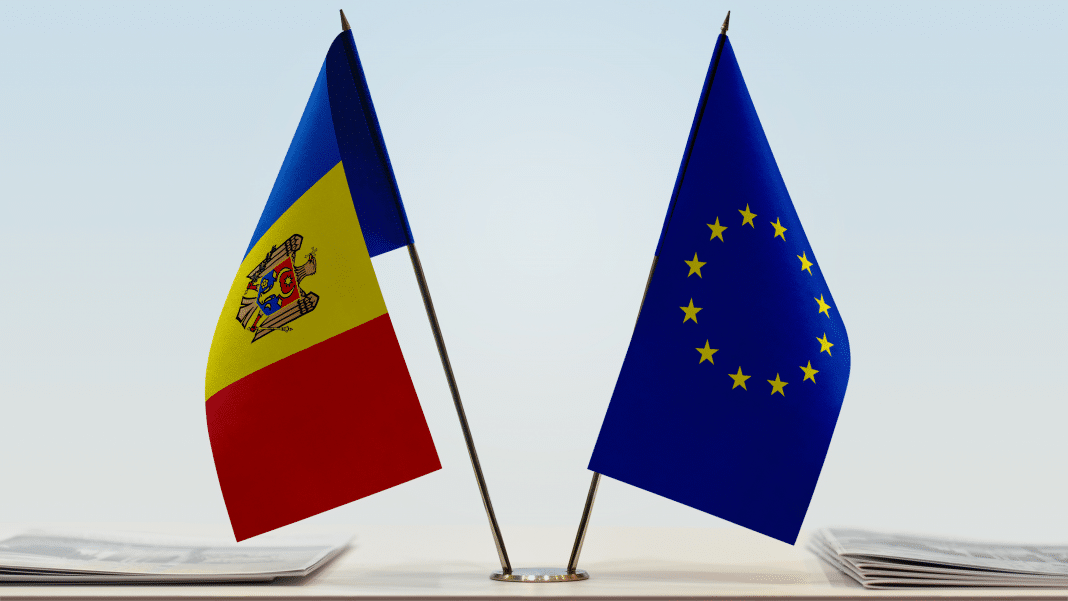
During the Summit, President von der Leyen announced the release of €270 million in pre-financing from the €1.9 billion EU Growth Plan for Moldova, supporting the country’s reforms and bringing its economy closer to the EU Single Market. This disbursement will translate into a new Bălți Regional Hospital, restored district heating in Chișinău, and lower electricity and gas bills for the people of Moldova. Overall, the Growth Plan will support better roads, modernised schools, new hospitals, growth for small businesses and the protection of Moldovan cultural heritage. This investment underscores the EU’s strong commitment to Moldova’s success.

President von der Leyen also announced that cheaper euro bank transfers will be available as of 5 October 2025 through Moldova’s inclusion in the Single European Payment Area (SEPA), granted in March by Member States.

Finally, President von der Leyen has proposed to integrate Moldova into the EU Roaming area as of 1 January 2026. The ‘Roam Like at Home’ initiative will allow Moldovan citizens to make calls, send text messages and use mobile data with Moldovan numbers while travelling in any of the 27 EU Member States without incurring roaming fees.

The leaders agreed to step up efforts to counter ongoing hybrid and cyber-attacks by Russia and its proxies aimed at destabilising the country ahead of the September parliamentary election.

The EU reaffirmed its assistance for Moldova’s resilience, including through the EU Partnership Mission in Moldova as well as supporting Moldova’s Centre of Strategic Communications tasked with detecting and debunking Russian disinformation. Leaders highlighted the need for clear communication on the benefits of EU integration and stressed the importance of strengthening anti-corruption efforts and safeguarding the integrity of the upcoming elections.

Background

EU-Moldova relations are at an all-time high as Moldova advances on its EU path. In June 2022, Moldova was granted candidate status. The European Council decided to open accession negotiations with Moldova in December 2023. The first Intergovernmental Conference, officially opening accession negotiations, took place in June 2024.

In October 2024, Moldovan citizens chose to anchor their European future in their country’s Constitution. On 4 June 2025, the EU-Moldova Association Council highlighted the EU and Moldova’s joint efforts to accelerate integration across various policy fields, in particular greater access to the EU Single Market.

The EU is supporting Moldova through political, financial and technical assistance. In March 2025, the EU adopted the €1.9 billion EU Growth Plan for Moldova. The Growth Plan – the largest EU financial support package since Moldova’s independence – underpins reforms essential for Moldova’s EU accession and has the potential to double the Moldovan economy over the next decade, transforming the lives of Moldovan citizens.

Earlier this year, the Commission and Moldova agreed on a 2-year Comprehensive Strategy for Energy Independence and Resilience to decouple Moldova from the insecurities of Russian energy supply and fully integrate it in the EU energy market. Under this strategy, overall support to the Republic of Moldova will account to €250 million.

More information: European Commission
Publicaciones relacionadas:

Commission advances on the modernisation of EU-Switzerland relations Banderas ucrania y EuropaEU and Ukraine reach agreement in principle on a modernised trade relationship EU and Mongolia hold Joint Committee in Ulaanbaatar bandera Japón y UEEU and Japan reinforce tech and digital partnership Package agreed at EU-United Kingdom Summit

EU News,  Institutional Affairs,  International Politics and Cooperation Agreement,  Chișinău,  Cooperation,  European Commission,  European Council,  European Union,  Moldova,  News,  reforms,  Summir

“This is a space for debate. All comments, for or against publication, that are respectful and do not contain expressions that are discriminatory, defamatory or contrary to current legislation will be published”.

Reader Interactions

Leave a Reply Cancel reply

Your email address will not be published. Required fields are marked *

This site uses Akismet to reduce spam. Learn how your comment data is processed.

Primary Sidebar

Footer

  • CDE Almería
  • Biblioteca Nicolás Salmerón – Universidad de Almería
  • Planta: 1ª, Despacho: 1.05.0B.
  • Ctra. Sacramento s/n. Almería (Spain)
  • Teléfono: (+34) 950 015266

HOME
NEWS
DOCUMENTATION
EUROPE ON THE NET
ABOUT US

  • LEGAL NOTICE
  • PRIVACY POLICY
  • COOKIE POLICY
  • ACCESSIBILITY
  • SITEMAP

Copyright © 2026 CDE Almería · Creative Commons LicenseThis work is licensed under a Creative Commons Attribution-NonCommercial 4.0 International License.

<p>El Centro de Documentación Europea de la Universidad de Almería utiliza cookies propias y de terceros para facilitar al usuario la navegación en su página Web y el acceso a los distintos contenidos alojados en la misma. Asimismo, se utilizan cookies analíticas de terceros para medir la interacción de los usuarios con el sitio Web. Pinche el siguiente enlace si desea información sobre el uso de cookies y como deshabilitarlas. </p>

Politica de privacidad

El Centro de Documentación Europea de la Universidad de Almería utiliza cookies propias y de terceros para facilitar al usuario la navegación en su página Web y el acceso a los distintos contenidos alojados en la misma. Asimismo, se utilizan cookies analíticas de terceros para medir la interacción de los usuarios con el sitio Web. Pinche el siguiente enlace si desea información sobre el uso de cookies y como deshabilitarlas. <a href="/politica-de-cookies" rel="noopener" target="_blank">Más información</a>

Cookies estrictamente necesarias

Las cookies estrictamente necesarias tiene que activarse siempre para que podamos guardar tus preferencias de ajustes de cookies.

Básicamente la web no funcionara bien si no las activas.

Estas cookies son:

  • Comprobación de inicio de sesión.
  • Cookies de seguridad.
  • Aceptación/rechazo previo de cookies.
Cookies de terceros

Esta web utiliza Google Analytics, Google Tag Manager y Yandex Metrika para recopilar información anónima tal como el número de visitantes del sitio, o las páginas más populares.

Dejar estas cookies activas nos permite mejorar nuestra web.

Política de cookies

Pinche el siguiente enlace si desea información sobre el uso de cookies y como deshabilitarlas. Más información