
The European Union (EU) and China held their 25th Summit in Beijing on 24 July 2025. European Council President António Costa and European Commission President Ursula von der Leyen met first with Chinese President Xi Jinping and then with Premier Li Qiang. EU High Representative for Foreign and Security Policy Kaja Kallas also took part in the meetings.
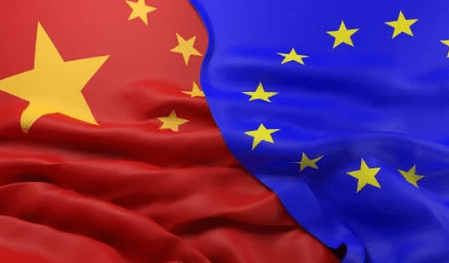
The Summit marked the 50th anniversary of the establishment of diplomatic relations between the European Union and the People’s Republic of China. It provided an opportunity for leaders to discuss the bilateral relationship in all its aspects, as well as the global and geopolitical situation.
The EU underlined the importance it continues to attach to this relationship and reiterated its commitment to deepen the link with China and to strengthen cooperation to address common global challenges such as climate change. The EU stressed that further engagement should lead to concrete progress on issues of common interest and should be reflected in more productive work towards a balanced and mutually beneficial economic relationship, based on fairness and reciprocity.
The leaders agreed that the EU and China have a shared responsibility to uphold the rules-based international order and to address global challenges. They reiterated their commitment to work together to safeguard multilateralism.
The leaders discussed Russia’s war of aggression against Ukraine. The EU underlined that this war of aggression is not only an existential threat to Ukraine, but also to global security. The EU reiterated that, as a permanent member of the UN Security Council, China has a specific responsibility to uphold the rules-based international order, the UN Charter and international law. The Russian invasion of Ukraine is a clear case of violation in all these cases. The EU reiterated its call on China not to provide any material support to sustain Russia’s military-industrial base. The EU encouraged China to use its influence to support a just and lasting peace in Ukraine, based on the principles of the UN Charter. The EU underlined that the supply of troops and weapons by the DPRK in support of Russia’s war in Ukraine poses considerable security risks in both Europe and East Asia.
The EU and China are important trading partners. In 2024, bilateral trade reached a value of €730 billion. However, current trade relations remain highly imbalanced, with a goods trade deficit of €305 billion. The EU has expressed its concern about current systemic distortions and manufacturing overcapacity, which exacerbate the unlevel playing field. Similarly, the EU reiterated its call for progress on long-standing market access issues and recalled that Chinese investments in Europe contribute to the EU’s long-term competitiveness, technological progress and the creation of quality jobs.
The EU remains ready to engage in a constructive dialogue to find negotiated solutions. As long as this is not the case, the EU will take proportionate and legally compliant measures to protect its legitimate interests.
The EU has indicated that it expects China to take concrete measures on access for EU companies to the Chinese market in priority sectors such as meat, cosmetics and pharmaceuticals. The EU insisted that China must put an end to unjustified and retaliatory trade defence cases and measures on EU exports of brandy, pork and dairy products. The EU highlighted the negative impact of China’s export controls on rare earths and permanent magnets and urged China to lift these restrictions.
The leaders welcomed the positive and productive bilateral cooperation on climate change, based on close collaboration both bilaterally and in international fora. Both believe that the EU and China should lead global efforts to reduce greenhouse gas emissions, including at COP30. To underline this commitment, the two sides agreed on a joint press statement on climate change. The EU’s share of global emissions has fallen to 6% and the EU reaffirmed its determination to reduce it further to 4% by 2030. The EU encouraged China to propose an ambitious plan to reduce its emissions by 2035 and to step up its international financial contributions, commensurate with its size and global responsibility. The EU invited China to join the Global Methane Emissions Reduction Commitment and to contribute to the Kunming-Montreal Global Biodiversity Framework. Both sides agreed to cooperate towards an ambitious and balanced international treaty on plastic pollution.
Since the last summit in December 2023, the EU and China have engaged in intensive dialogue, both at technical and political level, in a wide range of areas. This has resulted, inter alia, in enhanced cooperation on greenhouse gas emissions trading schemes, the implementation of a joint roadmap on the circular economy, a new action plan on regional policy cooperation for the period 2024-2029, a new dialogue on financial regulation and the reactivation of the work of a group on drug precursors. The EU and China are also working to extend the protection of geographical indications from 200 to 550 products.
The EU stressed the need to promote reciprocity in the digital field, underlining that European companies face limited access to China. In addition, the EU reiterated its concern about the lack of clarity in Chinese rules on data security and cross-border data flows from China, as well as malicious cyber activities detected as originating from China.
The EU reiterated its deep concern about the human rights situation in Xinjiang and Tibet, the treatment of human rights defenders and persons belonging to minorities, as well as the continued erosion of fundamental freedoms in Hong Kong, where China must respect its previous commitments. The EU welcomed the holding of the 40th session of the EU-China Human Rights Dialogue on 13 June 2025 in Brussels, which allowed for a comprehensive exchange on human rights issues, including on a number of individual cases of concern.
The EU reaffirmed its “one China” policy and expressed its concern about rising tensions in the Taiwan Strait. Increasing instability in the East and South China Seas threatens regional and global prosperity and security. The EU opposes any unilateral attempt to change the status quo by force or coercion and insists that the resolution of disputes must be by peaceful means in accordance with international law, in particular the United Nations Convention on the Law of the Sea (UNCLOS).
More information: Representation in Spain of the European Commission
Publicaciones relacionadas:
 EU and Moldova forge deeper ties at historic first Summit in Chișinău
 EU and Japan reinforce tech and digital partnership
 Europe-Japan cooperation in AI-based manufacturing technologies
 Commission advances on the modernisation of EU-Switzerland relations
 EU and Ukraine reach agreement in principle on a modernised trade relationship
Leave a Reply