
Social media platforms currently are witnessing a growing and concerning trend that sees traditional gender roles glorified while questioning the need for women’s financial independence.
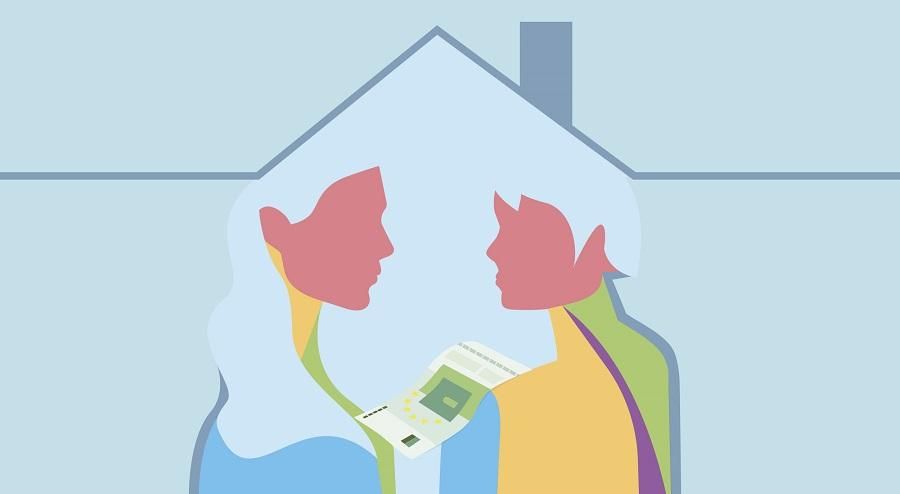
EIGE’s new report ‘Financial independence and gender equality: joining the dots on income, wealth and power’ offers a compelling perspective into why financial independence remains critical for women and men. And what we need to focus on to understand and measure the concept.
“What does it mean to be financially independent throughout the course of one’s adult life? We needed a richer definition and that’s what we provide in this report. It’s important to not only grasp income but also wealth and the dynamics of power and control within households”, says EIGE Director Carlien Scheele.
The facts: gender inequalities and financial independence
- On average in the EU, women in relationships earn one third less than their partner’s earnings – this is associated with reduced bargaining power and influence over decision-making.
- The overall gender earnings gap is 36.2 %. It assesses the combined impact of hourly earnings, the monthly average of paid hours and employment rate.
- On average, 7 % of women indicate their partner forbidding them to work and/or controlling family finances and their expenses.
The report defines financial independence in terms of income, wealth, and power and control. This approach sheds light on the historic knowledge gap surrounding financial independence and gender dynamics, offering insights on the status quo and solutions for a more equitable future. The report was developed in support of the current Belgian Presidency of the Council of the European Union.
Marie-Colline Leroy, State Secretary for Gender Equality, Equal Opportunities and Diversity, says:”Tackling socio-economic gender inequalities is one of the priorities of the Belgian Presidency. These are still little known or underestimated. Yet, we need robust data for identifying the levers to be activated to strengthen women’s autonomy and financial independence, and their ability to make choices, with dignity, throughout their lives. The information and recommendations proposed by EIGE in its report enabled us to take important political commitments in a pathway towards substantive gender equality, including for improving the availability of data on women’s financial independence.”
Financial independence: Key dimensions and sub-dimensions
Income
- Employment
- Earnings (incl. employment-related benefits
- State benefits
- Inter-household benefits
- Pension payments
- Living standards
- Taxes and social security contributions
Wealth
- Savings (incl. current accounts)
- Investments
- Property (e.g. land, residence, vehicles, goods)
- Pension fund
- Consumer debt (e.g. mortgage, loan)
Power and control
- Access to resources (incl. work, banking)
- Financial literacy
- Decision-making (about income, assets and liabilities, consumption)
- Spending
Factors affecting each dimension
- Individual attitudes and characteristics (e.g. sex, ethnicity, age, education, health, risk taking)
- Household structure and characteristics (e.g. number of children/dependants)
- Social and cultural norms and values
- Incidence of violence (e.g. economic violence)
- Policies and legislation (e.g. welfare and tax regimes, leave policies, childcare provision)
Council adopts first-ever EU law on violence against women |
Income ≠ financial independence
Here is a common misconception: Income equals financial independence. It does not.
Having an income – through employment, earnings, or other means – is an important factor and necessary to be financially independent.
But it is just the tip of the iceberg.
It’s the unseen layers of wealth and decision-making power which define a person’s level of financial independence more accurately.
Building wealth for a lifetime
Beyond a steady income, financial independence is about building wealth over the course of a lifetime.
Unfortunately, traditional gender roles often limit women’s access to the labour market, leading to restricted job opportunities leading to lower incomes and poor pensions.
Women are still expected to take on the lion’s share of care responsibilities once a couple decides to start a family. This often compels women to take on part-time work that restrict their earning potential. Without the opportunity to earn a more solid income and build wealth they are at a higher risk of poverty later in life. As a result, there is a staggering 26% gender pension gap in the EU.
Power play
Who makes the big financial decisions at home?
Women in the EU are, for example, often involved in everyday financial decision-making, but are less likely to be involved in strategic decisions related to large purchases, saving, and borrowing.
Men, on the other hand, tend to hold decision-making power when it comes to debt, with women more likely to be responsible for debt management. These observations reflect a larger trend of women having limited strategic control over household finances and being primarily responsible for making ends meet on a day-to-day basis.
Withholding and withdrawing
For women in abusive relationships, financial dependence is a significant risk factor.
Access to financial resources is hampered, let alone independence.
EIGE’s research found that financial dependence and economic violence do not affect all women to the same extent or in the same ways.
We found that that certain groups of women, such as migrant women and women with disabilities, are disproportionately affected.
From dependent to independent: recommendations
Financial dependence is a heavy toll for women to bear. What can be done to overcome persistent barriers?
Here are three key recommendations from the report:
- Develop standard indicators for monitoring gender differences in financial independence. This means for example routinely collecting sex disaggregated data on income pooling, sharing and decision making on financial matters in households.
- Raise awareness of the proposed multi-dimensional definition and measurement of financial independence to ensure effective integration into policy making at the EU and Member State levels. This needs to meet gender equality policy objectives.
- Prevent and combat economic violence against women and monitor its prevalence in the EU. This should include providing targeted support to women who have suffered economic violence by helping to build up their financial literacy.
“We need to apply a forward-looking approach to better understand and address the evolution of gender inequalities in financial independence. And this means reflecting on broader key trends we are observing such as changes to the way we live and work against the backdrop of an ageing society,” adds Carlien Scheele.
More information: European Institute for Gender Equality
Publicaciones relacionadas:
 Sharing the load: who invests more time and energy in childcare?
 Poland should stop the stigmatisation of LGBTI people
 The impact of the European Convention on Human Rights
 Recognition of parenthood: MEPs want children to have equal rights
 Commission gives young people a stronger voice in EU policymaking as a legacy of the European Year of Youth
Leave a Reply