• Skip to primary navigation
  • Skip to main content
  • Skip to primary sidebar
  • Skip to footer
  • Bluesky
  • Facebook
  • Instagram
  • Twitter
  • YouTube
CDE Almería – Centro de Documentación Europea – Universidad de Almería

CDE Almería - Centro de Documentación Europea - Universidad de Almería

Centro de Documentación Europea de la Universidad de Almería

  • HOME
  • WHAT´S ON
    • EU NEWS
    • Activities
    • EU Calls and Awards
    • Radio Program «Europe with You»
  • DOCUMENTATION
    • EU Media Collection
      • Web Space
      • MEDIATHEQUE REPOSITORY
  • Europe on the net
    • Institutions
    • EU Representation in Spain
    • European information network of Andalusia
  • ABOUT US
    • Presentation
    • Services
    • People
    • Contact
  • Spanish
  • English

Council adopts first-ever EU law on violence against women

Inicio » EU News » Social Affairs » Equality » Council adopts first-ever EU law on violence against women

7 de May de 2024

The Council has given the green light to an EU directive to combat violence against women and domestic violence. Taking decisive action against these acts of violence is essential to ensure the values and fundamental rights of equality between women and men and of non-discrimination. The law requires all EU countries to criminalise female genital mutilation, forced marriage and cyber violence such as the non-consensual sharing of intimate images.

The new law also contains measures to prevent violence against women and domestic violence and sets standards for the protection of victims of these crimes.

The law that was adopted today criminalises the following offences across the EU: female genital mutilation, forced marriage, non-consensual sharing of intimate images, cyber stalking, cyber harassment and cyber incitement to hatred or violence.

Committing these crimes will be punishable by prison sentences ranging from at least one to five years. The directive also comes with an extensive list of aggravating circumstances, such as committing the offence against a child, a former or current spouse or partner or a public representative, a journalist or a human rights defender, which carry more severe penalties.

The directive also contains detailed rules on the measures of assistance and protection that member states should provide to victims.

It will become easier for victims of violence against women and domestic violence to report a crime. As a minimum, it will be possible to report cybercrimes online. EU countries must also put measures in place to ensure that children are assisted by professionals. When children report a crime committed by someone with parental responsibility, authorities will have to take measures to protect the safety of the child before informing the alleged perpetrator.
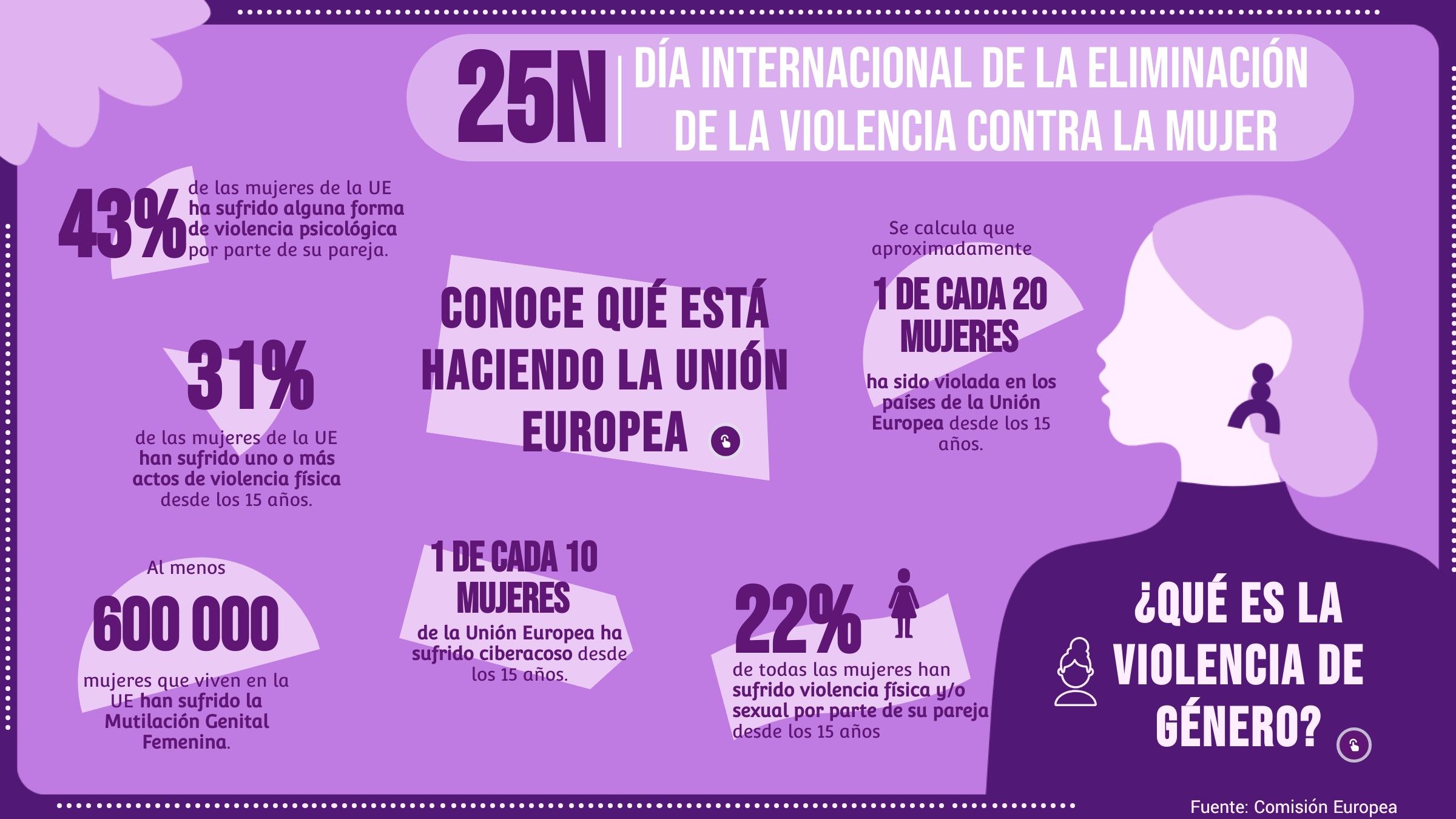
25 November – Day for the Elimination of Violence against Women

In order to protect a victim’s privacy and prevent repeat victimisation, member states must furthermore ensure that evidence relating to the victim’s past sexual conduct should only be permitted in criminal proceedings when it is relevant and necessary.

With the idea of building a safer future, preventive measures aim to increase awareness on the root causes of violence against women and domestic violence and to promote the central role of consent in sexual relationships.

Next steps

Member states have three years from the entry into force of the directive to transpose it into national law.

Background

The Commission (Vice-President for Values and Transparency, Vera Jourová and Commissioner for Equality, Helena Dalli) submitted the proposal for a directive on combating violence against women and domestic violence on 8 March 2022. Frances Fitzgerald and Evin Incir were the European Parliament’s rapporteurs for this file and the agreement between Council and Parliament was reached on 6 February 2024.

More information: Council of the EU
Publicaciones relacionadas:

“The Hungarian bill is a shame”, Von der Leyen LGBTIQ rights in Hungary: debate with Council and Commission Women’s rights in the EU Council gives final approval to new EU rules on short-term accommodation rentals peones de ajedrez en grupo y peón solitarioJudgment of the CJEU on homophobic discrimination in the workplace

Equality,  EU News,  Law,  Legislation,  Social Affairs Council,  eu law,  European Union,  violence against women

“This is a space for debate. All comments, for or against publication, that are respectful and do not contain expressions that are discriminatory, defamatory or contrary to current legislation will be published”.

Reader Interactions

Leave a Reply Cancel reply

Your email address will not be published. Required fields are marked *

This site uses Akismet to reduce spam. Learn how your comment data is processed.

Primary Sidebar

Footer

  • CDE Almería
  • Biblioteca Nicolás Salmerón – Universidad de Almería
  • Planta: 1ª, Despacho: 1.05.0B.
  • Ctra. Sacramento s/n. Almería (Spain)
  • Teléfono: (+34) 950 015266

HOME
NEWS
DOCUMENTATION
EUROPE ON THE NET
ABOUT US

  • LEGAL NOTICE
  • PRIVACY POLICY
  • COOKIE POLICY
  • ACCESSIBILITY
  • SITEMAP

Copyright © 2026 CDE Almería · Creative Commons LicenseThis work is licensed under a Creative Commons Attribution-NonCommercial 4.0 International License.

<p>El Centro de Documentación Europea de la Universidad de Almería utiliza cookies propias y de terceros para facilitar al usuario la navegación en su página Web y el acceso a los distintos contenidos alojados en la misma. Asimismo, se utilizan cookies analíticas de terceros para medir la interacción de los usuarios con el sitio Web. Pinche el siguiente enlace si desea información sobre el uso de cookies y como deshabilitarlas. </p>

Politica de privacidad

El Centro de Documentación Europea de la Universidad de Almería utiliza cookies propias y de terceros para facilitar al usuario la navegación en su página Web y el acceso a los distintos contenidos alojados en la misma. Asimismo, se utilizan cookies analíticas de terceros para medir la interacción de los usuarios con el sitio Web. Pinche el siguiente enlace si desea información sobre el uso de cookies y como deshabilitarlas. <a href="/politica-de-cookies" rel="noopener" target="_blank">Más información</a>

Cookies estrictamente necesarias

Las cookies estrictamente necesarias tiene que activarse siempre para que podamos guardar tus preferencias de ajustes de cookies.

Básicamente la web no funcionara bien si no las activas.

Estas cookies son:

  • Comprobación de inicio de sesión.
  • Cookies de seguridad.
  • Aceptación/rechazo previo de cookies.
Cookies de terceros

Esta web utiliza Google Analytics, Google Tag Manager y Yandex Metrika para recopilar información anónima tal como el número de visitantes del sitio, o las páginas más populares.

Dejar estas cookies activas nos permite mejorar nuestra web.

Política de cookies

Pinche el siguiente enlace si desea información sobre el uso de cookies y como deshabilitarlas. Más información