
The new system will allow Member States to rapidly exchange and jointly process VAT data, leading to earlier detection of suspicious networks.

The launch of the Transaction Network Analysis (TNA) tool comes as recent media investigations once again laid bare the huge costs of VAT fraud for public finances, with criminal gangs profiting at the expense of honest taxpayers. It is part of the Commission’s sustained effort to put in place a modern and fraud-proof VAT system.
VAT fraud can take place in the blink of an eye, making it even more important that Member States have tools to allow them to act as quickly and efficiently as possible. The TNA, which Member States started using today, will allow tax authorities fast and easy access to cross-border transaction information, leading to quick action when potential VAT fraud is flagged.
The TNA, developed through close collaboration between Member States and the Commission, will also allow much closer cooperation between the EU’s network of anti-fraud experts (‘Eurofisc’) when it comes to jointly analysing information so that VAT carousel fraud can be detected and intercepted as fast and effectively as possible. It will boost cooperation and information exchange between national tax officials, allowing Eurofisc officials to cross-check information with criminal records, databases and information held by Europol and OLAF, the EU’s anti-fraud agency, and to coordinate cross-border investigations.
Background
The common Value Added Tax (VAT) system plays an important role in Europe’s Single Market. It is a major and growing source of revenue for EU Member States, raising over €1 trillion in 2015, corresponding to 7% of EU GDP. One of the EU’s own resources is also based on VAT. As a consumption tax, it is one of the most growth-friendly forms of taxation.
The Commission has consistently pressed for the reform of the VAT system to make it more fraud proof. Progress has been made with new rules agreed on VAT for online sales and more efficient rules for the exchange of information and cooperation between Member States. However, progress has been slow on the Commission’s proposals to put in place a business-friendly and more fraud-proof definitive EU VAT area. A fundamental overhaul of the current system was proposed in October 2017 (link).
More Information
Access to the full news
Publicaciones relacionadas:
 Deal agreed to protect consumers against misleading and unfair practices
 Car rentals: EU action leads to clearer and more transparent pricing
 Employment and social developments in Europe: Record number of people in employment, but more investment in skills needed
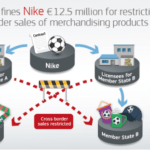 Antitrust: Commission fines Nike €12.5 million for restricting cross-border sales of merchandising products
 European Parliament confirms that the 2017 EU budget was well-managed
Leave a Reply