
Anew reportfrom the European Market Observatory for Fishery and Aquaculture Products (EUMOFA) shows how a series of crises—the COVID-19 pandemic, Brexit and Russia’s war of aggression against Ukraine—have transformed Europe’s fisheries and shellfish sector.
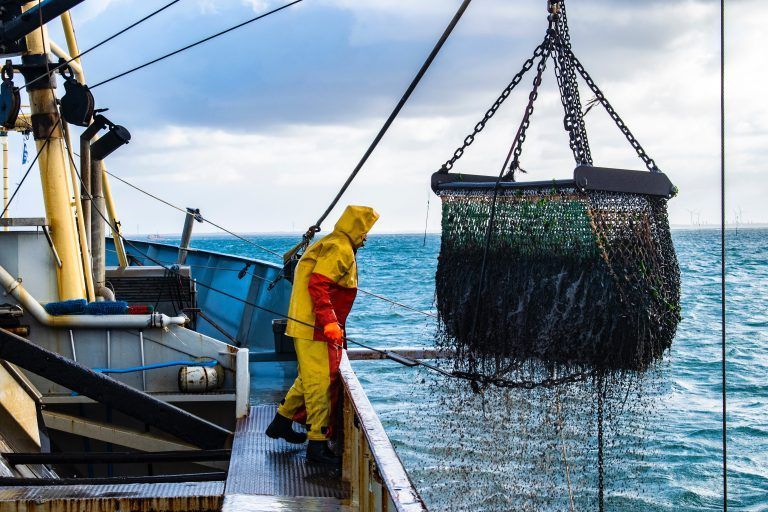
Between 2019 and 2024, the seafood supply chain in Europe faced three major crises in quick succession. First, the COVID-19 pandemic, which led to restaurant closures and disruptions to global transport. Then, Brexit, which introduced new border controls and delays between the EU and the UK. Finally, Russia’s war of aggression against Ukraine sent energy prices soaring.
Each of these events affected the sector in different ways, but together they created a ‘perfect storm’. Supply chains were disrupted, costs rose dramatically and consumer habits changed unpredictably.
From fresh to frozen
During the COVID-19 pandemic, demand for fresh fish fell sharply due to restaurant closures. At the same time, supermarket sales soared. People began buying more frozen and tinned fish, products that last longer and are easier to store.
This shift did not fully reverse after the pandemic. Even today, many households continue to prioritise convenience and affordability. Faced with rising prices, consumers have become more cautious, often opting for cheaper alternatives or reducing their consumption of seafood.
New administrative burdens and controls following Brexit
Brexit brought about structural and longer-lasting changes. From 2021 onwards, reduced fishing quotas, new health checks and increased red tape made trade more complex and costly. Fresh and chilled products were the hardest hit, as delays at borders disrupted rapid delivery systems.
Whilst EU support helped cover some immediate costs, particularly in Ireland, the Netherlands, Belgium and France, administrative requirements remained higher, especially for small businesses and EU Member States. For many companies, the change in transport routes, including reduced reliance on the UK land corridor, became a permanent rather than a temporary adjustment.
Russia’s war of aggression against Ukraine: the high cost of energy
Fishing vessels are heavily reliant on fuel. Fish farms require electricity to operate pumps and feeding systems. Processing plants depend on energy for refrigeration, packaging and transport. When energy prices soared after 2022, the impact spread throughout the system.
The result? A rise in operating costs for fishing vessels, aquaculture facilities, processing plants, cold storage and transport. These rising costs, coupled with high inflation, reduced people’s purchasing power, leading them to opt for cheaper seafood products with a longer shelf life.
The crisis has highlighted the importance of energy for competitiveness and resilience. The EU aquaculture sector remains highly sensitive to fuel and electricity prices, as well as to energy-intensive transport, highlighting its dependence on fossil fuels. To increase its resilience, the sector will need not only more diversified supply chains and sustainable production, but also a more decisive energy transition across fleets, aquaculture, processing and cold storage.
A sector that is adapting
Despite these challenges, the fisheries sector has shown resilience. Businesses have adapted, increasingly focusing on frozen, pre-packaged and value-added products to better cope with market uncertainty and transport disruptions.
Digitalisation also grew rapidly: online sales, direct-to-consumer channels and digital traceability tools became more common.
Supply chains diversified, reducing reliance on UK transit routes and, in some cases, on Russian raw materials. At the same time, investment in cold storage, automation and energy-efficient technologies increased, driven by rising costs and EU sustainability targets.
The new normal
Overall, the EU fisheries and aquaculture sector has become more adaptable, more digital and more risk-aware than before. However, it now operates in a very different environment, with higher costs, altered trade relations and more price-sensitive consumers.
A return to the pre-2020 situation is unlikely. Instead, the sector is adapting to a new normal, where resilience, sustainability and diversification are no longer merely responses to crises, but key factors for long-term competitiveness and security of supply.
2026: the situation in the Middle East
Although the study does not cover the year 2026, it is important to note that the situation in the Middle East since 28 February 2026 has severely disrupted global energy and commodities markets.
Attacks on energy infrastructure and major disruptions in the Strait of Hormuz have led to a sudden and significant rise in global oil prices and have affected international trade flows. These disruptions are having a substantial and lasting impact on the EU fisheries and aquaculture sector.
To support the EU fisheries and aquaculture sector, theEuropean Commission has activated the crisis mechanism of the European Maritime, Fisheries and Aquaculture Fund (EMFAF). This mechanism allows EU countries to provide financial compensation to fishermen, aquaculture producers, processors and retailers whose livelihoods have been affected by the consequences of the conflict in the Middle East. The last time this mechanism was activated was in 2022, following Russia’s war of aggression against Ukraine.
The emergency support measures, introduced on 16 April and applicable retroactively from 28 February 2026, were pre-allocated under the EMFAF 2021–2027 programme, leaving around €760 million of the initial €1.3 billion still immediately available.
The 2026 crisis highlights, once again, the structural vulnerability of a sector dependent on fossil fuels. Accelerating the energy transition remains essential for the long-term competitiveness, resilience and profitability of the EU fisheries and aquaculture sector.
More information: European Commission.
Publicaciones relacionadas:
 The EU’s agri-food trade surplus rises in the first five months of 2026
 Commission consults on revision of farm animal welfare rules
 EU agri-food exports increased in July 2025
 Organic farming in the EU: a decade of growth
 Short-term outlook of agricultural markets: uncertainty remains a constant feature of EU farming
Leave a Reply