
UN chief António Guterres called on Sunday for a pause in fighting to allow civilians to escape conflict zones in Ukraine, as the UN rights body (OHCHR) announced it had recorded 1,123 civilian casualties since the beginning of Russia’s armed attack on the country.
In a Tweet, the UN Secretary-General declared that it is absolutely essential to establish a pause in the fighting that continues unabated in Ukraine, to allow for the safe passage of civilians from all conflict zones, and also to ensure that life-saving humanitarian aid, such as the UN supplies that began arriving on Saturday, can move in to help those who remain.
Mr. Guterres singled out the cities of Mariupol, Kharkiv and Sumy as examples of hotspots where civilians are at particular risk. Attempts to allow some 200,000 civilians to safely leave Mariupol continue to be thwarted, with the International Committee of the Red Cross (ICRC) reporting “devastating scenes of human suffering” in the city.
The ICRC reported on Sunday that, whilst their teams remain on standby to help with the evacuation, they need security guarantees in order to operate. These guarantees have so far not been forthcoming, and the humanitarian organization called on the warring parties to agree to specific terms that would allow for safe passage out of the city.
Real fatality figures ‘considerably higher’ than recorded
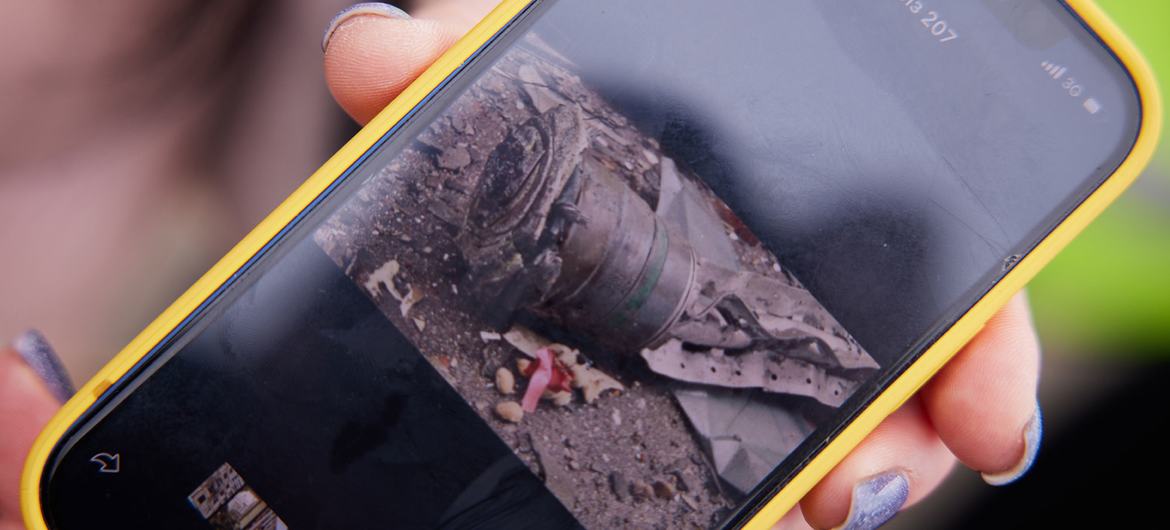
The Office of the UN High Commissioner for Human Rights (OHCHR) warned on Sunday that the casualty figures it has reported – for the period between 04:00 local time on 24 February 2022, when the Russian Federation’s armed attack against Ukraine started, to midnight on 5 March 2022 – are likely to be a considerable underestimate of the true numbers.
OHCHR said that 1,123 civilian casualties in Ukraine have been verified: 364 killed, including 25 children, and 759 injured. Most of the casualties have been caused by the use of explosive weapons with a wide impact area, including shelling from heavy artillery and multi-launch rocket systems, and missile and air strikes.
However, OHCHR believes that the real figures are considerably higher, especially in Government-controlled territory, and especially in recent days, as information from some locations where intense hostilities have been going on has been delayed and many reports are still pending corroboration. In the town of Volnovakha, for example, OHCHR is aware of allegations of hundreds of civilian casualties.
‘Fastest-growing refugee crisis in Europe since WW2’
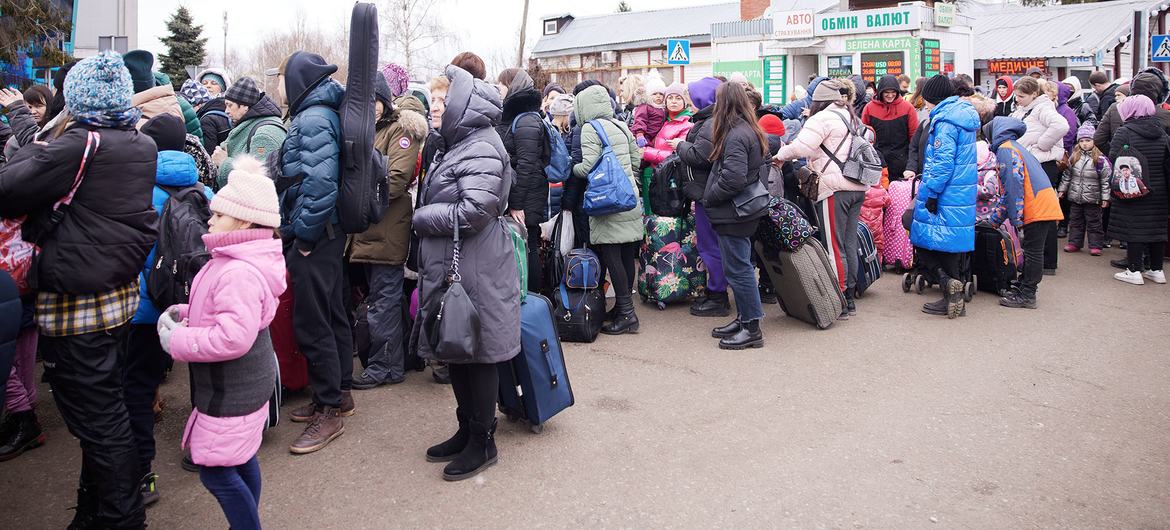
The Ukraine conflict has created the fastest-growing refugee crisis since the Second World War, the head of the UN refugee agency (UNHCR), declared in a Tweet on Sunday.
Filippo Grandi, the UN High Commissioner for Refugees, noted that more than 1.5 million people have crossed into neighbouring countries in just 10 days.
Mr. Grandi’s comments follow warnings from the UN children’s agency (UNICEF) on Friday of “unprecedented” numbers of children and families fleeing their homes, and humanitarian needs “growing by the hour”.
WHO releases priority healthcare concerns for Ukraine
The UN health agency (WHO) released its first Ukraine situation report on Saturday, outlining its health priorities for the country.
These include mental health care, due to what the agency calls “significant stress due to acute conflict”, and conflict-related trauma and injuries, exacerbated by lack of access to health facilities due to insecurity.
WHO is also concerned about excess death from common illnesses, due to disruption in services, and acute maternal, new-born and child illnesses, as well as the spread of infectious diseases such as COVID-19, measles, polio, TB, and HIV.
Diarrhoeal diseases are also on the list of priorities, due to the widespread destruction of water and sanitation infrastructure, inadequate vaccination coverage, population movements, and crowding.
Source: United Nations – UN News
More information:
WFP ramping up operations as hunger rises in Ukraine
Publicaciones relacionadas:
 Corona Crimes: Suspect Behind €6 Million Face Masks And Hand Sanitisers Scam Arrested Thanks To International Police Cooperation
 101 Arrested And 19,000 Stolen Artefacts Recovered In International Crackdown On Art Trafficking
 Doping Trafficking Ring with Professional Athletes Dismantled in Italy
 Rapid action via Eurojust leads to arrest of 10 human traffickers
 Intensified judicial response to serious cross-border crimes
Leave a Reply