• Skip to primary navigation
  • Skip to main content
  • Skip to primary sidebar
  • Skip to footer
  • Bluesky
  • Facebook
  • Instagram
  • Twitter
  • YouTube
CDE Almería – Centro de Documentación Europea – Universidad de Almería

CDE Almería - Centro de Documentación Europea - Universidad de Almería

Centro de Documentación Europea de la Universidad de Almería

  • HOME
  • WHAT´S ON
    • EU NEWS
    • Activities
    • EU Calls and Awards
    • Radio Program «Europe with You»
  • DOCUMENTATION
    • EU Media Collection
      • Web Space
      • MEDIATHEQUE REPOSITORY
  • Europe on the net
    • Institutions
    • EU Representation in Spain
    • European information network of Andalusia
  • ABOUT US
    • Presentation
    • Services
    • People
    • Contact
  • Spanish
  • English

Ukraine joins EU Civil Protection Mechanism

Inicio » EU News » Defence & Security » International Safety and Defence Politics » Ukraine joins EU Civil Protection Mechanism

21 de April de 2023

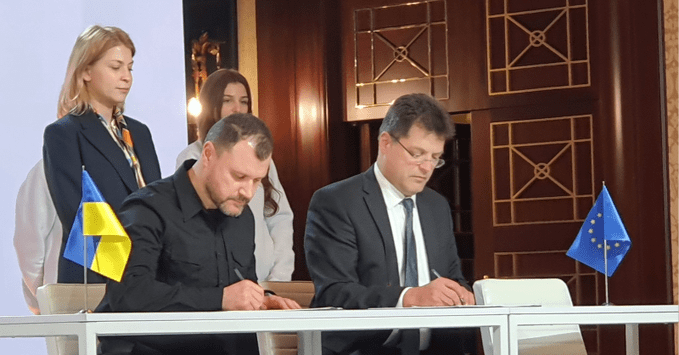
On 20th April, Ukraine becomes a Participating State of the EU Civil Protection Mechanism – the European solidarity framework that helps countries overwhelmed by a disaster.

Commissioner for Crisis Management, Janez Lenarčič, is in Kyiv to officially sign an agreement on behalf of the European Union granting Ukraine full membership of the Mechanism. During his visit, he will participate in the International Summit of Cities and Regions in Kyiv with President of Ukraine, Volodymyr Zelenskyy; Deputy Prime Minister, Olha Stefanishyna; Minister of Internal Affairs, Ihor Klymenko; and Head of Emergency Service, Serhiy Kruk.

The EU Civil Protection Mechanism has channelled emergency assistance to Ukraine from across Europe since the onset of Russia’s war of aggression against Ukraine in February 2022. In its largest and longest running operation, more than 88,000 tonnes of life-saving equipment, food, and medicines, have been sent to Ukraine via the Mechanism. Most recently, more than 1,000 power generators fully financed by the EU were mobilised to Ukraine from the strategic rescEU energy reserves. Now, by being a full member, Ukraine will also be able to dispatch aid via the Mechanism at a time another country finds itself in a crisis.

The EU is also allocating a further €55 million in humanitarian funding to Ukraine on top of the €145 million already provided earlier this year. This new humanitarian funding will focus on preparing for next winter. 
European Commission launches New European Bauhaus capacity building programme to rebuild Ukraine

Background

When an emergency overwhelms the response capabilities of a country in Europe and beyond, it can request assistance through the Mechanism. The European Commission plays a key role in coordinating the disaster response worldwide. Since its inception in 2001, the EU Civil Protection Mechanism has been activated for more than 600 emergencies and crises inside and outside the EU. The EU Civil Protection Mechanism aims to strengthen cooperation between the 27 EU countries and now 9 Participating States (Iceland, Norway, Serbia, North Macedonia, Montenegro, Türkiye, Bosnia and Herzegovina, Albania, and most recently Ukraine) on civil protection to improve prevention, preparedness, and response to disasters.

A joint approach further helps pool expertise and capacities of first responders, avoids duplication of relief efforts, and ensures that assistance meets the needs of those affected. Pooling together civil protection capacities and capabilities allows for a stronger and more coherent collective response.

The Mechanism also helps coordinate disaster preparedness and prevention activities of national authorities and contributes to the exchange of best practices. This facilitates the continuous development of higher common standards enabling teams to understand different approaches better and work interchangeably when a disaster strikes.

Since Russia’s invasion of Ukraine in February 2022, the EU has allocated in total of €685 million in humanitarian aid to Ukraine, including €55 million top-up that has been requested by the European Commission and currently under adoption by the EU’s Budgetary Authority. EU-funded humanitarian assistance is provided in line with the humanitarian principles of humanity, neutrality, impartiality and independence. It is delivered through the UN humanitarian agencies, non-governmental organisations and the International Committee of the Red Cross.


More information

European Commission

Publicaciones relacionadas:

Eurobarometer results 2022 Foreign Affairs Council Main Results, 24 January 2022 Disinformation: The harder you push, the harder they resist visado abierto por hoja aleatoriaCharles Michel: Europe’s values, freedom and democracy will prevail Trolling For A Victory Steeped In Blood And Hunger

Defence & Security,  EU News,  International Safety and Defence Politics Civil Protection Mechanism,  EU,  European Commission,  ukraine

“This is a space for debate. All comments, for or against publication, that are respectful and do not contain expressions that are discriminatory, defamatory or contrary to current legislation will be published”.

Reader Interactions

Leave a Reply Cancel reply

Your email address will not be published. Required fields are marked *

This site uses Akismet to reduce spam. Learn how your comment data is processed.

Primary Sidebar

Footer

  • CDE Almería
  • Biblioteca Nicolás Salmerón – Universidad de Almería
  • Planta: 1ª, Despacho: 1.05.0B.
  • Ctra. Sacramento s/n. Almería (Spain)
  • Teléfono: (+34) 950 015266

HOME
NEWS
DOCUMENTATION
EUROPE ON THE NET
ABOUT US

  • LEGAL NOTICE
  • PRIVACY POLICY
  • COOKIE POLICY
  • ACCESSIBILITY
  • SITEMAP

Copyright © 2026 CDE Almería · Creative Commons LicenseThis work is licensed under a Creative Commons Attribution-NonCommercial 4.0 International License.

<p>El Centro de Documentación Europea de la Universidad de Almería utiliza cookies propias y de terceros para facilitar al usuario la navegación en su página Web y el acceso a los distintos contenidos alojados en la misma. Asimismo, se utilizan cookies analíticas de terceros para medir la interacción de los usuarios con el sitio Web. Pinche el siguiente enlace si desea información sobre el uso de cookies y como deshabilitarlas. </p>

Politica de privacidad

El Centro de Documentación Europea de la Universidad de Almería utiliza cookies propias y de terceros para facilitar al usuario la navegación en su página Web y el acceso a los distintos contenidos alojados en la misma. Asimismo, se utilizan cookies analíticas de terceros para medir la interacción de los usuarios con el sitio Web. Pinche el siguiente enlace si desea información sobre el uso de cookies y como deshabilitarlas. <a href="/politica-de-cookies" rel="noopener" target="_blank">Más información</a>

Cookies estrictamente necesarias

Las cookies estrictamente necesarias tiene que activarse siempre para que podamos guardar tus preferencias de ajustes de cookies.

Básicamente la web no funcionara bien si no las activas.

Estas cookies son:

  • Comprobación de inicio de sesión.
  • Cookies de seguridad.
  • Aceptación/rechazo previo de cookies.
Cookies de terceros

Esta web utiliza Google Analytics, Google Tag Manager y Yandex Metrika para recopilar información anónima tal como el número de visitantes del sitio, o las páginas más populares.

Dejar estas cookies activas nos permite mejorar nuestra web.

Política de cookies

Pinche el siguiente enlace si desea información sobre el uso de cookies y como deshabilitarlas. Más información