
In 2022, land roughly the size of Corsica was scorched by wildfires in the EU, according to the latest JRC report on fires in the pan-European region.
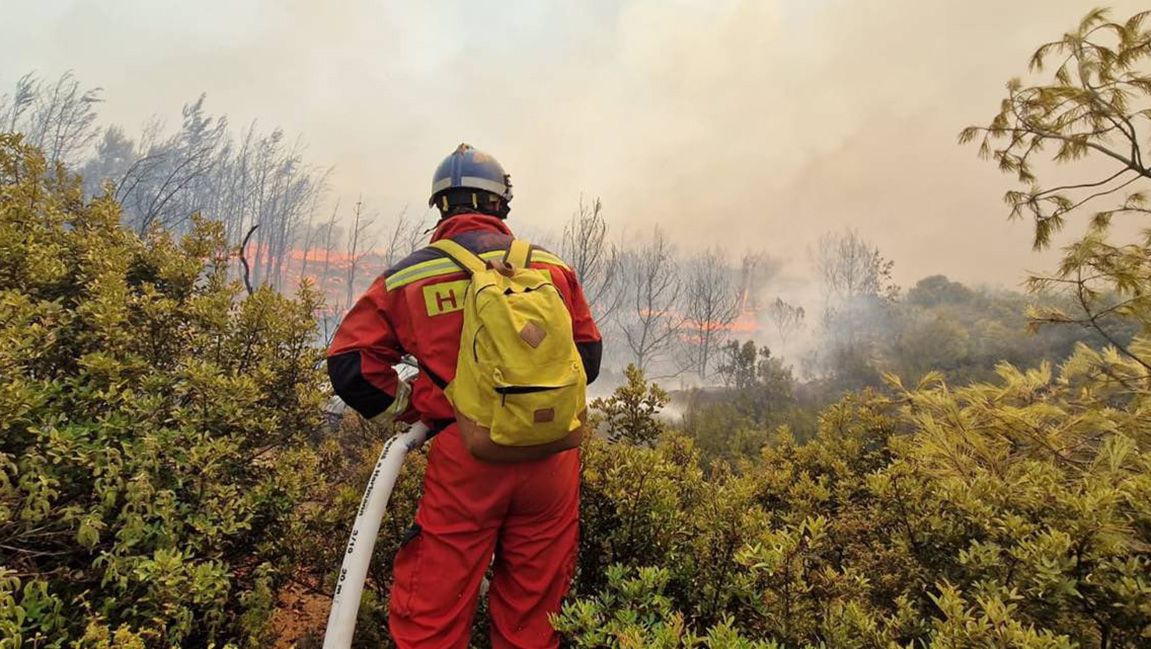
It’s a third year in a row that unprecedented wildfire events cause large environmental and economic damage in the EU and, often, tragic loss of life. While most of the fires (96%) are caused by human actions, they are aggravated by increased fire danger conditions driven by climate change.
Nearly 900 000 ha of land burnt in 2022, of which approximately 365 000 ha belong to Natura 2000 sites, according to the report Forest Fires in Europe, Middle East and North Africa 2022, published today. It makes 2022 the second-worst year – the worst being 2017 with 1.3 million ha of burnt land and over 130 people killed – since monitoring through the European Forest Fire Information System (EFFIS) started in 2000.
Fires also impacted the Natura 2000 network, EU’s biodiversity reservoir, accounting for about 43% of the total burnt area. The total burnt land in Natura 2000 protected areas in 2022 is the highest in a decade, according to the report.
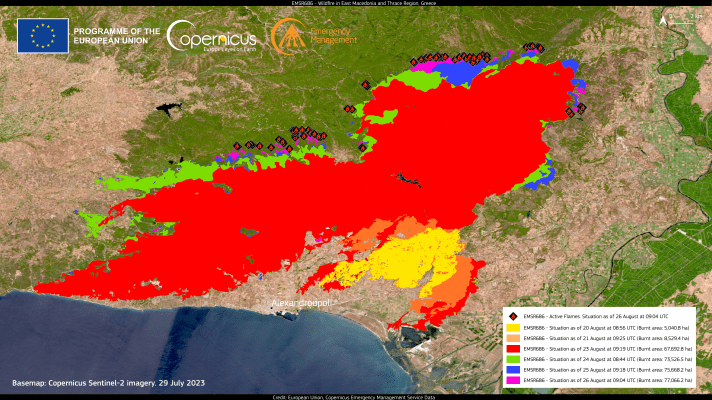
Data for 2023 shows that so far, wildfires have already burned about 500 000 ha of natural land in the EU. This includes the largest single wildfire (Alexandroupolis, Greece) recorded in the EU, with over 96 000 ha burnt. This year saw again rampant wildfires, difficult to contain by traditional firefighting for their high temperatures, intensity and speed. They were put under control only when meteorological conditions improved, allowing firefighters to tackle the blazes. Other critical wildfires in the EU occurred in Portugal, Spain, Italy and Greece.
Prevention measures must target all sectors of the population, including rural actors in direct contact with natural areas, as well as the enlarged population segment that lives in the so-called wildland urban interface (WUI), where built settlements are either inside or adjacent to wildland vegetation. Most of the fires occur in the WUI, as they are set by human actions, and simultaneously most affect this population in areas at high risk of wildfires.
It is a warning signal of what global warming can bring about in the coming years, as temperatures increase, and droughts become more pronounced in many European countries. Thanks to prevention measures put in place by the EU and its Member States and the enhanced preparedness and firefighting operations of the fire management services, the number of casualties in 2022 was contained.
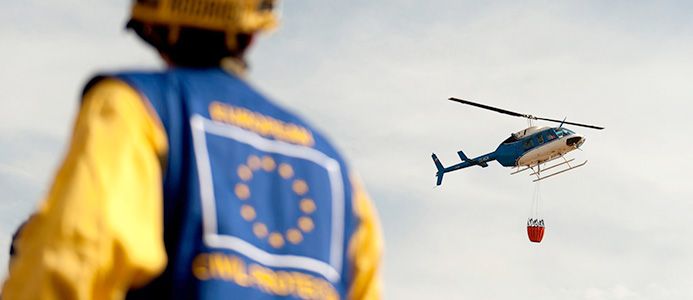
EU doubles rescEU firefighting fleet for summer 2023 |
The EU Nature Restoration Law will help to ensure that the adaptive capacity of Europe’s ecosystems is constantly being improved, and the new proposal for a Forest Monitoring Law will lead to timely, accurate and comparable forest data allowing for better prevention of and preparedness for wildfires and other forest disturbances.
In the last three years, wildfires raged from west to east and across northern, central, and southern European countries. The high frequency and intensity of wildfires in the summer puts EU’s fighting services under unprecedented conditions of fire danger in which, often, aerial firefighting loses its effectiveness and ground firefighting is difficult or impossible. The trend of these unprecedented fires occurs not only in Europe, but also across the globe.
In 2023, clear examples of rampant wildfires occurred in Chile and Canada. Other regions like California, Australia, South America, etc. are periodically hit by wildfires of frequency and intensity beyond their traditional range.
Background
EFFIS, the European Forest Fire Information System, started as a pilot project between the Commission, and countries within the EU and in the neighbourhood with the objective to provide harmonised information on forest fires and assess their effects in the pan-European region. Today, this network gathers 43 countries which contribute with information on wildfires. It is also a platform for exchange of good practices on fire prevention, firefighting, restoration, and other fire management activities.
Since 2015 EFFIS is one of the components of the Emergency Management Services in Copernicus, the EU Earth observation programme which provides information on the planet and its environment from both satellite monitoring and in situ data.
The EU continues to work on measures to mitigate the impact of wildfires. The EU Strategy on Adaptation to Climate Change, aims to support prevention of and preparedness for the unavoidable impacts of climate change, while the EU Forest Strategy sets the basis for enhanced fire prevention and climate resilience of our forests, building on the guidelines for prevention of wildfires and increased monitoring.
These guidelines call for the management of vegetation to avoid the continuity and accumulation of fuels on the ground, facilitating firefighting interventions if wildfires occur. Reduction of wildfire ignitions, caused in its majority, by human actions, and planning and management of the landscape are the two main lines that EU scientists recognise as key to reduce wildfire risk.
In 2021, the EU reinforced its capacity in the Union Civil Protection Mechanism (UCPM) to increase the aerial firefighting means at its disposal and to assist countries during the 2022 fire season. In 2022, the Commission’s President Ursula von der Leyen committed to double this firefighting capacity in 2023. The Emergency Response Coordination Centre (ERCC) of the EU Civil Protection Mechanism coordinates this reinforced capacity.
The support of the JRC through its early warning and monitoring systems and the provision of timely information on ongoing wildfires enables informed decision making to dispatch those aerial means funded by the EU.
More information: EU Science Hub
Publicaciones relacionadas:
 Commission launches EU missions to tackle major challenges
 EU-funded project develops robotic system to save bees
 EU produced 14.7 million bicycles in 2022
 New plan to support green and digital transition and EU recovery
 Building a Climate-Resilient Future – A new EU Strategy on Adaptation to Climate Change
Leave a Reply