• Skip to primary navigation
  • Skip to main content
  • Skip to primary sidebar
  • Skip to footer
  • Bluesky
  • Facebook
  • Instagram
  • Twitter
  • YouTube
CDE Almería – Centro de Documentación Europea – Universidad de Almería

CDE Almería - Centro de Documentación Europea - Universidad de Almería

Centro de Documentación Europea de la Universidad de Almería

  • HOME
  • WHAT´S ON
    • EU NEWS
    • Activities
    • EU Calls and Awards
    • Radio Program «Europe with You»
  • DOCUMENTATION
    • EU Media Collection
      • Web Space
      • MEDIATHEQUE REPOSITORY
  • Europe on the net
    • Institutions
    • EU Representation in Spain
    • European information network of Andalusia
  • ABOUT US
    • Presentation
    • Services
    • People
    • Contact
  • Spanish
  • English

The Spanish cities of La Laguna, Casares and Miranda de Ebro, winners of the European Capitals of Inclusion and Diversity Awards 2024

Inicio » EU News » Social Affairs » Equality » The Spanish cities of La Laguna, Casares and Miranda de Ebro, winners of the European Capitals of Inclusion and Diversity Awards 2024

29 de April de 2024

The European Commission announced on 25 April the winners of the third edition of the European Capitals of Inclusion and Diversity Awards. The awards celebrate localities and regions across the EU that lead by example in inclusive policies.
 

This year’s winners are cities and municipalities from Croatia, Slovenia, Spain, Italy and Sweden. They have received the award for their work in building fairer societies by promoting diversity and inclusion on the basis of gender, racial and ethnic origin, religion and belief, disability, age and sexual orientation.


The winners of the European Capitals of Inclusion and Diversity Awards 2024 are:

In the category “Localities with more than 50 000 inhabitants”:

  • Gold goes to the city of Zagreb (Croatia) for its series of specific initiatives and strategies on how to support, protect and include women, persons with disabilities, LGBTIQ+ persons, migrants and Roma.
  • Silver goes to the municipality of Växjö (Sweden) for its comprehensive approach to integrating gender perspectives into its strategies and programmes.
  • Bronze goes to the city of La Laguna (Spain) for its wide range of initiatives and the scope of its strategies on gender, migrants, disability, age, LGBTIQ, ethnicity and religion.

In the category “Localities with less than 50 000 inhabitants”:

  • Gold goes to the city of Corbetta (Italy) for its wide range of actions and initiatives with an intersectional and participatory approach, specifically in relation to persons with disabilities, women and LGBTIQ people.
  • Silver goes to the city of Miranda de Ebro (Spain) for the innovative approach of its Casa de la Igualdad, a central hub for programme delivery, and for initiatives to combat various forms of discrimination. The House offers cultural events and community, education and awareness-raising initiatives.
  • Bronze goes to the municipality of Casares (Spain) for its commendable ambition and commitment to promoting equality and inclusion, despite its relatively small population of 9,000 inhabitants.
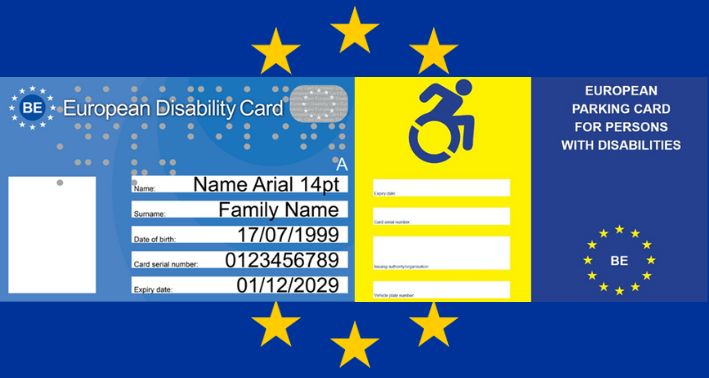
 

European Parliament gives final green light to European disability and parking cards


Specific award for authorities that facilitate safe localities and regions for women in all their diversity by combating violence against women:

  • Gold goes to the city of Ljubljana (Slovenia), which supports solidarity efforts, in partnership with civil society, to create a comprehensive support system on combating violence against women.
  • Silver goes to the city of Miranda de Ebro (Spain), which brings together policy makers, educators, social services and civil society, with the active participation of the women concerned, for example through an initiative involving the police and social services to provide safe and emergency accommodation for victims.
  • The bronze goes to the municipality of Växjö (Sweden) for its strategic planning in terms of funding, support and awareness raising, as well as for its special department dedicated to combating violence against women.


The Audience Award, who voted during the ceremony, goes to Corbetta (Italy).


More information: European Commission
Publicaciones relacionadas:

Women’s rights in the EU How is gender-based violence addressed in the EU? Almost 1 in 2 women in the EU have experienced psychological violence The Parliament’s fight for gender equality in the EU símbolo que representa a un hombre y una mujer en blanco y negroHow data accelerates progress towards equality and narrows the gender gap

Equality,  EU News,  Social Affairs 2024,  Capital Awards,  diversity,  Equality,  EU,  European Diversity Month,  Inclusión,  winners

“This is a space for debate. All comments, for or against publication, that are respectful and do not contain expressions that are discriminatory, defamatory or contrary to current legislation will be published”.

Reader Interactions

Leave a Reply Cancel reply

Your email address will not be published. Required fields are marked *

This site uses Akismet to reduce spam. Learn how your comment data is processed.

Primary Sidebar

Footer

  • CDE Almería
  • Biblioteca Nicolás Salmerón – Universidad de Almería
  • Planta: 1ª, Despacho: 1.05.0B.
  • Ctra. Sacramento s/n. Almería (Spain)
  • Teléfono: (+34) 950 015266

HOME
NEWS
DOCUMENTATION
EUROPE ON THE NET
ABOUT US

  • LEGAL NOTICE
  • PRIVACY POLICY
  • COOKIE POLICY
  • ACCESSIBILITY
  • SITEMAP

Copyright © 2026 CDE Almería · Creative Commons LicenseThis work is licensed under a Creative Commons Attribution-NonCommercial 4.0 International License.

<p>El Centro de Documentación Europea de la Universidad de Almería utiliza cookies propias y de terceros para facilitar al usuario la navegación en su página Web y el acceso a los distintos contenidos alojados en la misma. Asimismo, se utilizan cookies analíticas de terceros para medir la interacción de los usuarios con el sitio Web. Pinche el siguiente enlace si desea información sobre el uso de cookies y como deshabilitarlas. </p>

Politica de privacidad

El Centro de Documentación Europea de la Universidad de Almería utiliza cookies propias y de terceros para facilitar al usuario la navegación en su página Web y el acceso a los distintos contenidos alojados en la misma. Asimismo, se utilizan cookies analíticas de terceros para medir la interacción de los usuarios con el sitio Web. Pinche el siguiente enlace si desea información sobre el uso de cookies y como deshabilitarlas. <a href="/politica-de-cookies" rel="noopener" target="_blank">Más información</a>

Cookies estrictamente necesarias

Las cookies estrictamente necesarias tiene que activarse siempre para que podamos guardar tus preferencias de ajustes de cookies.

Básicamente la web no funcionara bien si no las activas.

Estas cookies son:

  • Comprobación de inicio de sesión.
  • Cookies de seguridad.
  • Aceptación/rechazo previo de cookies.
Cookies de terceros

Esta web utiliza Google Analytics, Google Tag Manager y Yandex Metrika para recopilar información anónima tal como el número de visitantes del sitio, o las páginas más populares.

Dejar estas cookies activas nos permite mejorar nuestra web.

Política de cookies

Pinche el siguiente enlace si desea información sobre el uso de cookies y como deshabilitarlas. Más información