• Skip to primary navigation
  • Skip to main content
  • Skip to primary sidebar
  • Skip to footer
  • Bluesky
  • Facebook
  • Instagram
  • Twitter
  • YouTube
CDE Almería – Centro de Documentación Europea – Universidad de Almería

CDE Almería - Centro de Documentación Europea - Universidad de Almería

Centro de Documentación Europea de la Universidad de Almería

  • HOME
  • WHAT´S ON
    • EU NEWS
    • Activities
    • EU Calls and Awards
    • Radio Program «Europe with You»
  • DOCUMENTATION
    • EU Media Collection
      • Web Space
      • MEDIATHEQUE REPOSITORY
  • Europe on the net
    • Institutions
    • EU Representation in Spain
    • European information network of Andalusia
  • ABOUT US
    • Presentation
    • Services
    • People
    • Contact
  • Spanish
  • English

The EU supports school feeding in Afghanistan for nearly 2 million girls and boys in primary school

Inicio » EU News » The EU supports school feeding in Afghanistan for nearly 2 million girls and boys in primary school

24 de October de 2023

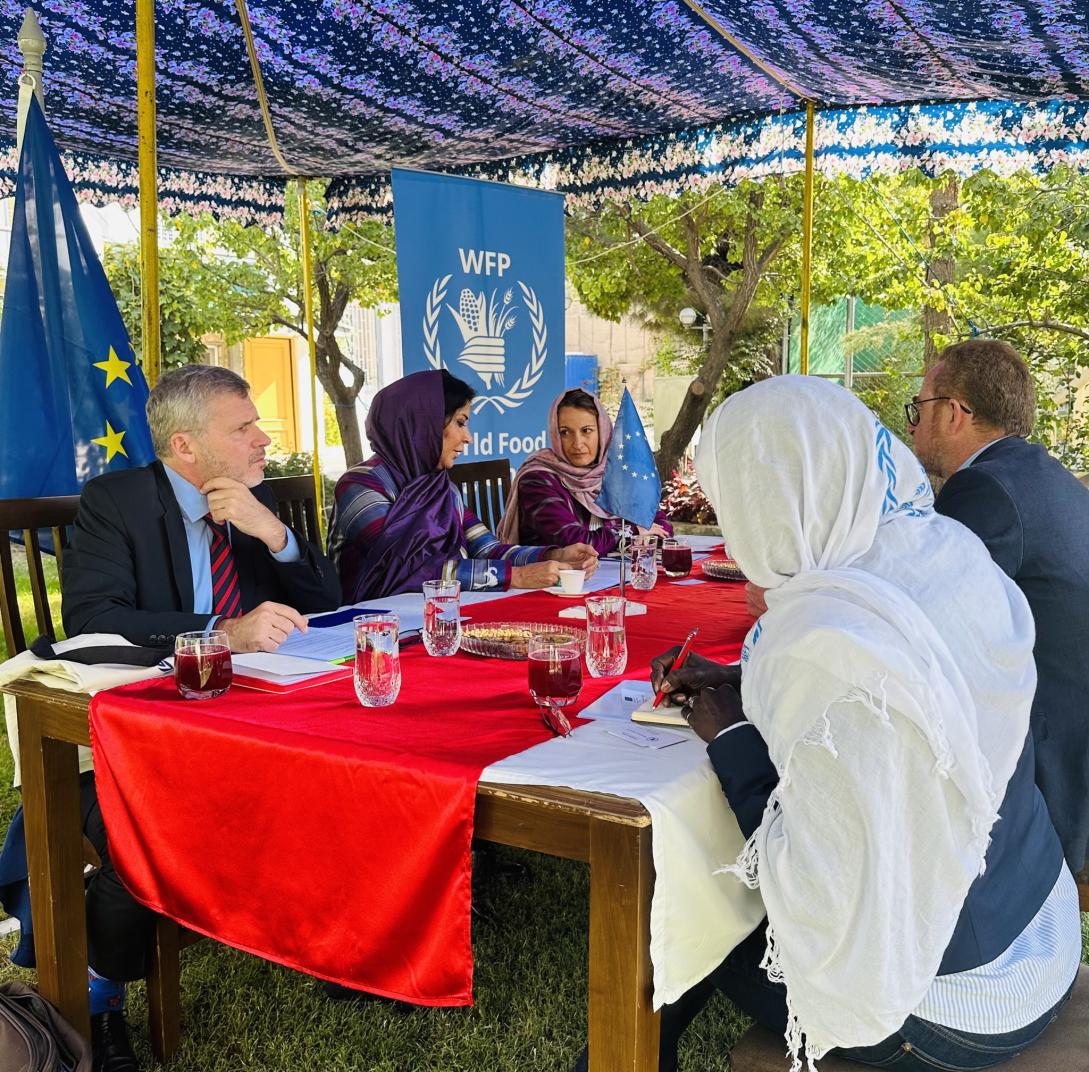
The European Union has announced an additional EUR 9.9 million to the United Nations World Food Programme (WFP) to support nearly 2 million primary school students in Afghanistan.

The European Union is allocating an additional EUR 9.9 million to the United Nations World Food Programme (WFP) to support nearly 2 million primary school students in Nangarhar, Nuristan, Ghor, Farah and Jawzjan provinces over two years. With this new funding WFP will be able to provide nearly 900,000 boys and more than 850,000 girls in primary school with nutritious school snacks.

“Learning with an empty stomach is hard. The school feeding programme in Afghanistan helps increase enrolment, attendance and retention in primary school, for boys and girls. School feeding improves learning abilities and the well-being of the children who are the next generation of Afghanistan”, said Raffaella Iodice, the EU Chargée d’Affaires a.i. to Afghanistan.

”Many children in Afghanistan come to school without breakfast and WFP’s school feeding programme provides their first meal of the day. School feeding is an important part of our activities in the country, where 15 million people – or one third of the population – do not know where their next meal will come from,” said Harald Mannhardt, Deputy Country Director of WFP Afghanistan.

Most of the school children – a planned 1.4 million – will receive locally produced fortified biscuits during their morning school break. One 100-gram roll of cookies contains 450 calories, along with fat, protein, and many important vitamins and minerals that are essential for children.

Some 340,000 additional children will receive a daily ration of bread made of wheat and soy flour, dried fruits and nuts, freshly baked in a local bakery that sources its ingredients from farmers in Afghanistan. In addition, 480,000 girl students will receive take-home rations of fortified vegetable oil that will also benefit their families.

Background

Launched in Afghanistan more than two decades ago, WFP’s school feeding programme aims to link food security and better nutrition with education among school-aged children. In 2022, WFP distributed school snacks to more than 700,000 girls and boys in primary school and more than 200,000 girls received take-home rations.

The European Union has been a steadfast supporter of primary school students through WFP’s school feeding programme. This latest addition follows a contribution of EUR 11 million towards WFP’s school
feeding programme for the years 2022 and 2023, thereby totalling over EUR 20 million for the last two years.

Source: Press release – Delegation of the European Union to Afghanistan

Publicaciones relacionadas:
New Erasmus+ programme in the European Union Welcome to Europe Day!! The European Commission fights against disinformation The European Union launches calls for education, research and innovation for 2023 – Colombia Mujeres afganas se manifiestan contra la opresión talibanaAfghanistan: Foreign Ministers’ statement on Taliban decision to ban women from universities


Education and Culture,  EU News,  Institutional Affairs,  International Politics and Cooperation,  Teaching and Education Afghanistan,  equality gender,  Financial Aid,  girls,  School,  women

“This is a space for debate. All comments, for or against publication, that are respectful and do not contain expressions that are discriminatory, defamatory or contrary to current legislation will be published”.

Reader Interactions

Leave a Reply Cancel reply

Your email address will not be published. Required fields are marked *

This site uses Akismet to reduce spam. Learn how your comment data is processed.

Primary Sidebar

Footer

  • CDE Almería
  • Biblioteca Nicolás Salmerón – Universidad de Almería
  • Planta: 1ª, Despacho: 1.05.0B.
  • Ctra. Sacramento s/n. Almería (Spain)
  • Teléfono: (+34) 950 015266

HOME
NEWS
DOCUMENTATION
EUROPE ON THE NET
ABOUT US

  • LEGAL NOTICE
  • PRIVACY POLICY
  • COOKIE POLICY
  • ACCESSIBILITY
  • SITEMAP

Copyright © 2026 CDE Almería · Creative Commons LicenseThis work is licensed under a Creative Commons Attribution-NonCommercial 4.0 International License.

<p>El Centro de Documentación Europea de la Universidad de Almería utiliza cookies propias y de terceros para facilitar al usuario la navegación en su página Web y el acceso a los distintos contenidos alojados en la misma. Asimismo, se utilizan cookies analíticas de terceros para medir la interacción de los usuarios con el sitio Web. Pinche el siguiente enlace si desea información sobre el uso de cookies y como deshabilitarlas. </p>

Politica de privacidad

El Centro de Documentación Europea de la Universidad de Almería utiliza cookies propias y de terceros para facilitar al usuario la navegación en su página Web y el acceso a los distintos contenidos alojados en la misma. Asimismo, se utilizan cookies analíticas de terceros para medir la interacción de los usuarios con el sitio Web. Pinche el siguiente enlace si desea información sobre el uso de cookies y como deshabilitarlas. <a href="/politica-de-cookies" rel="noopener" target="_blank">Más información</a>

Cookies estrictamente necesarias

Las cookies estrictamente necesarias tiene que activarse siempre para que podamos guardar tus preferencias de ajustes de cookies.

Básicamente la web no funcionara bien si no las activas.

Estas cookies son:

  • Comprobación de inicio de sesión.
  • Cookies de seguridad.
  • Aceptación/rechazo previo de cookies.
Cookies de terceros

Esta web utiliza Google Analytics, Google Tag Manager y Yandex Metrika para recopilar información anónima tal como el número de visitantes del sitio, o las páginas más populares.

Dejar estas cookies activas nos permite mejorar nuestra web.

Política de cookies

Pinche el siguiente enlace si desea información sobre el uso de cookies y como deshabilitarlas. Más información