• Skip to primary navigation
  • Skip to main content
  • Skip to primary sidebar
  • Skip to footer
  • Bluesky
  • Facebook
  • Instagram
  • Twitter
  • YouTube
CDE Almería – Centro de Documentación Europea – Universidad de Almería

CDE Almería - Centro de Documentación Europea - Universidad de Almería

Centro de Documentación Europea de la Universidad de Almería

  • HOME
  • WHAT´S ON
    • EU NEWS
    • Activities
    • EU Calls and Awards
    • Radio Program «Europe with You»
  • DOCUMENTATION
    • EU Media Collection
      • Web Space
      • MEDIATHEQUE REPOSITORY
  • Europe on the net
    • Institutions
    • EU Representation in Spain
    • European information network of Andalusia
  • ABOUT US
    • Presentation
    • Services
    • People
    • Contact
  • Spanish
  • English

The Commission decides to refer SPAIN to the Court of Justice of the European Union for failing to implement taxation rules set out by the Merger Directive

Inicio » EU News » Law » Jurisprudence » The Commission decides to refer SPAIN to the Court of Justice of the European Union for failing to implement taxation rules set out by the Merger Directive

24 de May de 2024

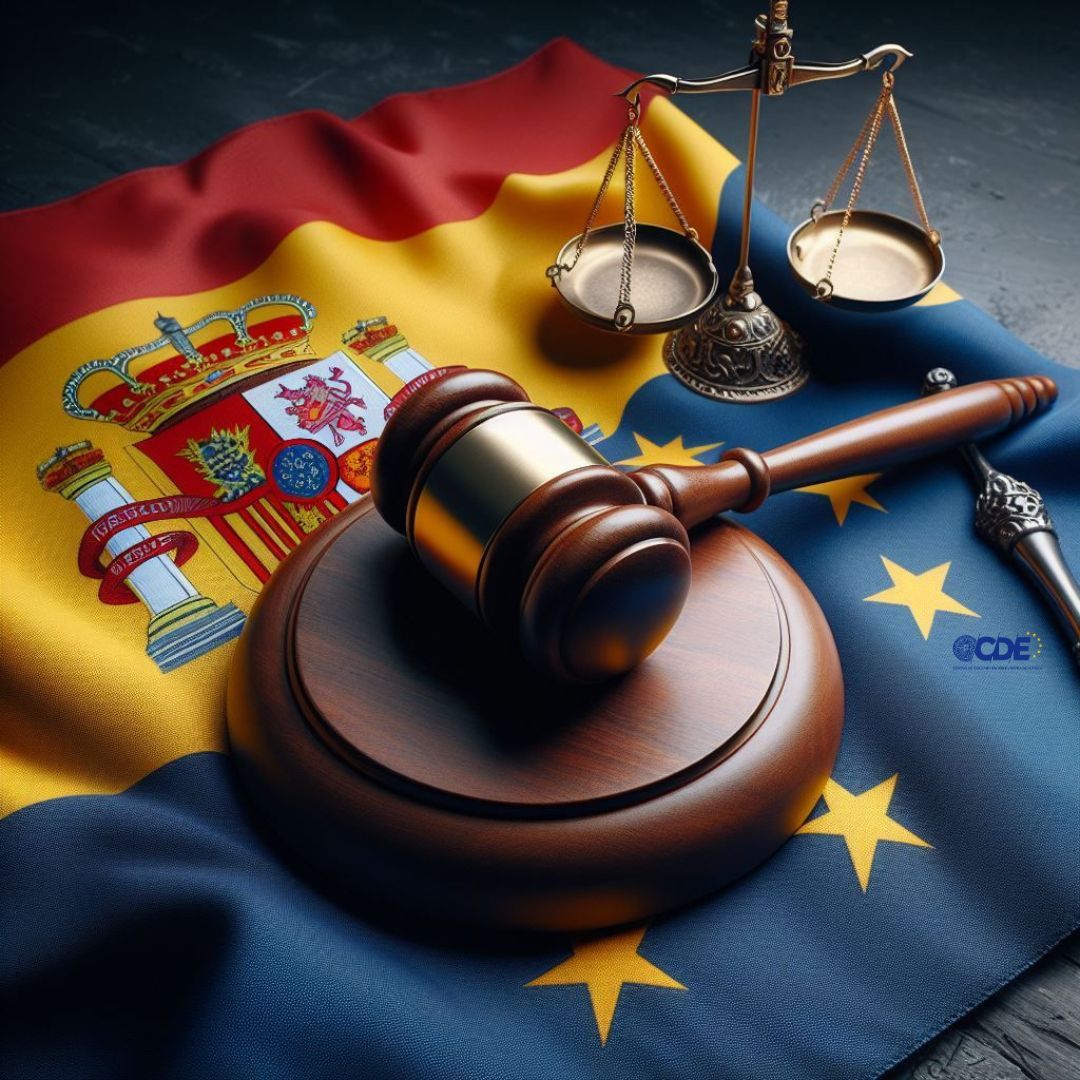
The European Commission decided to refer Spain to the Court of Justice of the European Union for failure to ensure correct implementation of the Merger Directive on the common system of taxation applicable to Member States (Directive 2009/133/EC). The objective of the Merger Directive is to remove fiscal obstacles to cross-border reorganisations involving companies situated in two or more Member States.

The Directive harmonizes rules on taxation that concern mergers, divisions, transfers of assets and exchanges of shares among companies across the internal market and EU Member States.

The Commission sent a letter of formal notice on 25 January 2019, followed by a reasoned opinion on 28 November 2019 to Spain. In its formal replies, and in subsequent exchanges with national authorities, Spain has maintained that its tax legislation is in line with the Merger Directive. The Commission considers that efforts by the Spanish authorities, to date have been insufficient and is therefore referring Spain to the Court of Justice of the European Union.

Background                                                             

The Merger Directive establishes a comprehensive framework for fair and consistent taxation practices and streamlines corporate restructuring processes thus bolstering competitiveness and stimulating economic growth across the EU.

Currently, Spanish law sets restrictive conditions for total divisions of companies that are not provided for in the Merger Directive: after the total division of a company, shareholders of the divided company have to maintain the same proportion of shares in each of the companies which received the assets from the divided company, that they formerly had in the divided company. If this condition is not met, the Spanish rules require that the assets and liabilities transferred are branches of activity and therefore do not benefit from the tax regime.

These conditions are not required by EU law and are therefore a violation of the Merger Directive.

An improper implementation of the Merger Directive by a Member State introduces a distortion that disrupts the internal market and contributes to legal uncertainty for companies.
Waste: Commission decides to refer SPAIN to the Court of Justice of the European Union for failure to apply the waste management requirements

More information: European Commission

Publicaciones relacionadas:

New EU fiscal rules approved by MEPs bandera españa europaApril infringement package: main decisions for Spain State aid: Commission to further facilitate implementation of aid measures promoting the green and digital transition Ursula Von der LeyenAn EU approach to enhance economic security European Commission backs Spain’s request for a targeted review of its recovery plan



Economy and Finance,  EU News,  Institutional Affairs,  Jurisprudence,  Law,  Market,  State Members Court of Justice of the European Union,  EU,  European Commission,  merger,  taxation

“This is a space for debate. All comments, for or against publication, that are respectful and do not contain expressions that are discriminatory, defamatory or contrary to current legislation will be published”.

Reader Interactions

Leave a Reply Cancel reply

Your email address will not be published. Required fields are marked *

This site uses Akismet to reduce spam. Learn how your comment data is processed.

Primary Sidebar

Footer

  • CDE Almería
  • Biblioteca Nicolás Salmerón – Universidad de Almería
  • Planta: 1ª, Despacho: 1.05.0B.
  • Ctra. Sacramento s/n. Almería (Spain)
  • Teléfono: (+34) 950 015266

HOME
NEWS
DOCUMENTATION
EUROPE ON THE NET
ABOUT US

  • LEGAL NOTICE
  • PRIVACY POLICY
  • COOKIE POLICY
  • ACCESSIBILITY
  • SITEMAP

Copyright © 2026 CDE Almería · Creative Commons LicenseThis work is licensed under a Creative Commons Attribution-NonCommercial 4.0 International License.

<p>El Centro de Documentación Europea de la Universidad de Almería utiliza cookies propias y de terceros para facilitar al usuario la navegación en su página Web y el acceso a los distintos contenidos alojados en la misma. Asimismo, se utilizan cookies analíticas de terceros para medir la interacción de los usuarios con el sitio Web. Pinche el siguiente enlace si desea información sobre el uso de cookies y como deshabilitarlas. </p>

Politica de privacidad

El Centro de Documentación Europea de la Universidad de Almería utiliza cookies propias y de terceros para facilitar al usuario la navegación en su página Web y el acceso a los distintos contenidos alojados en la misma. Asimismo, se utilizan cookies analíticas de terceros para medir la interacción de los usuarios con el sitio Web. Pinche el siguiente enlace si desea información sobre el uso de cookies y como deshabilitarlas. <a href="/politica-de-cookies" rel="noopener" target="_blank">Más información</a>

Cookies estrictamente necesarias

Las cookies estrictamente necesarias tiene que activarse siempre para que podamos guardar tus preferencias de ajustes de cookies.

Básicamente la web no funcionara bien si no las activas.

Estas cookies son:

  • Comprobación de inicio de sesión.
  • Cookies de seguridad.
  • Aceptación/rechazo previo de cookies.
Cookies de terceros

Esta web utiliza Google Analytics, Google Tag Manager y Yandex Metrika para recopilar información anónima tal como el número de visitantes del sitio, o las páginas más populares.

Dejar estas cookies activas nos permite mejorar nuestra web.

Política de cookies

Pinche el siguiente enlace si desea información sobre el uso de cookies y como deshabilitarlas. Más información