
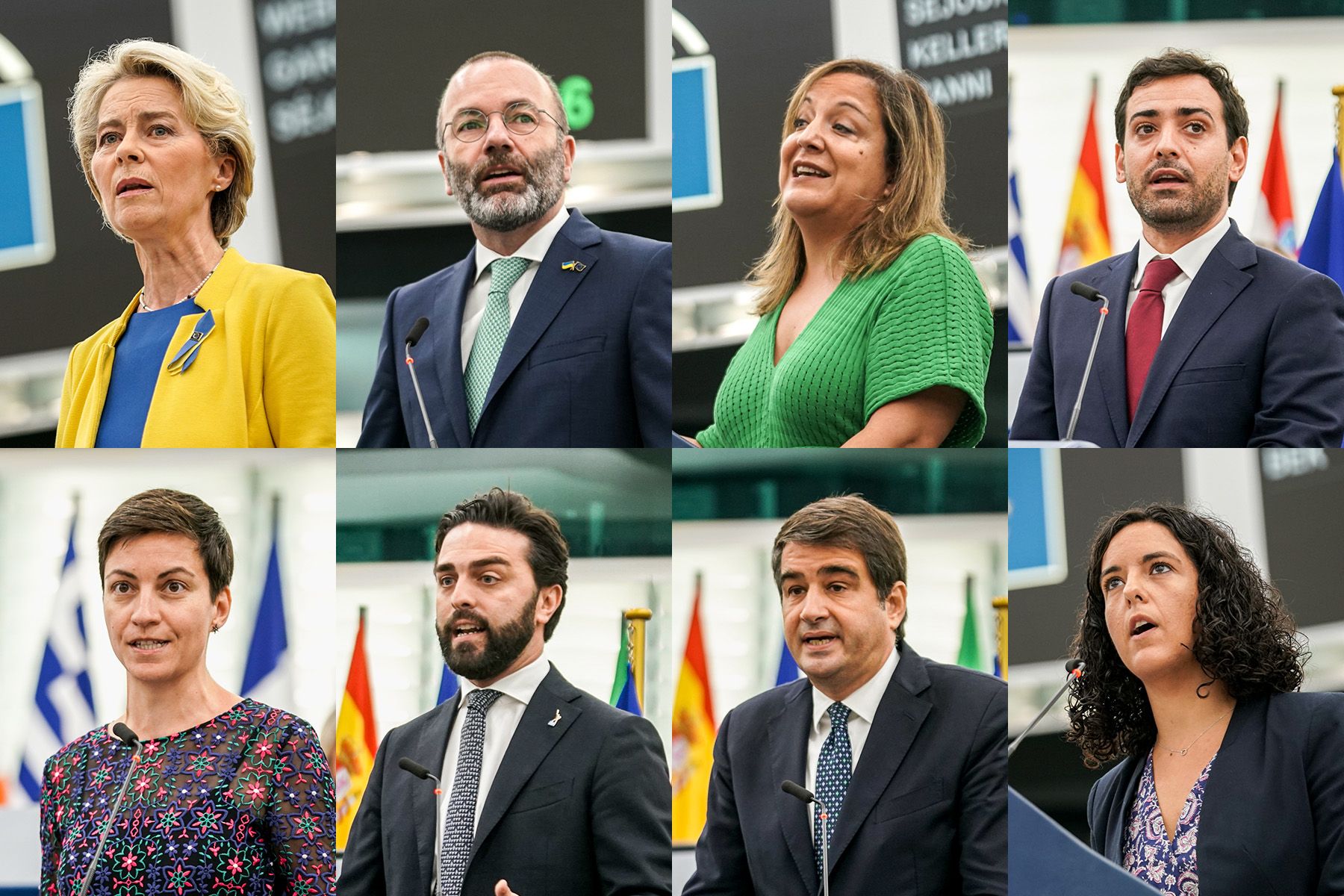
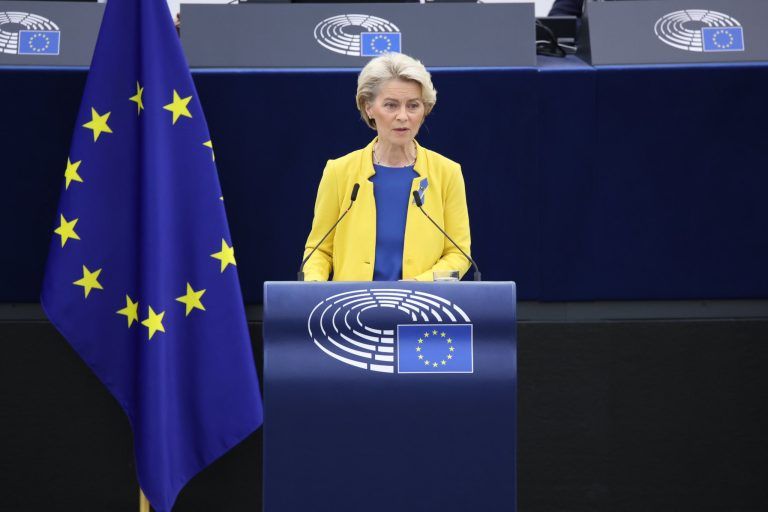
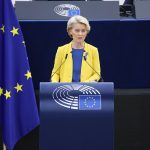
In the annual State of the European Union debate, MEPs quizzed President von der Leyen on the Commission’s work in the past year and its upcoming plans.
Opening the debate, EP President Roberta Metsola said: “It is a special honour to have Olena Zelenska with us on this important day. We are here against an alarming backdrop of an illegal and unjustifiable invasion of sovereign Ukraine, high inflation, energy and electricity price rises, a climate catastrophe, increased food insecurity and rising costs of living. Today our message must be that “Europe will respond”.”
On the war against Ukraine, Commission President von der Leyen stated: “Putin will fail and Europe will prevail.” She added that the sanctions against Russia “are here to stay.” Ms von der Leyen announced €100 million to restore damaged Ukrainian schools as well as bringing Ukraine into the EU’s free roaming area and the Single Market.
On soaring energy prices, the Commission will put forward measures for member states to reduce their electricity consumption and will propose a cap on the revenues of companies that produce electricity at a low cost to raise more than €140 billion to cushion the blow for citizens. She also announced a reform of the electricity market. Von der Leyen made clear that Putin is exclusively to blame for the current energy crisis and the price increases.
On the Conference on the Future of Europe, President von der Leyen promised that the Citizens’ Panels will now become a regular feature and that the moment for a European Convention has arrived.
Further topics the Commission President touched upon include fighting foreign interference to protect our democracies, closer cooperation with countries such as Chile, Mexico, New Zealand, Australia and India, and proposals for a European Sovereignty Fund, a European Critical Raw Materials Act, a European Hydrogen Bank and an SME Relief Package.
Interventions by the leaders of the political groups
Manfred Weber (EPP, DE) urged for a “winter of solidarity”: “We can beat Putin and lower people’s electricity bills”. On the new energy proposals, he deplored the Parliament’s diminished role and regretted the Council’s lack of leadership. He also asked for a moratorium on new legislation to avoid an additional burden on farmers and SMEs. Finally, he stressed that there is “no effort to coordinate the EU’s defence activities” and called on the “Commission to launch, before December, a European defence action plan”.
The EU’s commitment to Ukraine’s freedom and integrity must be firm, but besides celebrating wins, we need to support those who are suffering from the social and economic consequences of the war, said Iratxe García (S&D, ES). “If not, we will see populism grow”, she warned. Ms García welcomed the emergency energy proposals, particularly the use of the extraordinary profits made by energy companies, because “it is not acceptable that some become millionaires at the expense of families’ suffering”.
Stéphane Séjourné (Renew, FR), declared that Ukraine’s fight “is a fight for Europe’s values, it is our fight, the fight for the rule of law against the law of the strongest”. The EU has the means to respond quickly and effectively to the consequences of the war on European citizens, he said. He expressed support for measures to reduce energy prices and called for “all our dependencies, on food, raw materials, health, digital and defence infrastructures” to be reduced. Public policies should be aligned with the objective of strategic autonomy, he concluded.
“We must continue to support Ukraine and even scale up those efforts”, insisted Ska Keller (Greens/EFA, DE). However, solidarity within the EU also needs to increase. We must ensure that the costs of these times are carried by those with the broadest shoulders, she stressed. “Ultimately, the only way through this crisis is to use less energy and more renewable energy”. Ms Keller also called on the Commission to make sure that “no money is paid out to Poland and Hungary unless they return to the path of the rule of law.”
Marco Zanni (ID, IT) considered that the proposed measures “are nowhere near enough to bring concrete help to those who are suffering today”. “The cap on the price of gas -the only measure that will somehow help citizens and businesses (…) – is still being discussed”. Mr Zanni urged the Commission to consider that ‘the world has changed since 2019’ and that certain policies are no longer viable, as they have neither helped to protect the climate nor to achieve an industrial and socio-economic transition.
Raffaele Fitto (ECR, IT) called for the Atlantic Alliance to continue being strengthened and for sanctions to be maintained, which are the only means to achieve results. However, he emphasised the need to “ensure true unity” in the EU to be able to tackle “two big issues: that of energy and that of support for families and businesses”. We need clear answers, he insisted on “the gas price cap and the decoupling of the price between gas and energy”.
Manon Aubry (The Left, FR) highlighted that citizens cannot pay their bills any more. Salaries stagnate while prices rise with inflation and energy costs, but dividends go up and billionaires use their private jets, she deplored. Ms Aubry welcomed the announced excess profits tax for energy companies, saying that her group was always the only one to ask for such a tax, which needs to be paid by all enterprises that benefit from the crises.
Source: European Parliament

Leave a Reply