
Today, the Commission has published the State of the Energy Union Report 2024 which describes how the EU has managed unprecedented challenges in the energy policy landscape during this Commission’s mandate, equipping the EU with a regulatory framework for pursuing the clean energy transition and laying the foundations for renewed economic growth and competitiveness.
Crucially, over the past years, the EU has managed to withstand critical risks to its security of energy supply, regain control over the energy market and prices, and accelerate the transition towards climate neutrality:
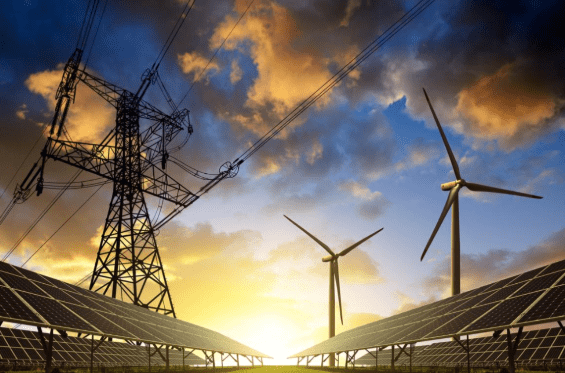
- Renewable energy generation is breaking new capacity records. In the first half of 2024, half of the EU’s electricity generation came from renewable sources.
- The share of Russian gas in EU imports dropped from 45% in 2021 to 18% by June 2024, while imports from trusted partners like Norway and the US have increased.
- We reduced gas demand between August 2022 and May 2024 by 138 billion cubic meters.
- The EU reached its 90% winter gas storage target on 19 August 2024, well ahead of the 1 November deadline.
- Energy prices are more stable and remain significantly below the peak levels of the energy crisis of 2022.
- The EU’s greenhouse gas emissions fell by 32.5% from 1990 to 2022, while the EU economy has grown by around 67% in the same period.
- At international level, the EU led the global initiative to triple renewable energy capacity and double energy efficiency improvements as part of the transition away from fossil fuels, which was endorsed by all Parties at COP28 in Dubai.
Significant progress has been made on renewable energy. Wind power overtook gas to become the EU’s second largest source of electricity behind nuclear, and by the first half of 2024 renewables generated 50% of electricity in the EU. In 2022 the EU’s primary energy consumption renewed its downward trend, falling by 4.1%. Nevertheless, energy efficiency efforts will need to be stepped up further for the EU to meet the 11.7% final energy consumption reduction target by 2030. Further improvement is needed, not least in the electrification of heating equipment across the board and the rate of renovation of buildings. Strengthened efforts are needed to address high energy prices. This is key to improve the competitiveness of EU industry, and to accelerate investments in Europe’s integrated infrastructure networks, which are essential for the electrification of the European economy.
The report recalls that all Member States must submit their final updated National Energy and Climate Plans as soon as possible, to ensure collective achievement of the 2030 energy and climate goals. The assessment of the draft updated NECPs published in December 2023 shows that Member States have taken a step in the right direction, but this is not yet sufficient to reduce net greenhouse gas emissions by at least 55% by 2030 and they need to take into account the Commission’s recommendations for their final Plans. Today, the Commission also published a report on the functioning of the Regulation on the Governance of the Energy Union and Climate Action, which concludes that the regulation is playing an important role in keeping the EU on track to meet its 2030 targets by making planning and reporting more coherent, integrated, and simpler.
New and emerging challenges will need to be addressed in the future, such as the current ambition gap in renewables and energy efficiency targets, the increase of energy poverty, the energy price differential compared to other global competitors, and the risk of new strategic critical dependencies. They will require a decisive policy response and a step change in efforts at EU and Member State level, through more coordination, market integration and joint action.
The EU has continued to stand by Ukraine in the face of relentless Russian attacks on its energy system. The synchronisation of the Ukrainian and Moldovan grids with the Continental European Network helped stabilise Ukraine’s electricity system and the capacity for electricity exchanges has now reached 1.7 GW for commercial trade. It also enables Ukraine to benefit from emergency imports. By 31 July 2024, over 40% of all donations from Member States were dedicated to the energy sector, with the Union Civil Protection Mechanism’s total contribution estimated at over €900 million. The Ukraine Energy Support Fund (UESF) also mobilised over €500 million by June 2024. In addition, the EU’s €50 billion Ukraine Facility will provide consistent funding to aid Ukraine’s recovery and sustainable economic growth up to 2027.
Enhancing energy security and competitiveness
EU manufacturers face growing competition in net-zero technologies on global and domestic markets. The Report recalls the importance of the Net-Zero Industry Act and the Critical Raw Materials Act, alongside the reform of the Electricity Market Design to face these challenges. Today’s report also recognises the need to build on partnerships with industry to accelerate the development of net-zero technologies and strengthen the EU’s manufacturing base. Industrial alliances such as the European Battery Alliance, European Clean Hydrogen Alliance, Solar PV Industry Alliance, Renewable and Low-Carbon Fuels value chain Industrial Alliance and Alliance on Small Modular Reactors will play an important role. The Commission’s clean transition dialogues with industry and social partners will support the implementation of the European Green Deal.
The Innovation Fund, with its estimated budget of around €40 billion until 2030, also plays a crucial role. The European Hydrogen Bank, financed from the EU ETS Innovation Fund, is up and running and has conducted a first successful round of EU auctions awarding nearly €720 million to 7 renewable hydrogen projects in Europe.
Empowering consumers in the clean transition
With new energy market legislation, such as the reformed Electricity Market Design, the most vulnerable will be better protected from disconnection. In case of a natural gas price crisis, Member States can introduce measures to protect consumers and ensure access to affordable energy and essential social services. This includes through interventions on price settings at retail level to shield consumers from excessively high prices.
The Social Climate Fund will also be a key instrument, to mobilise at least €86.7 billion for 2026-2032, financed from ETS revenues and at least 25% Member State co-funding. The Fund will support structural measures and investments in energy efficiency renovations, access to affordable and energy-efficient housing, clean heating and cooling and integration of renewable energy as well as in zero- and low-emission mobility and transport. There is also an option to provide temporary direct income support.
Background
This report is published each year to take stock of the EU’s progress towards the objectives of the Energy Union. Following last year State of the Energy Union report dealing with the challenges and achievements in 2020-2023, this year’s report gives an update on how the EU successfully acted on unprecedented developments and challenges in the last year of this Commission’s mandate.
The first part of the report shows how the high energy and climate ambition under the European Green Deal provided the basis for the EU’s crisis response strategy and the REPowerEU Plan. It also outlines steps to enhance the competitiveness of European industry. The second part analyses the state of play in the implementation of the Energy Union in all its five dimensions: (1) security, solidarity and trust; (2) a fully integrated internal energy market; (3) energy efficiency; (4) climate action and decarbonising the economy; and (5) research, innovation and competitiveness. This year’s report is accompanied by an annex containing information on voluntary and national schemes on bioenergy in the Member States.
Source: European Comission
Publicaciones relacionadas:
 Commission invests EUR 3 billion in innovative clean technology projects to accelerate energy independence
 GEOTHERMICA, the new European initiative
 BSO – Tracking energy in our buildings
 Energy security in the EU
 EU greenhouse gas emissions kept decreasing in 2018, largest reductions in energy sector
Leave a Reply