• Skip to primary navigation
  • Skip to main content
  • Skip to primary sidebar
  • Skip to footer
  • Bluesky
  • Facebook
  • Instagram
  • Twitter
  • YouTube
CDE Almería – Centro de Documentación Europea – Universidad de Almería

CDE Almería - Centro de Documentación Europea - Universidad de Almería

Centro de Documentación Europea de la Universidad de Almería

  • HOME
  • WHAT´S ON
    • EU NEWS
    • Activities
    • EU Calls and Awards
    • Radio Program «Europe with You»
  • DOCUMENTATION
    • EU Media Collection
      • Web Space
      • MEDIATHEQUE REPOSITORY
  • Europe on the net
    • Institutions
    • EU Representation in Spain
    • European information network of Andalusia
  • ABOUT US
    • Presentation
    • Services
    • People
    • Contact
  • Spanish
  • English

Proxy voting in Parliament’s plenary during pregnancy and after childbirth

Inicio » EU News » Social Affairs » Equality » Proxy voting in Parliament’s plenary during pregnancy and after childbirth

5 de November de 2025

The Committee on Constitutional Affairs has put forward a proposal to allow MEPs to vote in plenary by proxy during pregnancy and in the months following childbirth.

The proposal, seeks to introduce a clearly defined exception to the current rule that all votes in Parliament’s plenary sessions must be cast personally. This would allow Members who are temporarily unable to attend plenary sessions due to upcoming or recent childbirth, to exercise their citizen-given mandates in full. The legislative initiative report was adopted by 28 votes in favour, one against and without abstentions, while the accompanying resolution received 26 votes in favour and four against, without abstentions.

Under the proposed targeted revision to the EU Electoral Act, a member who is pregnant or has given birth would be able to delegate their plenary voting rights to another MEP for a maximum of three months before the estimated date of birth and six months after.

This voluntary arrangement is designed to reconcile the principle of personal voting with the need for inclusion and equality in political representation. MEPs also want to set an example for national legislatures and to strengthen democratic legitimacy through fairer participation conditions.

Quote

Rapporteur Juan Fernando López Aguilar (S&D, ES), commented: “No elected representative should ever have to choose between their vote and their child. Introducing proxy voting for MEPs on maternity leave strengthens democratic representation and ensures that voters’ voices continue to be heard in the months before and after childbirth. This measure also gives fresh momentum to the ongoing, ambitious reform of the Electoral Act and supports our broader goal of promoting gender equality and work–life balance by encouraging parents to participate fully in political life”.

Next steps

Parliament’s plenary is set to vote on the proposal during its upcoming session in Brussels on 12 – 13 November. The text will then be submitted to Council for unanimous approval by the member states. If modified, the new draft law will need to be approved by more than half of sitting MEPs. Finally, for the new rules to enter into force, all EU countries will have to approve them in line with their respective constitutional procedures.

Background

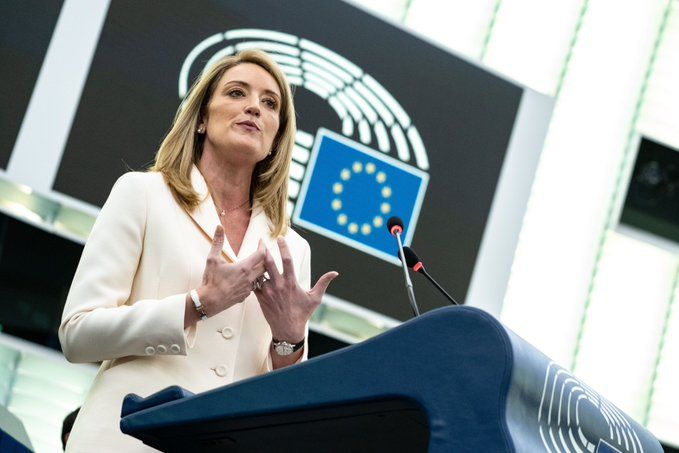
The proposal, initiated aby EP President Roberta Metsola earlier this year, reflects Parliament’s long-standing commitment to promote gender equality and modern working standards in representative institutions.

More information: European Parliament

Publicaciones relacionadas:

The Parliament’s fight for gender equality in the EU European Parliament moves to improve maternity provisions for its Members The EU has been awarded for its strategy on gender equality LGBTIQ rights in Hungary: debate with Council and Commission How is gender-based violence addressed in the EU?

Equality,  EU News,  Social Affairs childbirth,  EU,  European Parliament,  gender equality,  MEPs,  News,  pregnancy,  proposal,  proxy,  Roberta Metsola,  vote

“This is a space for debate. All comments, for or against publication, that are respectful and do not contain expressions that are discriminatory, defamatory or contrary to current legislation will be published”.

Reader Interactions

Leave a Reply Cancel reply

Your email address will not be published. Required fields are marked *

This site uses Akismet to reduce spam. Learn how your comment data is processed.

Primary Sidebar

Footer

  • CDE Almería
  • Biblioteca Nicolás Salmerón – Universidad de Almería
  • Planta: 1ª, Despacho: 1.05.0B.
  • Ctra. Sacramento s/n. Almería (Spain)
  • Teléfono: (+34) 950 015266

HOME
NEWS
DOCUMENTATION
EUROPE ON THE NET
ABOUT US

  • LEGAL NOTICE
  • PRIVACY POLICY
  • COOKIE POLICY
  • ACCESSIBILITY
  • SITEMAP

Copyright © 2026 CDE Almería · Creative Commons LicenseThis work is licensed under a Creative Commons Attribution-NonCommercial 4.0 International License.

<p>El Centro de Documentación Europea de la Universidad de Almería utiliza cookies propias y de terceros para facilitar al usuario la navegación en su página Web y el acceso a los distintos contenidos alojados en la misma. Asimismo, se utilizan cookies analíticas de terceros para medir la interacción de los usuarios con el sitio Web. Pinche el siguiente enlace si desea información sobre el uso de cookies y como deshabilitarlas. </p>

Politica de privacidad

El Centro de Documentación Europea de la Universidad de Almería utiliza cookies propias y de terceros para facilitar al usuario la navegación en su página Web y el acceso a los distintos contenidos alojados en la misma. Asimismo, se utilizan cookies analíticas de terceros para medir la interacción de los usuarios con el sitio Web. Pinche el siguiente enlace si desea información sobre el uso de cookies y como deshabilitarlas. <a href="/politica-de-cookies" rel="noopener" target="_blank">Más información</a>

Cookies estrictamente necesarias

Las cookies estrictamente necesarias tiene que activarse siempre para que podamos guardar tus preferencias de ajustes de cookies.

Básicamente la web no funcionara bien si no las activas.

Estas cookies son:

  • Comprobación de inicio de sesión.
  • Cookies de seguridad.
  • Aceptación/rechazo previo de cookies.
Cookies de terceros

Esta web utiliza Google Analytics, Google Tag Manager y Yandex Metrika para recopilar información anónima tal como el número de visitantes del sitio, o las páginas más populares.

Dejar estas cookies activas nos permite mejorar nuestra web.

Política de cookies

Pinche el siguiente enlace si desea información sobre el uso de cookies y como deshabilitarlas. Más información