• Skip to primary navigation
  • Skip to main content
  • Skip to primary sidebar
  • Skip to footer
  • Bluesky
  • Facebook
  • Instagram
  • Twitter
  • YouTube
CDE Almería – Centro de Documentación Europea – Universidad de Almería

CDE Almería - Centro de Documentación Europea - Universidad de Almería

Centro de Documentación Europea de la Universidad de Almería

  • HOME
  • WHAT´S ON
    • EU NEWS
    • Activities
    • EU Calls and Awards
    • Radio Program «Europe with You»
  • DOCUMENTATION
    • EU Media Collection
      • Web Space
      • MEDIATHEQUE REPOSITORY
  • Europe on the net
    • Institutions
    • EU Representation in Spain
    • European information network of Andalusia
  • ABOUT US
    • Presentation
    • Services
    • People
    • Contact
  • Spanish
  • English

Melting Greenland ice sheet will lead to higher sea level rise than previously predicted

Inicio » EU News » Research and Innovation » Melting Greenland ice sheet will lead to higher sea level rise than previously predicted

10 de March de 2021

New research has shown that the Greenland ice sheet will melt 60 % more by 2100 than scientists had thought, pushing rising sea levels from 10 cm to 18 cm.
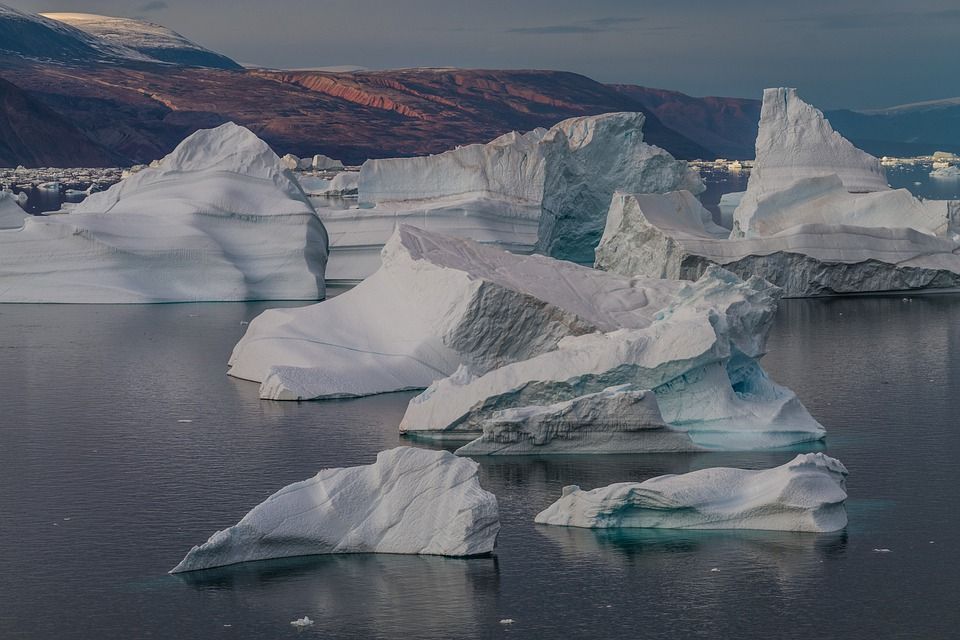
Spanning an area of about 1.8 million km2, the Greenland ice sheet is the largest body of ice in the northern hemisphere, and the second largest in the world after the Antarctic ice sheet. In light of the serious implications of ice loss for the global climate, scientists have been studying the Greenland ice sheet to determine how much it’s likely to melt and how this will actually affect sea levels. A new study supported by the EU-funded MC2 and PROTECT projects has now concluded that the ice sheet is likely to melt about 60 % more by 2100 than previously predicted. This means that sea levels could rise approximately 8 cm higher than earlier estimates used in Intergovernmental Panel on Climate Change (IPCC) reports. The study, whose results were obtained using multiple climate models, has been published in the journal ‘Nature Communications’. One of the climate models used in the research is the Modéle Atmosphérique Régional, or MAR. “While our MAR model suggested that in 2100 the surface melting of the Greenland ice sheet would contribute to a rise in the oceans of around ten centimetres in the worst-case scenario (i.e. if we do not change our habits), our new projections now suggest a rise of 18 cm,” stated Stefan Hofer of MC2 project coordinator University of Oslo in a news item posted on the ‘ScienceDaily’ website.

More information

European Comission – News

Publicaciones relacionadas:

Local traffic data and how it gives more power to citizens Artificial intelligence solves 50-year-old biology mystery Unravelling the secrets hidden inside the TRAPPIST-1 planets Particle physics milestone achieved at CERN Conference on the Future of Europe: launch of the multilingual digital platform


EU News,  Research and Innovation Climate Change,  European Comission,  iceberg

“This is a space for debate. All comments, for or against publication, that are respectful and do not contain expressions that are discriminatory, defamatory or contrary to current legislation will be published”.

Reader Interactions

Leave a Reply Cancel reply

Your email address will not be published. Required fields are marked *

This site uses Akismet to reduce spam. Learn how your comment data is processed.

Primary Sidebar

Footer

  • CDE Almería
  • Biblioteca Nicolás Salmerón – Universidad de Almería
  • Planta: 1ª, Despacho: 1.05.0B.
  • Ctra. Sacramento s/n. Almería (Spain)
  • Teléfono: (+34) 950 015266

HOME
NEWS
DOCUMENTATION
EUROPE ON THE NET
ABOUT US

  • LEGAL NOTICE
  • PRIVACY POLICY
  • COOKIE POLICY
  • ACCESSIBILITY
  • SITEMAP

Copyright © 2026 CDE Almería · Creative Commons LicenseThis work is licensed under a Creative Commons Attribution-NonCommercial 4.0 International License.

<p>El Centro de Documentación Europea de la Universidad de Almería utiliza cookies propias y de terceros para facilitar al usuario la navegación en su página Web y el acceso a los distintos contenidos alojados en la misma. Asimismo, se utilizan cookies analíticas de terceros para medir la interacción de los usuarios con el sitio Web. Pinche el siguiente enlace si desea información sobre el uso de cookies y como deshabilitarlas. </p>

Politica de privacidad

El Centro de Documentación Europea de la Universidad de Almería utiliza cookies propias y de terceros para facilitar al usuario la navegación en su página Web y el acceso a los distintos contenidos alojados en la misma. Asimismo, se utilizan cookies analíticas de terceros para medir la interacción de los usuarios con el sitio Web. Pinche el siguiente enlace si desea información sobre el uso de cookies y como deshabilitarlas. <a href="/politica-de-cookies" rel="noopener" target="_blank">Más información</a>

Cookies estrictamente necesarias

Las cookies estrictamente necesarias tiene que activarse siempre para que podamos guardar tus preferencias de ajustes de cookies.

Básicamente la web no funcionara bien si no las activas.

Estas cookies son:

  • Comprobación de inicio de sesión.
  • Cookies de seguridad.
  • Aceptación/rechazo previo de cookies.
Cookies de terceros

Esta web utiliza Google Analytics, Google Tag Manager y Yandex Metrika para recopilar información anónima tal como el número de visitantes del sitio, o las páginas más populares.

Dejar estas cookies activas nos permite mejorar nuestra web.

Política de cookies

Pinche el siguiente enlace si desea información sobre el uso de cookies y como deshabilitarlas. Más información