
The second EU-Moldova Summit marked a further step forward in relations between the EU and the Republic of Moldova and highlighted the country’s remarkable progress on its path towards the EU. The President of the European Commission, Ursula von der Leyen, the President of the European Council, António Costa, and the President of Moldova, Maia Sandu, met in Brussels a week after the historic launch of the first working group in the accession negotiations.
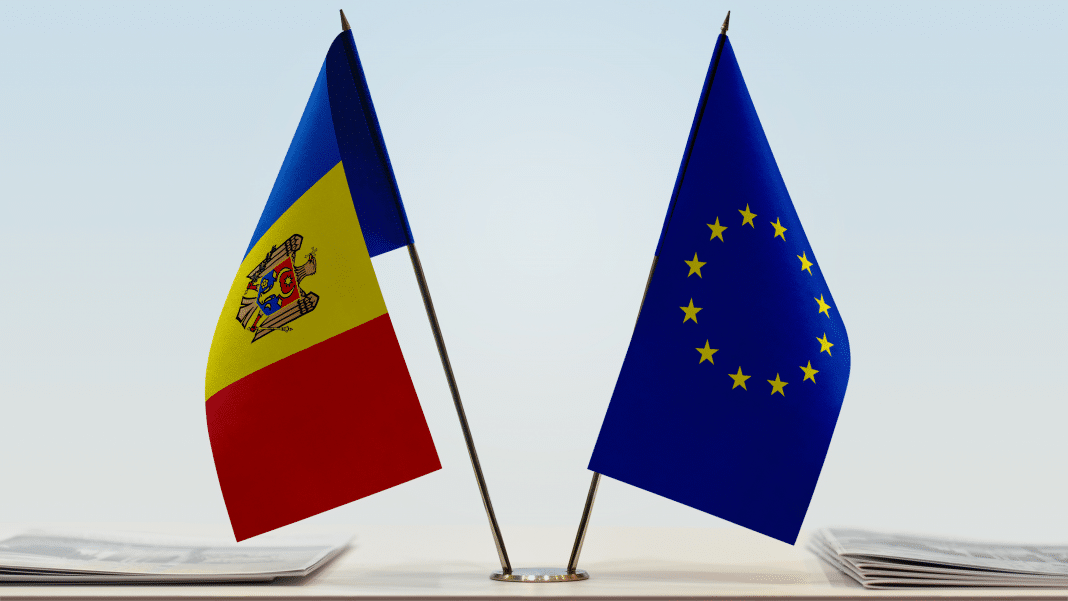
During the summit, the leaders focused on the next steps in Moldova’s accession process and on deepening its gradual integration into the European Union. They also took stock of the implementation of Moldova’s Growth Plan and related reforms.
President von der Leyenstated:“Moldova belongs in the European Union. The courage, determination and commitment of its people bring the country closer to our Union every day. Europe stands with Moldova: for reform, for opportunities and for a shared future of peace, freedom, democracy and prosperity.”
Providing solutions for citizens and businesses.
Moldova’s strong track record of reforms has already secured some €504 million in EU support under the Growth Plan and is delivering tangible benefits for citizens through strategic investments. During the Summit, a new investment of 232.7 million euros was announced, backed by the EU and earmarked for the rehabilitation of the Porumbrei–Comrat road, also under the Growth Plan.
The leaders welcomed the progress made in Moldova’s gradual integration into the EU, particularly through its participation in the Single Euro Payments Area (SEPA), the ‘Roam Like at Home’ programme andtheCreative Europe initiative. These significant advances achieved over the past year are facilitating euro transfers, eliminating roaming charges and bringing Moldova and its people closer to the EU. To further strengthen people-to-people contacts, the Commission supports Moldova’s full participation in thenextErasmus programmeand plans to extendtheDiscoverEUrailpassschemeto young Moldovans in 2027.
Deepening cooperation on security and defence.
The leaders addressed regional and global challenges, including the consequences of Russia’s war of aggression against Ukraine. They reaffirmed their commitment to strengthening Moldova’s resilience, security and democratic institutions.
In this context, a new support package worth 11 million euros will bolster Moldova’s resilience to hybrid attacks, and an investment of 17 million euros in border infrastructure will contribute to Moldova’s security and territorial integrity.
The leaders reaffirmed the key role of the EU Partnership Mission in Moldova in strengthening the country’s resilience to hybrid threats. The EU is also committed to providing support through the relevant initiatives of the European Shield for Democracy. It continues to support Moldova in combating actions aimed at destabilising, undermining or threatening its sovereignty and independence, including actions seeking to subvert its democratic processes. Last week, it imposed restrictive measures against six individuals responsible for such actions.
Moldova is the second-largest recipient of support from the European Peace Fund, with a total of €197 million committed to date. EU support will continue into 2026 with another similar aid package currently being prepared.
Fund
Thefirst EU–MoldovaSummittook place in July 2025.
Moldova has been an EU candidate country since June 2022. On 15 June 2026, the EU formally opened the first negotiating chapter of the accession process after Moldova had met the initial requirements.
In March 2025, the EU approved the Growth Plan for Moldova, worth 1,900 million euros and supported by the Reform and Growth Facility for the period 2025–2027. This is the largest package of EU financial support ever granted to the country. To date, Moldova has received approximately €504 million under this mechanism.
The EU supports Moldova’s social development. Since 2021, more than €16 million has been mobilised through Erasmus to support cooperation with Moldova in the fields of education, training, youth and sport. In January 2026, MoldovajoinedCreative Europe, the European Union’s flagship programme to support the cultural and creative sectors.
Moldova’s gradual integration into the EU’s single market is already underway. Since October 2025, Moldova has been part of SEPA, and Moldovan citizens have been benefiting from the ‘Roam Like at Home’ programme since January 2026. Improved market access for various agricultural products has further strengthened Moldova’s economic integration with the EU.
More information: European Commission.
Publicaciones relacionadas:
 EU-Western Balkans Summit highlights enlargement as a strategic investment in Europe’s peace, stability and security
 Europe-Japan cooperation in AI-based manufacturing technologies
 EU and Moldova forge deeper ties at historic first Summit in Chișinău
EU and Moldova reach agreement on a modernised trade relationship
EU and Moldova forge deeper ties at historic first Summit in Chișinău
EU and Moldova reach agreement on a modernised trade relationship
 Commission provides €1 billion in macro-financial assistance to Egypt
Leave a Reply