
The EU and Moldova have reached an agreement to review and update the trade terms of the EU-Moldova Deep and Comprehensive Free Trade Area (DCFTA). This marks an important step towards building a stable, long-term and balanced trade relationship, especially as Moldova advances on its path towards EU membership.
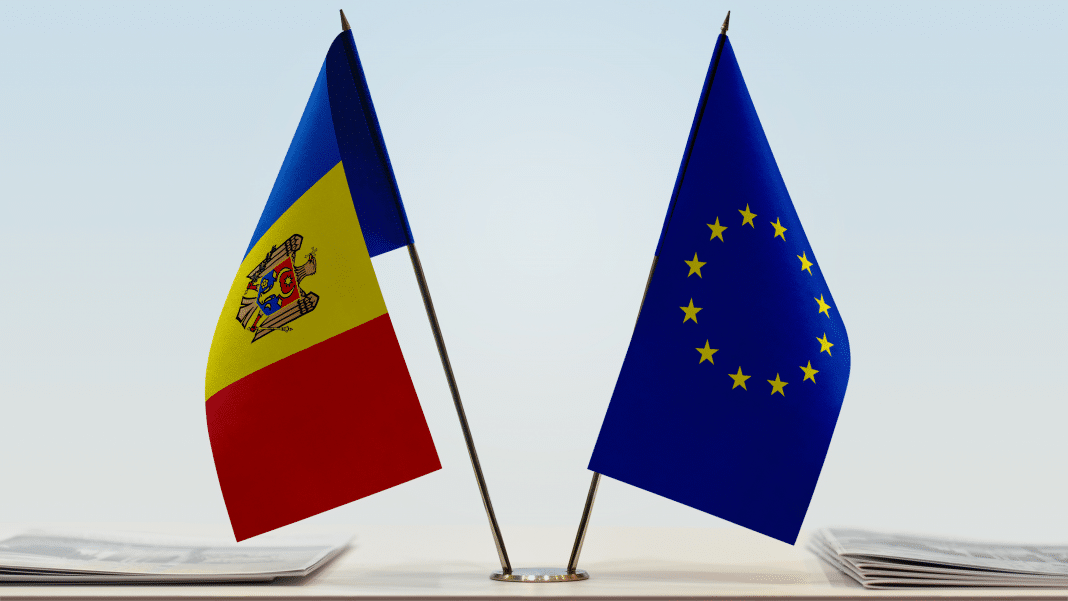
The updated agreement aims to support Moldova’s European ambitions while also being mindful of EU interests, mirroring other trade agreements.
While most Moldovan exports already benefit from duty-free access under the existing EU-Moldova Association Agreement, the revised terms offer further opportunities for both sides, while taking into account the sensitivities of certain agricultural sectors.
The EU has agreed to increase access for the Moldovan agricultural exports not yet liberalised:
- Plums, table grapes, apples and cherries: Tariff rate quotas will be increased to reflect recent trade volumes and Moldova’s integration into the EU economy. They will also allow for greater exports, while also ensuring that Moldovan exporters can continue to export at least the same quantities as they did under the autonomous trade measures (ATMs).
- Grape juice, tomatoes and garlic: Imports of these products will be free of duty (except the specific element of the entry price system for tomatoes).
For its part, Moldova has agreed to improve access for certain EU agricultural exports: quotas will be increased for pork and poultry, and new tariff quotas will be offered for frozen boneless meat, milk and butter.
New market access for Moldovan products is conditional on the gradual alignment of Moldova to relevant EU production standards, such as the use of pesticides. This approach is consistent with the logic of Moldova’s EU accession process and the adoption of the EU acquis.
Both sides will have the possibility to activate a safeguard mechanism enabling the adoption of appropriate measures in case imports cause adverse effects to either party. In the EU’s case, the assessment of a possible disturbance can be done at the level of one or more Member States.
The agreement includes a review planned for 2027. This will consider Moldova’s progress towards EU membership, how well its market is integrating with the EU, how much of the agreed trade quotas have been used and how production and import capacities have evolved. It will also consider the interests and sensitivities of both sides.
Next steps
Member States and the European Parliament will be informed about the details of the agreement in the coming days.
Subject to final legal revision of the agreement, the EU and Moldova will proceed with their respective procedures for the formal endorsement of the reviewed DCFTA.
On the EU side, the Commission will adopt in the coming days a proposal for a decision of the Council, for it to endorse the agreement. The agreement will then be formally adopted by the EU-Moldova Association Committee.
As the ATMs expire today (24 July 2025) and pending the entry into force of the reviewed DCFTA, trade will continue under the current DCFTA terms.
Background
The EU and Moldova signed an Association Agreement in June 2014 and the agreement has been in full effect since July 2016. The Deep and Comprehensive Free Trade Area is an integral part of the Agreement. It provides for duty-free access for most Moldovan products, and it reduces tariffs that European firms face when exporting to Moldova and makes customs procedures more efficient. In addition, the agreement further facilitates trade by gradual approximation of Moldovan legislation, rules and procedures, including standards, to those of the EU.
On 25 July 2022, the EU put in place ATMs to support Moldova’s economy, which has been affected by Russia’s war against Ukraine. The conflict disrupted Moldova’s traditional export routes, many of which depended on transit through Ukraine. The ATMs were renewed twice and expired on 24 July 2025.
The ATMs helped Moldova reorient its trade towards the EU by providing practical support. As a result, Moldovan exports to the EU rose, from €1.8 billion in 2021 to €2.2 billion in 2024.
The Commission has consistently aimed to agree on longer term reciprocal tariff liberalisation with Moldova, ensuring a seamless transition to a new framework in which all trade arrangements are integrated into the renewed DCFTA regime.
More information: European Commission
Publicaciones relacionadas:
 EU and Moldova forge deeper ties at historic first Summit in Chișinău
 Commission advances on the modernisation of EU-Switzerland relations
 EU and Ukraine reach agreement in principle on a modernised trade relationship
 EU and Mongolia hold Joint Committee in Ulaanbaatar
 EU and Japan reinforce tech and digital partnership
Leave a Reply