
On Tuesday 19 May, the European Commission adopted the Fertiliser Action Plan: an initiative to support farmers facing rising costs and fertiliser shortages, boost domestic production and reduce Europe’s dependence on imports. The Plan will contribute directly to ensuring food security and strengthening Europe’s strategic autonomy, whilst pursuing ambitious climate and environmental goals.
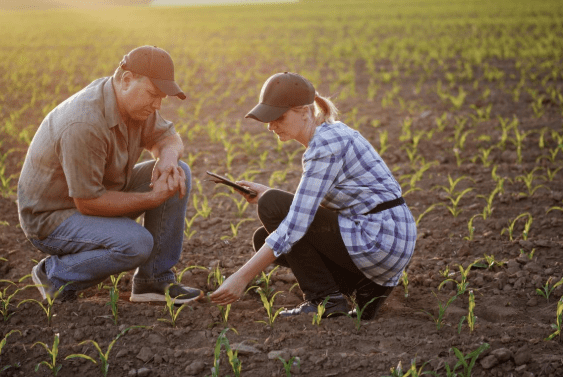
Recent supply disruptions and price volatility have placed farmers across Europe under increasing pressure, highlighting the continent’s vulnerability to external disruptions in the supply of fertilisers. Building on theCommunication on Fertilisersadopted in 2022, the current Fertiliser Action Plan combines immediate support measures aimed at ensuring affordability and security of supply with long-term actions to strengthen domestic fertiliser production, improve supply resilience and accelerate the transition towards bio-based, low-carbon and circular fertilisers.
The President of the European Commission, Ursula von der Leyen, stated:“With this Action Plan, we are investing in a stronger European fertiliser industry, supporting European farmers and accelerating innovation in sustainable and domestically produced solutions. The current fossil fuel crisis shows that climate leadership and economic resilience are intertwined. That is why Europe is building a future based on sustainability, affordability and industrial strength.”
Supporting farmers and improving their access to fertilisers.
The Commission will provide exceptional and targeted support to European farmers facing high fertiliser costs, using existing instruments under the EU’s agricultural policy. The Commission will propose mobilising the EU budget to bolster the agricultural reserve with a substantial amount. This financial package will be presented before the summer to provide immediate liquidity to farmers ahead of the next production cycle and will help maintain agricultural production.
As an additional short-term relief measure, the Commission will present a specific legislative package that will allow Member States to make full useofthe support available under theirCommon Agricultural Policy (CAP) Strategic Plans. This package will include a new liquidity scheme to facilitate cash flow, greater flexibility for advance payments, and stronger incentives for more efficient farming practices that reduce and optimise fertiliser use, drive the transition to bio-based fertilisers, and invest in the resilience of farms where necessary.
The forthcoming support measures for farmers will focus on improved nutrient management, support for the development and adoption of nutrient-efficient farming practices, and a greater emphasis onfarm advisory serviceswithin the CAP framework.
The Commission will also present measures to facilitate the use of digestate, with appropriate environmental safeguards. Furthermore, following the forthcoming review of theNitrates Directive, the Commission will clarify certain implementing rules to better adapt them to the reality of permanent crop farming.
Strengthening domestic production, promoting the circular economy and decarbonisation.
The Commission will take measures to support its domestic fertiliser industry, prevent deindustrialisation, ensure a stable supply and reduce dependence on imports. To boost the circular economy and reduce emissions, the Commission will encourage the use of European alternatives. This includes greater use of organic and bio-based fertilisers, as well as alternatives to traditional mineral products. Other avenues include algae biomass, other soil improvers, microbial solutions, biostimulants and the recovery of nitrogen and phosphorus from sewage sludge.
In the context of the upcoming review of the Emissions Trading Scheme (ETS), and without prejudging it, we will analyse options to ensure that any additional flexibility for the fertiliser industry comes with the responsibility to decarbonise production, to increase the production of bio-based and circular fertilisers, and to ensure the availability and affordability of domestically produced fertilisers in Europe. This will ensure the availability and affordability of fertilisers for farmers, the uptake of European fertiliser products and, ultimately, benefit domestic industry.
The Commission will also examine how to provide appropriate incentives for carbon farming and carbon removal, combining public and private resources (Member States, the Common Agricultural Policy (CAP), the European Competitiveness Fund and revenue from the Carbon Border Adjustment Mechanism (CBAM)).
At the same time, the Commission will remove unnecessary red tape and market barriers, and propose new measures to boost demand for sustainable domestically produced fertilisers. This will help the Single Market to function better, including in relation to mineral products.
To further streamline circular economy practices, the Commission will assess measures in the context of the review of theWaste Framework Directiveaimed at simplifying the management of animal by-products and other by-products.
The Commission will also ensure that the fertiliser sector does not lag behind other sectors in accessing funding for sustainable innovation and modernisation. Existing funds, in particular cohesion funds, will be mobilised to support the production of biogas and biomethane, as well as investments in wastewater treatment infrastructure to expand sludge valorisation and nutrient recovery.
Strengthen market transparency, preparedness and improve dialogue between stakeholders.
A properly functioning fertiliser market requires greater transparency and structured dialogue between policymakers and stakeholders across the entire value chain. To this end, the Commission will launch an EU Fertiliser Value Chain Alliance, bringing together fertiliser producers, farmers and Member States to define a common strategy to overcome these challenges and ensure continued food security at affordable prices across the EU. As part of this Alliance, an initial policy dialogue with all actors in the chain will be organised in the coming months to develop solutions to the challenges related to the supply, production, marketing and use of fertilisers. The results will serve as a basis for working towards viable solutions for both farmers and the sector.
In addition, the Commission will strengthen market monitoring and early warning capabilities, and will propose a proportionate framework to ensure the availability of regular and up-to-date data on fertilisers in the EU. In this context, the Commission will draw up a report assessing how costs related to theCarbon Border Adjustment Mechanism(CBAM) andthe Emissions Trading System(ETS)are passedon to the fertiliser prices paid by farmers and, ultimately, to food prices. TheFertiliser Market Observatorywill remain the central platform for market intelligence. It will also be strengthened by improving the collection of data on market functioning, prices and stocks.
To strengthen preparedness, the Commission will assess stockpiling and other options to ensure the supply of fertilisers and key inputs. This could include seasonal or minimum stocks and, where appropriate, joint procurement or other instruments to increase resilience to external shocks and mitigate price volatility.
The EU will continue to engage in international cooperation frameworks and with candidate countries, neighbours and partners worldwide to ensure transparency, promote the diversification of fertiliser and input supplies, and explore investment options in those countries through mutually beneficial partnerships.
Background
Fertilisers are essential for agricultural productivity, farm viability and food security, and account for a significant proportion of farmers’ production costs. Geopolitical crises and supply disruptions have sent fertiliser prices soaring, placing increasing pressure on farmers across Europe.
Rising fertiliser costs threaten to force farmers to reduce application rates or cut back on cultivated areas, jeopardising crop yields, food production and the resilience of the EU’s agri-food sector.
With the next sowing season fast approaching, farmers need reliable access to sufficient quantities of affordable fertilisers. At the same time, Europe must strengthen a more resilient, competitive and circular domestic fertiliser industry to reduce strategic dependencies and better withstand future crises.
As part of its ongoing response to the situation, the Commission has already adopted several measures. A derogation from the standard calculation rules was introduced to reduce the impact of the CBAM on fertilisers, making them the only product to benefit from such a derogation (use of a 1% margin instead of 10%, with a gradual increase to 30% for all other sectors).
In February 2026, the Commission alsoproposed temporary duty-free tariff quotasfor several key nitrogen fertilisers and inputs for their production (ammonia, urea). In April 2026, the Commission adopteda temporary state aid frameworkto support sectors affected by the Middle East crisis, including agriculture. In April, the Commission also convened a High-Level Dialogue with stakeholders to contribute to the development of the Fertiliser Action Plan and to identify measures to strengthen the sustainability, competitiveness and resilience of the EU’s fertiliser system.
More information: European Commission.
Publicaciones relacionadas:
 La Comisión Europea invita a los agricultores a participar en una encuesta en línea sobre la simplificación
 A Spanish state aid scheme worth €1.5 billion has been approved to support farmers affected by the 2025/26 floods in Andalusia and Extremadura
 Seaweed and solar energy join hands at sea
 The UAL advances in R+D+i in agrifoods
 Use of antibiotics in animals is decreasing
Leave a Reply