• Skip to primary navigation
  • Skip to main content
  • Skip to primary sidebar
  • Skip to footer
  • Bluesky
  • Facebook
  • Instagram
  • Twitter
  • YouTube
CDE Almería – Centro de Documentación Europea – Universidad de Almería

CDE Almería - Centro de Documentación Europea - Universidad de Almería

Centro de Documentación Europea de la Universidad de Almería

  • HOME
  • WHAT´S ON
    • EU NEWS
    • Activities
    • EU Calls and Awards
    • Radio Program «Europe with You»
  • DOCUMENTATION
    • EU Media Collection
      • Web Space
      • MEDIATHEQUE REPOSITORY
  • Europe on the net
    • Institutions
    • EU Representation in Spain
    • European information network of Andalusia
  • ABOUT US
    • Presentation
    • Services
    • People
    • Contact
  • Spanish
  • English

The Commission adopts the Visa Strategy and a new recommendation to attract talent for innovation

Inicio » Noticias UE » Medio Ambiente » Transporte » The Commission adopts the Visa Strategy and a new recommendation to attract talent for innovation

30 de January de 2026

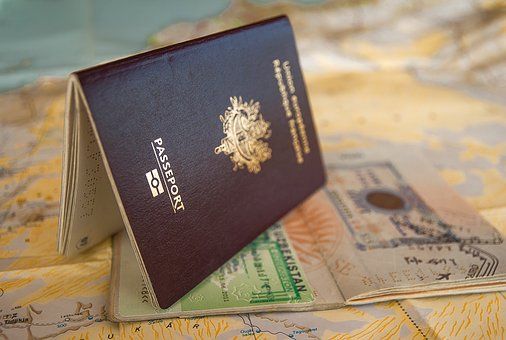
The Commission adopted its first EU Visa Strategy, which sets out a framework for a visa policy that promotes the EU’s long-term interests. This strategy makes visa policy more strategic and better equipped to respond to increasing mobility, regional instability and geopolitical competition. 
 

The Strategy has the following objectives: 

  • strengthenthe security of the Schengen area;
  • supporteconomic growth and competitiveness;
  • promotingthe EU’s strategic interests, values and global position in the world. 

Alongside the Strategy, the Commission also adopted aRecommendation on attracting talent for innovation, with a view to making the EU more attractive to highly skilled professionals, students, researchers and innovative entrepreneurs and supporting the EU’s competitiveness in a global context.  

Key pillars  

The Visa Strategy is based on three key pillars:  

Strengthening EU security 

This includes:  

  • A modern system for granting visa exemptions to partner countries
  • Stricter monitoring of existing visa-free regimes
  • Greater visa benefits
  • Possible specific visa restrictions
  • New measures to enhance the security of travel documents

Boosting competitiveness 

The strategy proposes new measures to support the EU’s global competitiveness, attract talent and make legitimate travel easier, faster and more predictable for tourists and business travellers, including:  

  • New digital procedures for both visa-free and visa-required travellers: ETIAS will simplify and partially automate pre-departure checks for visa-free travellers, starting in the fourth quarter of 2026.
  • Multiple-entry visas with longer validity for trusted travellers. 
  • Better conditions for talent 

  • Additional support for non-EU citizens and employers to address challenges related to the visa process through the European Legal Gateway Offices 

  • Additional EU funding to support visa processing for highly qualified third-country nationals

Modern tools for visas

The EU is implementing advanced digital tools to modernise visa and border management. EU IT systems will beinteroperable by 2028, allowing multiple databases to be consulted simultaneously through a single centralised search, thereby improving information exchange and preventing visa abuse. 

Recommendation on attracting talent for innovation 

The Recommendation complements the Visa Strategy and sets out concrete ways in which Member States can make the EU more attractive to students, researchers and highly skilled workers, start-up founders and innovative entrepreneurs in sectors that are key to the EU’s competitiveness and strategic autonomy.  

The recommendation urges Member States to provide simpler and faster procedures for long-term visas and residence permits through more digitised processes, fewer documents and shorter processing times, easier transitions to work or entrepreneurship from studies or research in the EU, better intra-EU mobility, as well as better access to information and greater coordination between Member State authorities, universities and research organisations. 

More information: European Commission. 
Publicaciones relacionadas:

EUROPEAN AGENDA: tourism and transport Railway communication in Almeria to be debated in the European Parliament Día Internacional de la mujerParliament calls for ambitious gender equality strategy The European Commission and the European Parliament strengthen the EU’s access to space Why do people migrate?

EU News,  Social Affairs,  Transport actualidad,  business travellers,  coordination,  EU,  information,  Mobility,  News,  noticias,  organisation,  plan,  strategy,  tourists,  Travel,  visa

“This is a space for debate. All comments, for or against publication, that are respectful and do not contain expressions that are discriminatory, defamatory or contrary to current legislation will be published”.

Reader Interactions

Leave a Reply Cancel reply

Your email address will not be published. Required fields are marked *

This site uses Akismet to reduce spam. Learn how your comment data is processed.

Primary Sidebar

Footer

  • CDE Almería
  • Biblioteca Nicolás Salmerón – Universidad de Almería
  • Planta: 1ª, Despacho: 1.05.0B.
  • Ctra. Sacramento s/n. Almería (Spain)
  • Teléfono: (+34) 950 015266

HOME
NEWS
DOCUMENTATION
EUROPE ON THE NET
ABOUT US

  • LEGAL NOTICE
  • PRIVACY POLICY
  • COOKIE POLICY
  • ACCESSIBILITY
  • SITEMAP

Copyright © 2026 CDE Almería · Creative Commons LicenseThis work is licensed under a Creative Commons Attribution-NonCommercial 4.0 International License.

<p>El Centro de Documentación Europea de la Universidad de Almería utiliza cookies propias y de terceros para facilitar al usuario la navegación en su página Web y el acceso a los distintos contenidos alojados en la misma. Asimismo, se utilizan cookies analíticas de terceros para medir la interacción de los usuarios con el sitio Web. Pinche el siguiente enlace si desea información sobre el uso de cookies y como deshabilitarlas. </p>

Politica de privacidad

El Centro de Documentación Europea de la Universidad de Almería utiliza cookies propias y de terceros para facilitar al usuario la navegación en su página Web y el acceso a los distintos contenidos alojados en la misma. Asimismo, se utilizan cookies analíticas de terceros para medir la interacción de los usuarios con el sitio Web. Pinche el siguiente enlace si desea información sobre el uso de cookies y como deshabilitarlas. <a href="/politica-de-cookies" rel="noopener" target="_blank">Más información</a>

Cookies estrictamente necesarias

Las cookies estrictamente necesarias tiene que activarse siempre para que podamos guardar tus preferencias de ajustes de cookies.

Básicamente la web no funcionara bien si no las activas.

Estas cookies son:

  • Comprobación de inicio de sesión.
  • Cookies de seguridad.
  • Aceptación/rechazo previo de cookies.
Cookies de terceros

Esta web utiliza Google Analytics, Google Tag Manager y Yandex Metrika para recopilar información anónima tal como el número de visitantes del sitio, o las páginas más populares.

Dejar estas cookies activas nos permite mejorar nuestra web.

Política de cookies

Pinche el siguiente enlace si desea información sobre el uso de cookies y como deshabilitarlas. Más información