• Skip to primary navigation
  • Skip to main content
  • Skip to primary sidebar
  • Skip to footer
  • Bluesky
  • Facebook
  • Instagram
  • Twitter
  • YouTube
CDE Almería – Centro de Documentación Europea – Universidad de Almería

CDE Almería - Centro de Documentación Europea - Universidad de Almería

Centro de Documentación Europea de la Universidad de Almería

  • HOME
  • WHAT´S ON
    • EU NEWS
    • Activities
    • EU Calls and Awards
    • Radio Program «Europe with You»
  • DOCUMENTATION
    • EU Media Collection
      • Web Space
      • MEDIATHEQUE REPOSITORY
  • Europe on the net
    • Institutions
    • EU Representation in Spain
    • European information network of Andalusia
  • ABOUT US
    • Presentation
    • Services
    • People
    • Contact
  • Spanish
  • English

June 21: European Day of Music

Inicio » EU News » Education and Culture » Culture » June 21: European Day of Music

21 de June de 2023

On June 21, Europe celebrates the European Day of Music, a day dedicated to the promotion of music as a universal language of humanity.
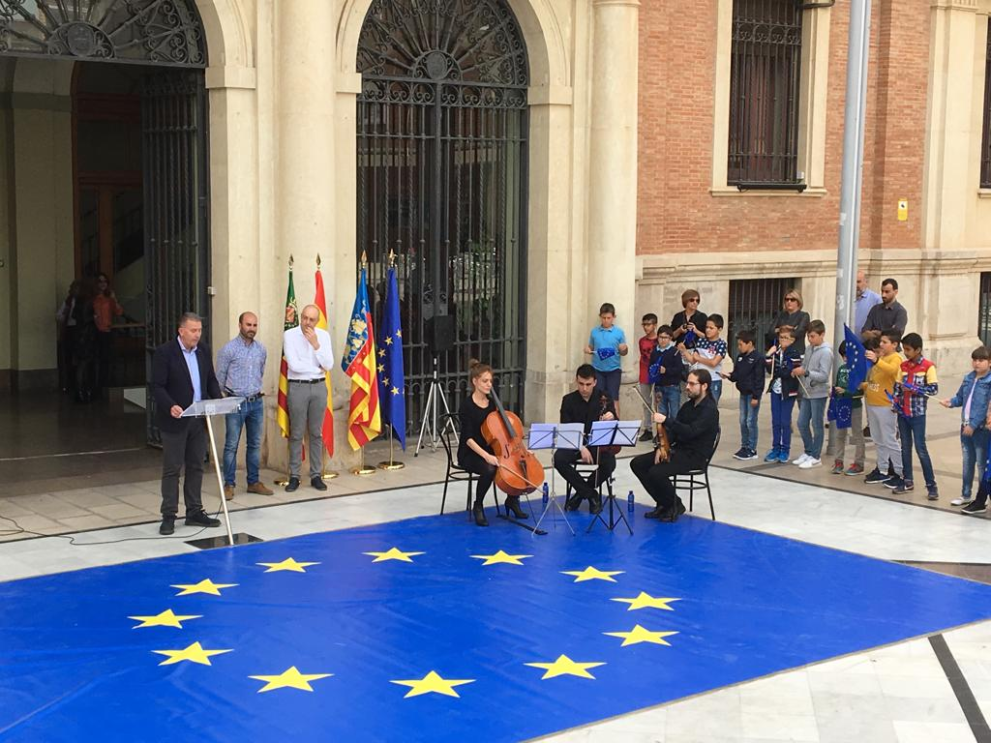
On June 21, coinciding with the summer solstice, Europe celebrates the European Day of Music, a day dedicated to the vindication and promotion of music as a universal language of humanity.

Why do we celebrate the European Day of Music on June 21?

The origin of this celebration dates back to 1976, when the musician and former assistant director of France Musique, Joël Cohen, proposed to celebrate the “Saturnales de la musique” on June 21 and December 21. In the first edition, bands and musicians took to the streets of Toulouse to play during the night of June 21.

A little later, in 1982, a survey conducted in France revealed that 5 million citizens played a musical instrument. Given the importance of music in French society, the then French Minister of Culture, Jack Lang, together with composer Maurice Fleuret (Director of Music and Dance at the Ministry of Culture and formerly of France Musique) and Christian Dupavillon, architect-scenographer and member of the Cabinet, launched the first edition of the Fête de la Musique.

Thus, they invited musicians, both professional and amateur, to play for free in public spaces, with the aim of making music accessible to everyone. This is how the Fiesta de la Música was born, a celebration that has been repeated every June since 1982 to the present day.

Una artista española galardonada en los premios «La Música Mueve Europa»


Adoption of the European Day of Music

Three years after the first edition of the Festival of Music, in 1985 and coinciding with the celebration of the European Year of Music, the European Union established June 21 as the European Day of Music under the same philosophy: to dedicate a day to promote musical diversity, encouraging musicians from all over Europe to share their work free of charge with the public. At the same time, it seeks to promote and facilitate cultural exchange through music.

In recent years, European Music Day celebrations have multiplied in cities across Europe. A wide variety of activities are already scheduled for 2023 in Spain.

Hymn of Europe: Ode to Joy

It was also in 1985, coinciding with the European Year of Music, that the European Union established its official anthem. The piece was composed by Beethoven in 1823, who wanted to set to music the “Ode to Joy”, written by Friedrich von Schiller in 1785. The melody belongs to the composer’s Ninth Symphony and is intended as a symbol of union between the member states. The anthem is purely instrumental and is not intended to replace national anthems.

Creative Europe 2021-2027

Creative Europe is the flagship program to support the cultural and creative sectors and the only one in the European Union specifically designed for this purpose.

In 2014-2020, the previous Creative Europe program, the initiative “Music Moves Europe: Boosting Music Diversity and Talent in Europe” was launched. It supported more than 60 small-scale music projects and 5 independent studios in the EU. Find out which music projects have been funded by Creative Europe.

For the period 2021-2027, it has a budget of 2.44 billion euros. At the proposal of the Commission, the Parliament and the Council of the European Union introduced a sectoral approach on music in the Creative Europe 2021-2027 program. The aim is to promote diversity, creativity and innovation in the field of music, particularly in the distribution of the musical repertoire in Europe.

Source: Representation of the European Commission in Spain

Publicaciones relacionadas:

EUROPEAN DAY OF LANGUAGESEuropean Day of Languages 2020 Musintergacción Erasmus+MusIntegrACTION: transmitting Europe’s cultural heritage through music International Earth Day Let’s sing! June 21 – European Day of Music CulturEU: Commission steps up support to the cultural sector

Culture,  Education and Culture,  EU News 21 june,  day,  European Commission,  European Union,  Music

“This is a space for debate. All comments, for or against publication, that are respectful and do not contain expressions that are discriminatory, defamatory or contrary to current legislation will be published”.

Reader Interactions

Leave a Reply Cancel reply

Your email address will not be published. Required fields are marked *

This site uses Akismet to reduce spam. Learn how your comment data is processed.

Primary Sidebar

Footer

  • CDE Almería
  • Biblioteca Nicolás Salmerón – Universidad de Almería
  • Planta: 1ª, Despacho: 1.05.0B.
  • Ctra. Sacramento s/n. Almería (Spain)
  • Teléfono: (+34) 950 015266

HOME
NEWS
DOCUMENTATION
EUROPE ON THE NET
ABOUT US

  • LEGAL NOTICE
  • PRIVACY POLICY
  • COOKIE POLICY
  • ACCESSIBILITY
  • SITEMAP

Copyright © 2026 CDE Almería · Creative Commons LicenseThis work is licensed under a Creative Commons Attribution-NonCommercial 4.0 International License.

<p>El Centro de Documentación Europea de la Universidad de Almería utiliza cookies propias y de terceros para facilitar al usuario la navegación en su página Web y el acceso a los distintos contenidos alojados en la misma. Asimismo, se utilizan cookies analíticas de terceros para medir la interacción de los usuarios con el sitio Web. Pinche el siguiente enlace si desea información sobre el uso de cookies y como deshabilitarlas. </p>

Politica de privacidad

El Centro de Documentación Europea de la Universidad de Almería utiliza cookies propias y de terceros para facilitar al usuario la navegación en su página Web y el acceso a los distintos contenidos alojados en la misma. Asimismo, se utilizan cookies analíticas de terceros para medir la interacción de los usuarios con el sitio Web. Pinche el siguiente enlace si desea información sobre el uso de cookies y como deshabilitarlas. <a href="/politica-de-cookies" rel="noopener" target="_blank">Más información</a>

Cookies estrictamente necesarias

Las cookies estrictamente necesarias tiene que activarse siempre para que podamos guardar tus preferencias de ajustes de cookies.

Básicamente la web no funcionara bien si no las activas.

Estas cookies son:

  • Comprobación de inicio de sesión.
  • Cookies de seguridad.
  • Aceptación/rechazo previo de cookies.
Cookies de terceros

Esta web utiliza Google Analytics, Google Tag Manager y Yandex Metrika para recopilar información anónima tal como el número de visitantes del sitio, o las páginas más populares.

Dejar estas cookies activas nos permite mejorar nuestra web.

Política de cookies

Pinche el siguiente enlace si desea información sobre el uso de cookies y como deshabilitarlas. Más información