
The Council adopted a decision and a regulation clarifying the obligations of Central Securities Depositories (CSD) holding assets and reserves of the Central Bank of Russia (CBR) that are immobilised as consequence of EU’s restrictive measures.
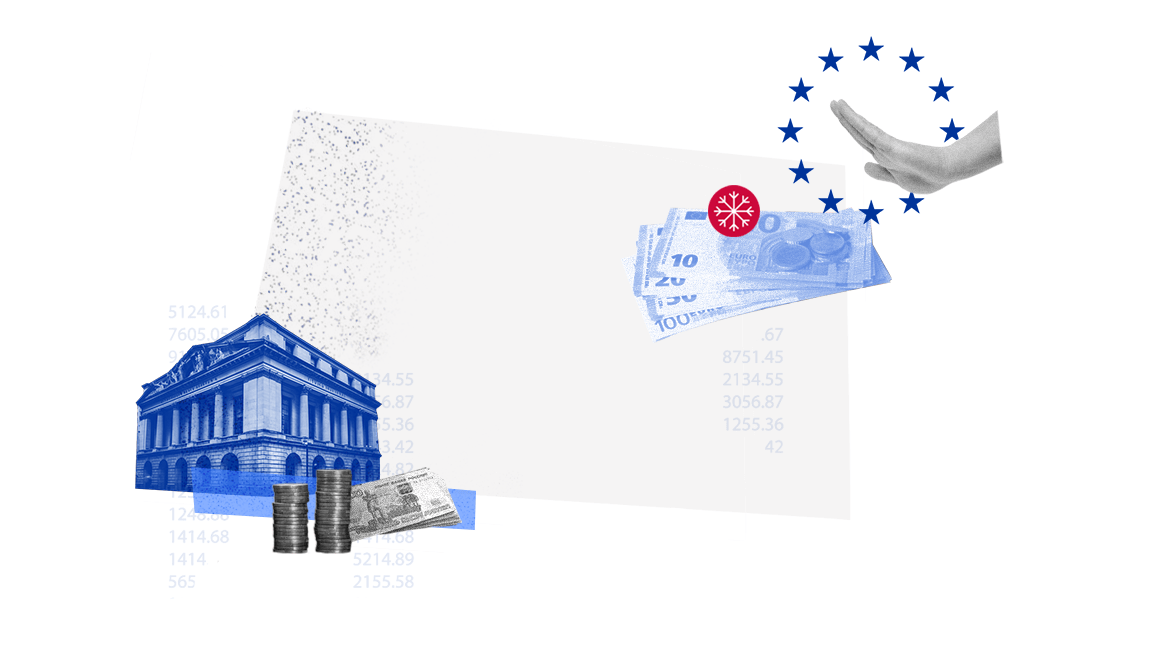
After Russia launched its illegal and unjustified full-scale invasion of Ukraine in February 2022, the EU, in coordination with international partners, decided to prohibit any transactions related to the management of reserves as well as of assets of the CBR. As a result of that prohibition, the relevant assets held by financial institutions in the EU member states are “immobilised”.
Today’s decision, in line with G7 position, clarifies the prohibition of those transactions as well as the legal status of the revenues generated by the CSDs in connection with holding of Russian immobilised assets and sets clear rules for the entities holding them. The Council decided in particular that CSDs holding more than €1 million of CBR’s assets must account extraordinary cash balances accumulating due to EU restrictive measures separately and must also keep corresponding revenues separate. In addition, CSDs shall be prohibited from disposing of the ensuing net profits.
In view of risks and costs related to holding of the assets and reserves of the Central Bank of Russia, each central security depository may request its supervisory authority to authorise a release of a share of those net profits in view of complying with statutory capital and risk management requirements.
This decision paves the way for the Council to decide on a possible establishment of a financial contribution to the EU budget raised on these net profits to support Ukraine and its recovery and reconstruction at a later stage. This financial contribution may be channeled through the EU budget to the Ukraine Facility on which the Council and the European Parliament reached a provisional agreement on 6 February 2024.
Background
In their statement of 6 December 2023, G7 leaders reiterated that decisive progress was needed to direct extraordinary revenues held by private entities stemming directly from Russia’s immobilised sovereign assets to support Ukraine.
In its conclusions of 14-15 December 2023, the European Council reiterated its resolute condemnation of Russia’s war of aggression against Ukraine, which constitutes a manifest violation of the UN Charter, and reaffirmed the European Union’s unwavering support for Ukraine’s independence, sovereignty and territorial integrity within its internationally recognised borders and its inherent right to self-defence. The European Council further reiterated its call for decisive progress, in coordination with partners, on how extraordinary revenues held by private entities stemming directly from Russia’s immobilised assets could be directed to support Ukraine and its recovery and reconstruction, consistent with applicable contractual obligations, and in accordance with EU and international law.
Around €260 billion in Central Bank of Russia assets have been immobilised in the form of securities and cash in the jurisdictions of the G7 partners, the EU and Australia, with more than two thirds of those immobilised in the EU.
More information: Council of the EU
Publicaciones relacionadas:
 Europe in danger: What next for EU Security and Defence?
 EU and NATO sign a new joint declaration on cooperation
 Corona Crimes: Suspect Behind €6 Million Face Masks And Hand Sanitisers Scam Arrested Thanks To International Police Cooperation
 101 Arrested And 19,000 Stolen Artefacts Recovered In International Crackdown On Art Trafficking
 Doping Trafficking Ring with Professional Athletes Dismantled in Italy
Leave a Reply