
Geothermal energy has significant potential to assist in achieving EU targets for the uptake of renewables and the decarbonisation of the energy sector, particularly for heating and cooling.
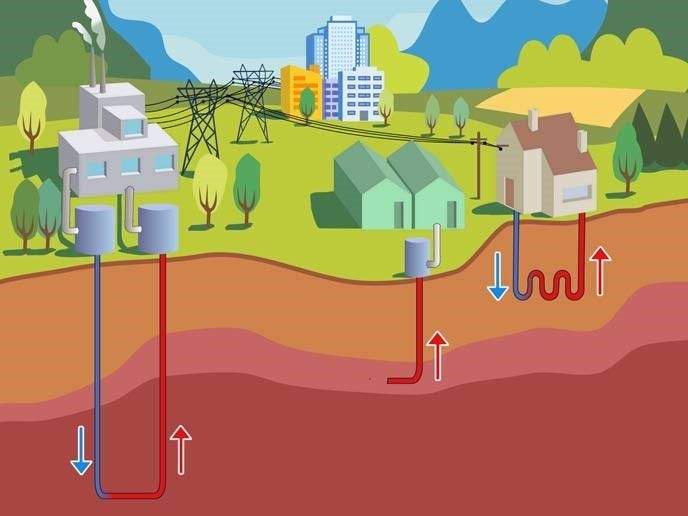
Drilled wells connect the fluid to the earth’s surface, allowing it to be used for a range of purposes such as to generate electricity or provide direct heat for district heating, water heating or industrial processes.
Several geothermal technologies exist, with different levels of maturity. So far, the share of geothermal energy in the EU’s renewable energy mix is small compared to other renewable sources, such as wind and solar power. But it has potential to grow in the context of the European Green Deal and the EU’s ambition to achieve carbon-neutrality by 2050.
Advantages and opportunities
A major advantage of geothermal energy, compared to other renewable energy sources, is that it is not dependent on the weather. According to the International Renewable Energy Agency (IRENA), geothermal energy could be a factor in stabilising electricity grids as it helps offset the risks associated with an energy system based on the variable supplies of other renewable energy sources. When used for heating, geothermal offers efficiency gains by supplying heat directly.
The launch of geothermal projects would create increased employment opportunities and local value production. Geothermal processes also produce lithium as a by-product, enhancing our access to this critical raw material.
Challenges
Geothermal energy development in the EU has been slower compared to other renewable energy sources due to several challenges and obstacles.
Compared to other renewable energy sources, the production of geothermal energy is associated with technical and economic risks. The deployment of geothermal faces challenges including high upfront costs, a lack of knowledge and of geological data, and the availability of skilled labour.
Despite these challenges, there have been some positive signals for the geothermal sector. Several EU countries have created national geothermal roadmaps with ambitious targets (such as Ireland, the Netherlands, Poland, Croatia, France, and Germany) to make investment in geothermal projects more attractive and encourage their development.
Supporting rules and initiatives
In terms of relevant EU legislation, the revised Renewable Energy Directive set enhanced targets for the share of renewables in the EU’s energy mix by 2030 and a binding target for an annual average percentage point increase in the share of renewable energy used for heating and cooling. However, it remains neutral on which renewable technologies to use and addresses the skills, certification and awareness bottlenecks.
The revised Energy Efficiency Directive and Renewable Energy Directive support other key drivers of geothermal energy. Integrated energy planning at the local level and the accelerated decarbonisation of existing district heating and cooling systems and the development of new, renewables-based ones.
The introduction in the Renewable Energy Directive of renewable energy benchmarks for the industry sector in the directive will also increase interest for innovative industrial applications of geothermal energy.
Additionally, geothermal is 1 of 8 strategic technologies included on the Net-Zero Industry Act, meaning it will benefit from measures to scale-up investments and speed up permitting processes. Lithium, a by-product of geothermal production, is covered in the Critical Raw Materials Act, which introduces rules that can indirectly benefit the entire geothermal sector. For example, national exploration programmes under the Critical Raw Materials Act are likely to include efforts to identify and evaluate opportunities for extraction of lithium, whether from primary sources (traditional mining) or as by-products (such as from geothermal operations).
The Commission also supports research and development in geothermal technologies. The EU funds research projects through the Horizon 2020 programme, focussing on cost reductions and improved performance. A CORDIS results pack, published in 2020, presents the results of 12 successful EU-funded geothermal energy projects.
Further information: European Commission



Leave a Reply