• Skip to primary navigation
  • Skip to main content
  • Skip to primary sidebar
  • Skip to footer
  • Bluesky
  • Facebook
  • Instagram
  • Twitter
  • YouTube
CDE Almería – Centro de Documentación Europea – Universidad de Almería

CDE Almería - Centro de Documentación Europea - Universidad de Almería

Centro de Documentación Europea de la Universidad de Almería

  • HOME
  • WHAT´S ON
    • EU NEWS
    • Activities
    • EU Calls and Awards
    • Radio Program «Europe with You»
  • DOCUMENTATION
    • EU Media Collection
      • Web Space
      • MEDIATHEQUE REPOSITORY
  • Europe on the net
    • Institutions
    • EU Representation in Spain
    • European information network of Andalusia
  • ABOUT US
    • Presentation
    • Services
    • People
    • Contact
  • Spanish
  • English

First cooperation and monitoring cycle to reach EU 2030 Digital Decade targets kicks off

Inicio » Noticias UE » Asuntos Institucionales » First cooperation and monitoring cycle to reach EU 2030 Digital Decade targets kicks off

10 de January de 2023

The Digital Decade policy programme 2030, a monitoring and cooperation mechanism to achieve common targets for Europe’s digital transformation by 2030, has entered into force.
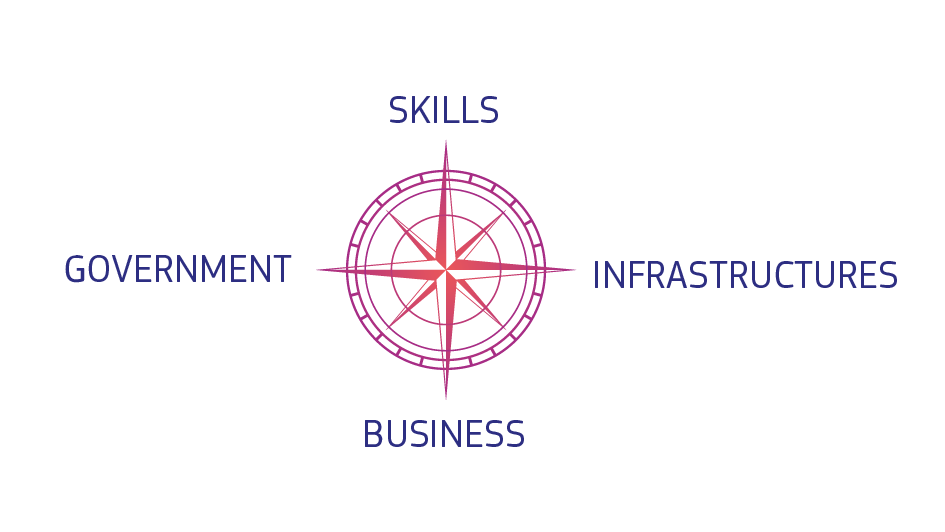
década digital

For the first time, the European Parliament, Member States and the Commission have jointly set concrete objectives and targets in the four key areas of digital skills, infrastructure including connectivity, the digitalisation of businesses, and online public services, in respect of the Declaration on European Digital Rights and Principles. The objectives and targets are accompanied by a cyclical cooperation process starting today, to take stock of progress and define milestones so that they can be reached by 2030. The programme also creates a new framework for multi-country projects that will allow Member States to join forces on digital initiatives.
2030 digital decade. Policy programme : a path to the digital decade


The aim: Digital Decade targets and objectives

Starting now and leading up to 2030, EU Member States, in collaboration with the European Parliament, the Council of the EU and the Commission, will shape their digital policies to achieve targets in 4 areas to:

  • Improve citizens’ basic and advanced digital skills;
  • Improve the take-up of new technologies, like Artificial Intelligence, data and cloud, in the EU businesses, including in small businesses;
  • Further advance the EU’s connectivity, computing and data infrastructure; and
  • Make public services and administration available online.

These targets embody the policy programme’s objectives, such as ensuring safe and secure digital technology, a competitive online environment for SMEs, safe cybersecurity practices, fair access to digital opportunities for all, as well as developing sustainable, energy and resource-efficient innovations.

Together, the Digital Decade objectives and targets will guide the actions of Member States, which will be assessed by the Commission in an annual progress report, the State of the Digital Decade. A new high-level expert group, the Digital Decade Board, will also reinforce the cooperation between the Commission and the Member States on digital transformation issues. A new Forum will also be created to bring on board various stakeholders and discuss their views.

Cooperation and monitoring progress towards 2030 targets

In the coming months, the Commission, together with Member States, will develop key performance indicators (KPIs) that will be used to monitor progress towards individual targets, within the framework of the annual Digital Economy and Society Index (DESI). In turn, Member States will prepare their national strategic roadmaps within 9 months from today, describing the policies, measures and actions that they plan to make, at national level, to reach the programme’s objectives and targets. From June 2023, the Commission will publish its annual progress report, the State of the Digital Decade, to provide an update, assessment and recommendation on progress towards the targets and objectives.

Multi-country projects

Pooling investments between Member States is necessary to achieve some of the ambitions of the Digital Decade objectives and targets. To join efforts for large-scale impact, the policy programme creates a process to identify and launch multi-country projects in areas such as 5G, quantum computers, and connected public administrations among others.
Spain and its Digital Economy and Society Index 2022

Next Steps

In the coming months, the Commission will adopt an implementing act defining the KPIs for the digital targets and will develop projected EU trajectories for each of them together with Member States.

In June, the Commission will publish the first State of the Digital Decade report, to provide an update, assessment, and recommendation on progress towards the targets and objectives.

In October, Members States will submit their first national strategic roadmaps, on which the Commission will have published guidance to support them.

More information: European Commission
Publicaciones relacionadas:

bandera españa europaEU Cohesion Policy: €37.3 billion to Spain Derechos Humanos infografíaDecember 10 – Human Rights Day Partnerships for Regional Innovation: 63 regions, 7 cities and 4Member States July infringements package: key decisions related to Spain and Environmental matters Parlamento EuropeoUNGA 77: EU Delegation to defend rules-based order

EU News,  Institutional Affairs 2022,  Comision Europea,  Comision Europea,  Decade,  Digital,  European Commission,  Unión Europea

“This is a space for debate. All comments, for or against publication, that are respectful and do not contain expressions that are discriminatory, defamatory or contrary to current legislation will be published”.

Reader Interactions

Leave a Reply Cancel reply

Your email address will not be published. Required fields are marked *

This site uses Akismet to reduce spam. Learn how your comment data is processed.

Primary Sidebar

Footer

  • CDE Almería
  • Biblioteca Nicolás Salmerón – Universidad de Almería
  • Planta: 1ª, Despacho: 1.05.0B.
  • Ctra. Sacramento s/n. Almería (Spain)
  • Teléfono: (+34) 950 015266

HOME
NEWS
DOCUMENTATION
EUROPE ON THE NET
ABOUT US

  • LEGAL NOTICE
  • PRIVACY POLICY
  • COOKIE POLICY
  • ACCESSIBILITY
  • SITEMAP

Copyright © 2026 CDE Almería · Creative Commons LicenseThis work is licensed under a Creative Commons Attribution-NonCommercial 4.0 International License.

<p>El Centro de Documentación Europea de la Universidad de Almería utiliza cookies propias y de terceros para facilitar al usuario la navegación en su página Web y el acceso a los distintos contenidos alojados en la misma. Asimismo, se utilizan cookies analíticas de terceros para medir la interacción de los usuarios con el sitio Web. Pinche el siguiente enlace si desea información sobre el uso de cookies y como deshabilitarlas. </p>

Politica de privacidad

El Centro de Documentación Europea de la Universidad de Almería utiliza cookies propias y de terceros para facilitar al usuario la navegación en su página Web y el acceso a los distintos contenidos alojados en la misma. Asimismo, se utilizan cookies analíticas de terceros para medir la interacción de los usuarios con el sitio Web. Pinche el siguiente enlace si desea información sobre el uso de cookies y como deshabilitarlas. <a href="/politica-de-cookies" rel="noopener" target="_blank">Más información</a>

Cookies estrictamente necesarias

Las cookies estrictamente necesarias tiene que activarse siempre para que podamos guardar tus preferencias de ajustes de cookies.

Básicamente la web no funcionara bien si no las activas.

Estas cookies son:

  • Comprobación de inicio de sesión.
  • Cookies de seguridad.
  • Aceptación/rechazo previo de cookies.
Cookies de terceros

Esta web utiliza Google Analytics, Google Tag Manager y Yandex Metrika para recopilar información anónima tal como el número de visitantes del sitio, o las páginas más populares.

Dejar estas cookies activas nos permite mejorar nuestra web.

Política de cookies

Pinche el siguiente enlace si desea información sobre el uso de cookies y como deshabilitarlas. Más información