
The Belgian presidency of the Council and representatives of the European Parliament reached a provisional agreement to add forced marriage, illegal adoption and surrogacy as types of exploitation covered by the EU’s anti-trafficking law.

The update of the directive on preventing and combating trafficking in human beings will also require EU countries to make sure that people knowingly using services provided by victims of trafficking can face sanctions. Other amendments concern the strengthening of victims’ support and assistance as well as prevention measures.
Forced marriage, illegal adoption and surrogacy
Council and European Parliament negotiators agreed to explicitly mention in the directive that the exploitation of surrogacy, forced marriage and illegal adoption are types of exploitation which fall under the scope of the definition of trafficking. The trafficking for the exploitation of surrogacy, which is when a woman agrees to deliver a child on behalf of another person or couple to become the child’s parent(s) after birth, will target those who coerce or deceive women into acting as surrogate mothers.
Including these forms of trafficking in the EU anti-trafficking law will take into account the prevalence and the relevance of these forms of exploitation.
Penalties and sanctions
As is the case in the current directive, the new types of exploitation (forced marriage, illegal adoption and surrogacy) will be punishable by a maximum penalty of at least five years of imprisonment, or of at least ten years of imprisonment in case of aggravated offences.
The Council and EU Parliament have also decided to include a new aggravating circumstance in the law to take into account the amplifying effect that information and communication technologies (ICT) can have as regards trafficking. This includes the fact that the perpetrator facilitated or committed the dissemination, by means of ICT, of images, videos or similar material of a sexual nature involving the victim.
Sanctions on legal persons, such as companies, held accountable for trafficking offences will also be beefed up. They will from now on cover the exclusion from access to public funding, including tender procedures, grants, concessions and licences, and the withdrawal of permits and authorisations to pursue activities which have resulted in committing the offence.
Using services provided by victims of trafficking
The agreement between Council and European Parliament foresees that member states must make it a criminal offence if a person who uses the service provided by a trafficking victim knows that the person is a victim of trafficking. In such cases, member states need to ensure that this offence is punishable by effective, proportionate and dissuasive penalties.
Under the current law member states should only consider making the use of services of persons exploited by human traffickers a criminal offence.
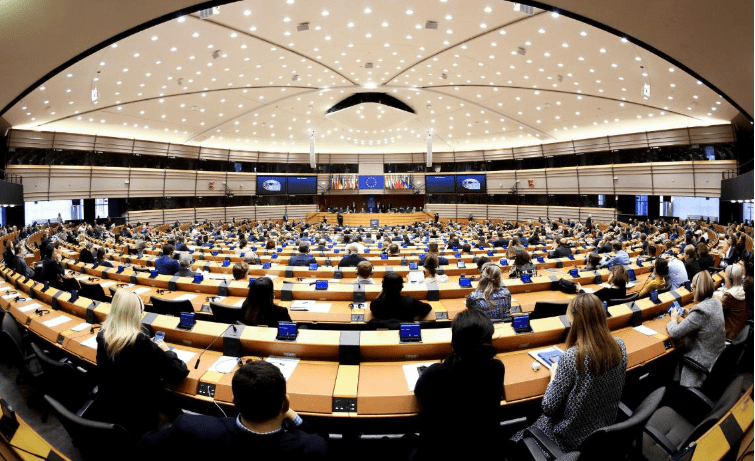
The European Parliament is ready to negotiate new European legislation on trafficking in human beings |
Next steps
Today’s provisional agreement will be submitted to member state’s representatives in the Council (Coreper) for confirmation. It will also have to be formally adopted by both institutions.
More information: Council of the European Union
Publicaciones relacionadas:
 Final vote on the Digital Services Act and the Digital Markets Act
 The European Parliament is ready to negotiate new European legislation on trafficking in human beings
 EU agrees to start lifting travel restrictions for residents of some third countries
 EU reaches political agreement on updated enforcement regulation
 Stop illegal live sports streaming, urge MEPs
Leave a Reply