

The Commission has proposed detailed rules to define what constitutes renewable hydrogen in the EU, with the adoption of two Delegated Acts required under the Renewable Energy Directive. These Acts are part of a broad EU regulatory framework for hydrogen which includes energy infrastructure investments and state aid rules, and legislative targets for renewable hydrogen for the industry and transport sectors. They will ensure that all renewable fuels of non-biological origin (also known as RFNBOs) are produced from renewable electricity. The two Acts are inter-related and both necessary for the fuels to be counted towards Member States’ renewable energy target. They will provide regulatory certainty to investors as the EU aims to reach 10 million tonnes of domestic renewable hydrogen production and 10 million tonnes of imported renewable hydrogen in line with the REPowerEU Plan.
More renewables, less emissions
The first Delegated Act defines under which conditions hydrogen, hydrogen-based fuels or other energy carriers can be considered as an RFNBO. The Act clarifies the principle of “additionality” for hydrogen set out in the EU’s Renewable Energy Directive. Electrolysers to produce hydrogen will have to be connected to new renewable electricity production. This principle aims to ensure that the generation of renewable hydrogen incentivises an increase in the volume of renewable energy available to the grid compared to what exists already. In this way, hydrogen production will be supporting decarbonisation and complementing electrification efforts, while avoiding pressure on power generation.
While initial electricity demand for hydrogen production will be negligible, it will increase towards 2030 with the mass rollout of large-scale electrolysers. The Commission estimates that around 500 TWh of renewable electricity is needed to meet the 2030 ambition in REPowerEU of producing 10 million tonnes of RFNBOs. The 10Mt ambition in 2030 corresponds to 14% of total EU electricity consumption. This ambition is reflected in the Commission proposal to increase the 2030 target for renewables to 45%.
The Delegated Act sets out different ways in which producers can demonstrate that the renewable electricity used for hydrogen production complies with additionality rules. It further introduces criteria aimed to ensure that renewable hydrogen is only produced when and where sufficient renewable energy is available (known as temporal and geographic correlation).
To take into account existing investment commitments and allow the sector to adapt to the new framework, the rules will be phased in gradually, and designed to become more stringent over time. Specifically, the rules foresee a transition phase of the requirements on “additionality” for hydrogen projects that will start operating before 1 January 2028. This transition period corresponds to the period when electrolysers will be scaled up and come onto the market. Furthermore, hydrogen producers will be able to match their hydrogen production with their contracted renewables on a monthly basis until the 1 January 2030. However, Member States will have the option of introducing stricter rules about temporal correlation as of 1 July 2027.
The requirements for the production of renewable hydrogen will apply to both domestic producers as well as producers from third countries that want to export renewable hydrogen to the EU to count towards the EU renewables targets. A certification scheme relying on voluntary schemes will ensure that producers, whether in the EU or in third countries, can demonstrate in a simple and easy way their compliance with the EU framework and trade renewable hydrogen within the Single Market.
The second Delegated Act provides a methodology for calculating life-cycle greenhouse gas emissions for RFNBOs. The methodology takes into account greenhouse gas emissions across the full lifecycle of the fuels, including upstream emissions, emissions associated with taking electricity from the grid, from processing, and those associated with transporting these fuels to the end-consumer. The methodology also clarifies how to calculate the greenhouse gas emissions of renewable hydrogen or its derivatives in case it is co-produced in a facility that produces fossil-based fuels.
Following the adoption, the Acts will now be transmitted to the European Parliament and the Council, which have 2 months to scrutinise them and to either accept or reject the proposals. At their request, the scrutiny period can be extended by 2 months. There is no possibility for the Parliament or Council to amend the proposals.
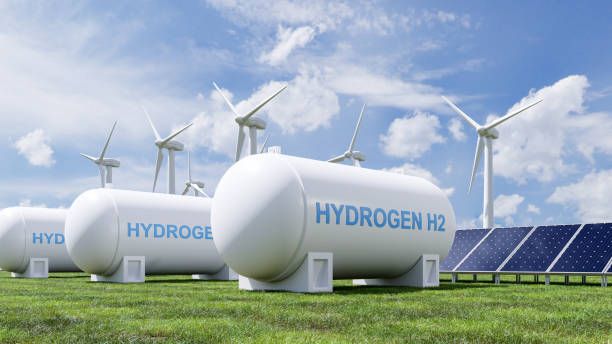
EU Commission approves €220 million Spanish measure to support COBRA in production of renewable hydrogen |
Background
In 2020, the Commission adopted a Hydrogen Strategy setting out a vision for the creation of a European hydrogen ecosystem from research and innovation to production and infrastructure, and development of international standards and markets. Hydrogen is expected to play a major role in the decarbonisation of industry and heavy-duty transport in Europe and globally. As part of the ‘Fit for 55′ package, the Commission has introduced several incentives for its uptake, including mandatory targets for the industry and transport sectors.
Hydrogen is also a key pillar of the REPowerEU Plan to get rid of Russian fossil fuels. The Commission has outlined a ‘Hydrogen Accelerator’ concept to scale up the deployment of renewable hydrogen. In particular, the REPowerEU Plan aims for the EU to produce 10 million tonnes and import 10 million tonnes of renewable hydrogen by 2030.
On top of the regulatory framework, the Commission is also supporting the emergence of the hydrogen sector in the EU via Important Projects of Common European Interest (IPCEIs). The first IPCEI, called “IPCEI Hy2Tech“, which includes 41 projects and was approved in July 2022, aims at developing innovative technologies for the hydrogen value chain to decarbonise industrial processes and the mobility sector, with a focus on end-users. In September 2022, the Commission approved “IPCEI Hy2Use“, a second project which complements IPCEI Hy2Tech and which will support the construction of hydrogen-related infrastructure and the development of innovative and more sustainable technologies for the integration of hydrogen into the industrial sector.
More information
Publicaciones relacionadas:
 Commission mobilises €123 million for research and innovation to combat the threat of variants
 JRC launches new tool to explore the future of European energy
 New world-class European supercomputer opens in Italy
 Commission sets out new ambitious mission to lead on supercomputing
 Local traffic data and how it gives more power to citizens
Leave a Reply