
The European Commission last week took a decisive step towards strengthening support for Ukraine by proposing a comprehensive financial assistance package, consisting of a loan cooperation facility with Ukraine of up to 45 billion euros and an exceptional macro-financial assistance loan of up to 35 billion euros.
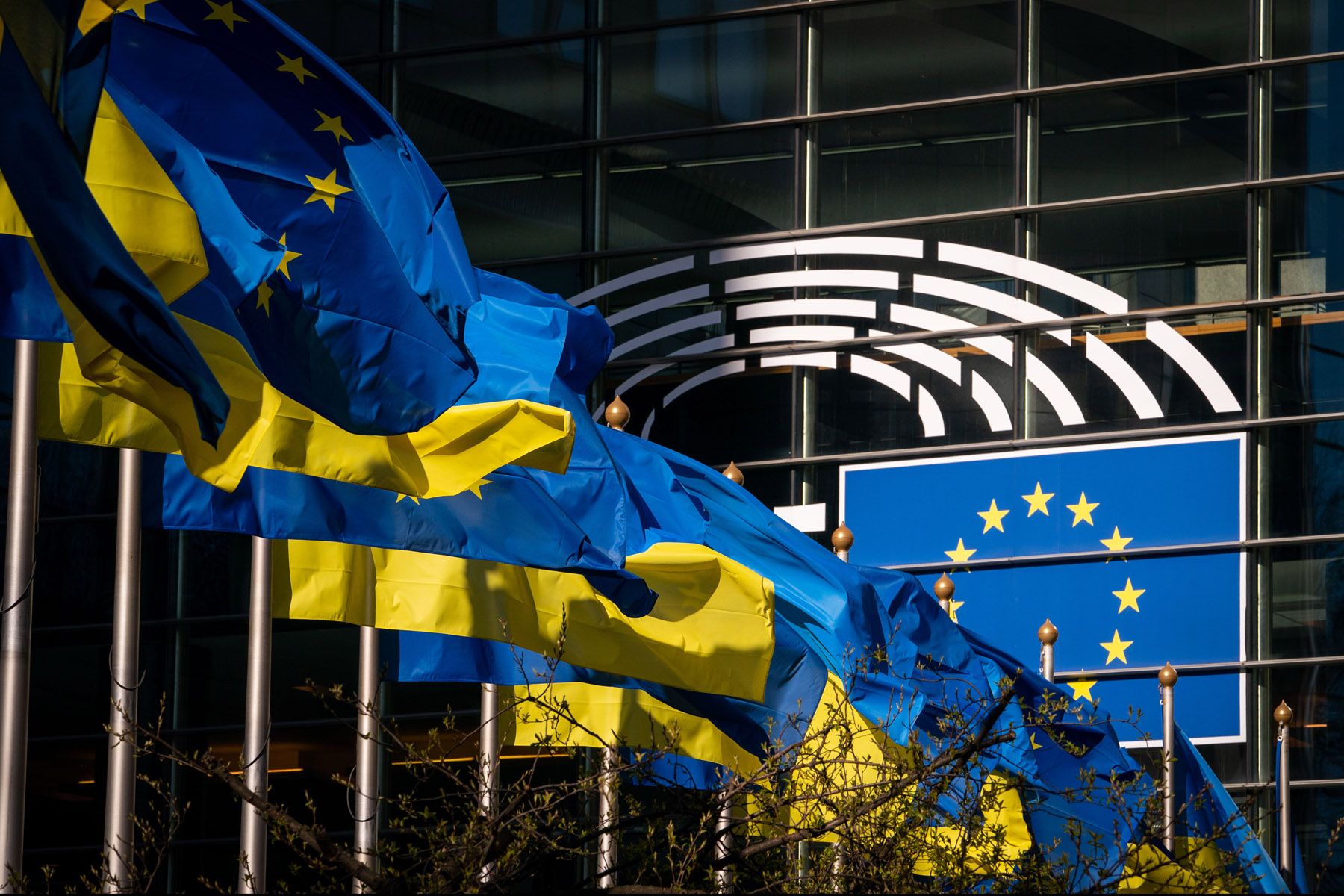
This package leverages extraordinary profits from immobilised Russian assets, sending a clear signal that the burden of rebuilding Ukraine will be shouldered by those responsible for its destruction. This approach will be applied for the first time in a structured way and at such a scale across EU and G7 lenders, ensuring long-term, stable financial support for Ukraine’s recovery and resilience.
Ukraine Loan Cooperation Mechanism
The Commission first proposes to establish a Ukraine Loan Cooperation Mechanism which will support the EU and G7 partners in issuing loans of up to €45 billion to Ukraine. As Ukraine continues to face unprecedented challenges due to Russia’s intensified aggression, this proposal underscores the EU’s unwavering commitment to Ukraine’s sovereignty and economic resilience.
The Ukraine Loan Cooperation Mechanism will offer to Ukraine support financed by leveraging the financial contribution raised on extraordinary windfall profits stemming from immobilised Russian Central Bank assets.
Ukraine can use this support to repay eligible loans from the EU and other lenders participating in the G7’s ‘Extraordinary Revenue Acceleration Loans for Ukraine’ (ERA) initiative.
Exceptional Macro-Financial Assistance
As the EU’s contribution to these loans under the ERA initiative, the Commission is proposing an exceptional MFA loan of up to €35 billion. This financial support is crucial for addressing Ukraine’s urgent budgetary needs, which have considerably risen in the face of the intensified and prolonged Russian aggression, including under the IMF’s Extended Fund Facility arrangement. The remaining loan amount covered is to be provided by other G7 partners.
This comprehensive financial package fulfils the commitments made during the G7 Leaders’ Summit in Apulia on 15 June and during the European Council of 27 June.
Through this package, the European Commission reaffirms its commitment to standing by Ukraine in times of need, ensuring that the EU’s support remains steadfast and effective.
Next steps
The proposal requires approval by the European Parliament and a qualified majority of EU Member States in the Council before entering into force.
In view of the urgency of the proposal, the Commission will be working hand in hand with co-legislators to ensure a swift adoption.
Background
Since the beginning of Russia’s war of aggression against Ukraine, the EU, together with its Member States, has unequivocally condemned Russia’s actions and has offered unprecedented support to Ukraine and its people. The EU, its Member States and European Financial Institutions have together provided €118.3 billion in grants and loans, supporting the Ukrainian war effort and its economy, helping to maintain basic services and offer early reconstruction, humanitarian assistance and help to those fleeing the war in the EU.
As part of the sanctions imposed by the EU on Russia, assets of the Central Bank of Russia held by financial institutions in the Member States and worth approximately €210 billion have been immobilised since February 2022. They represent the majority of such immobilised assets worldwide.
The prohibition of transactions on these assets generates an extraordinary cash accumulation on the balance sheets of central securities depositories (CSDs) bringing a return. On a yearly basis and depending on the level of interest rates, the extraordinary revenues are currently estimated at up to €2.5-3 billion a year. These unexpected and extraordinary revenues do not constitute sovereign assets, and do not have to be made available to the Central Bank of Russia, even after the immobilisation ends.
On 12 February 2024, the EU clarified the rules on how the immobilised assets and reserves should be managed and decided that CSDs holding reserves and assets from the Central Bank of Russia worth more than €1 million should set these revenues apart. Since 15 February 2024, the CSDs are not allowed to dispose of the related net profits or distribute them to shareholders.
In May 2024, the Council decided to use these extraordinary revenues for the benefit of Ukraine. At the end of July, €1.5 billion were already made available in support of Ukraine.
More information: European Commission
Publicaciones relacionadas:
 EU mobilises €10 million more to respond to severe Desert Locust outbreak in East Africa
 E-commerce: Council adopts new rules for exchange of VAT payment data
 Spanish courts must ensure that clauses in mortgage loan contracts providing for the application of a variable interest rate are clear and understandable
 Government frees up 18.23 billion euros in a raft of economic measures to mitigate impact of COVID-19
 The European Commission welcomes the cooperation agreement concluded between the European Central Bank, the Eurosystem and Sveriges Riksbank
Leave a Reply