
The European Commission adopted exceptional measures to address the current imbalances in the wine market of several EU regions. Under wine national support programmes, it will now be possible for Member States to include crisis distillation to remove the excess of wine from the market.
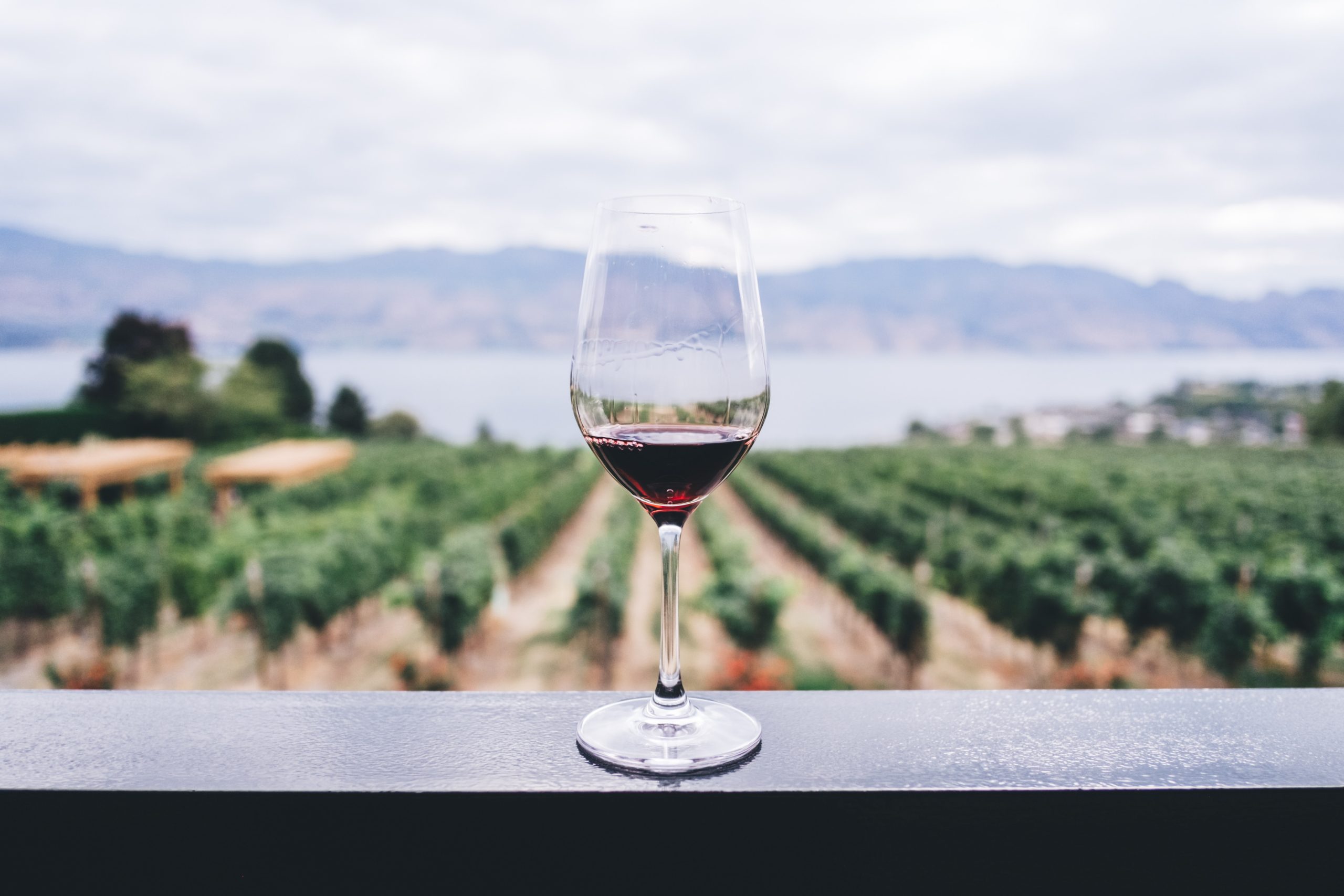
Flexibility in the implementation of the wine support programmes is also granted, allowing more flexibility for green harvesting this summer and increasing the EU’s co-financing rate of measures related to restructuring, green harvesting, promotion, and investments.
The wine sector is being hit by reduced consumption due to the current inflation on food and drinks prices, which in association with a good 2022 harvest and ensuing consequences of the market difficulties during the pandemic have led to an accumulation of stocks. The EU production of wine increased by 4% this year compared with the previous year while the initial stocks were higher by 2% compared to the average of the last 5 years. Drop in wine consumption for the ongoing marketing year are estimated at 7% in Italy, 10% in Spain, 15% in France, 22% in Germany and 34% in Portugal. In parallel, EU wine exports for the period January to April 2023 have been 8,5% lower than the previous year, contributing to further increasing the stocks.
This market context is translating into sales difficulties for EU wine growers and producers, reduction of market prices and consequently, a serious loss of income especially in certain regions mostly hit by these trends. The situation is very fragmented across the EU, and the imbalance between the available supply and the demand is rather concentrated in certain regions and wines. The most affected are red and rosé wines from certain regions of France, Spain and Portugal, but other wines and/or Member States might encounter similar difficulties in certain production regions.
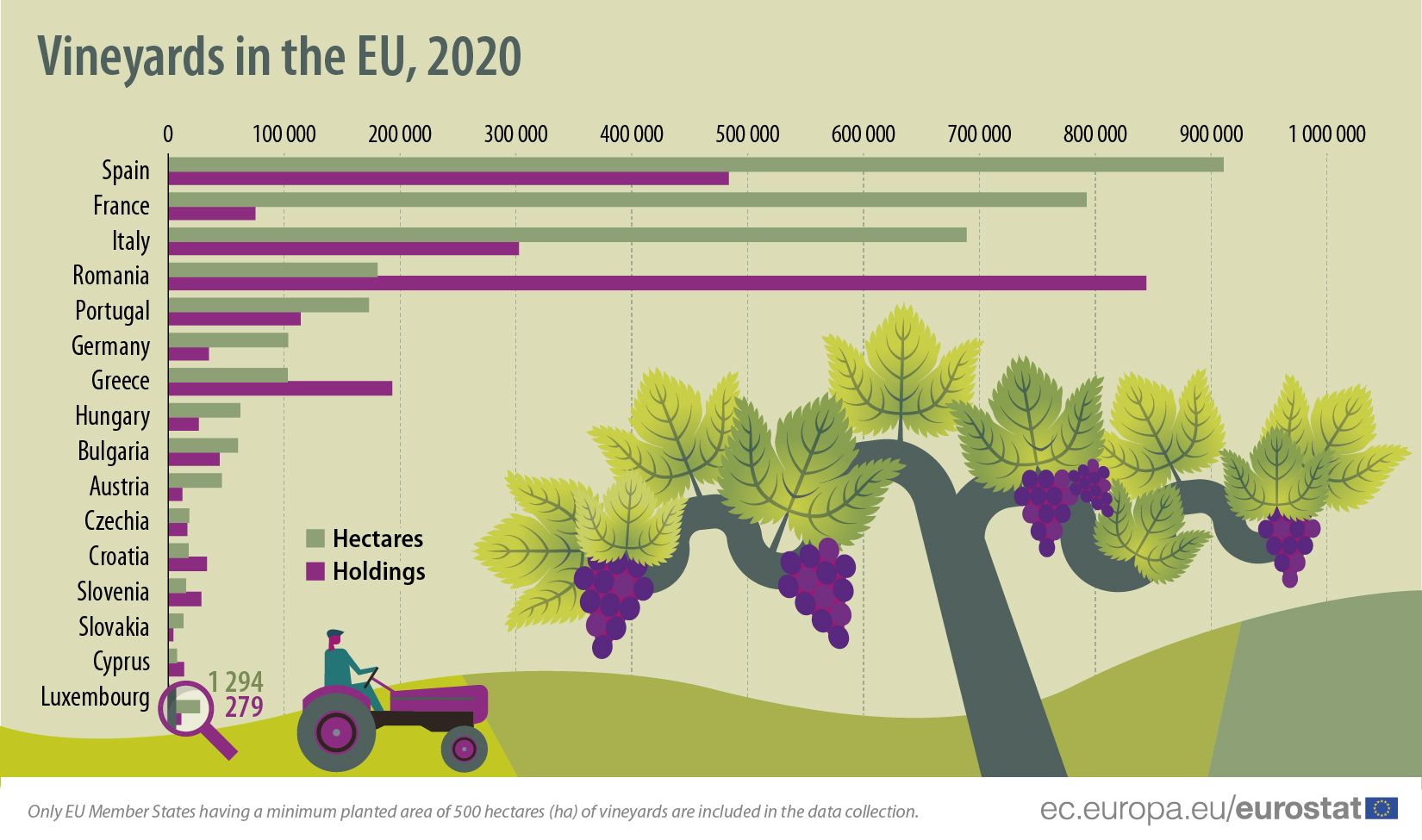
Spain has the largest area for wine in the EU |
The measures adopted by the Commission, after being endorsed by Member States in committee meeting, will help the sector address the current imbalances. It was necessary to adopt temporary markets measures to avoid that the unsold wine weighs on the whole internal market and prevents producers to find sufficient storage capacity for the new harvest.
Thanks to this decision,it will be possible until 15 October 2023 to distil the wine most affected by the market crisis under the support programmes for wine. The wine distilled is taken out of the market, and the alcohol obtained can only be used for non-food purposes to avoid a distortion of competition.
The Member States are required to target the crisis distillation measure to the regions or types of wine with market imbalance, to be identified based on objective criteria, such as a substantial increase of stocks or decrease of price and sales. The financial compensation to be granted to the wine eligible for distillation would be limited to a share of recent market prices. This will avoid any abuse or overcompensation following the implementation of this exceptional measure. Member States are expected to notify the Commission by 31 August 2023 of the implementation criteria of this exceptional measure. Member States will also be allowed to complement the EU’s financing with an amount up to the same level of national payments.
The Commission also granted additional flexibility in the implementation and financing of the wine support programmes for the financial year 2023. This will allow Member States to attune better their measures to the wine market situation in the current year and to better use green harvesting to prevent or reduce potential wine surplus for the coming year. In the current circumstances, beneficiaries from the wine support programmes are allowed to adapt their planned operations and in duly justified cases to implement their original projects only partially. The EU’s co-financing rate of measures related to restructuring, green harvesting, promotion and investments will be also increased from 50% to 60%.
More information: European Commission
Publicaciones relacionadas:
 Commission paves the way to improve the movement of mobile machinery on public roads across the EU
 Agroecology: 14 EU-funded projects that are helping to shape the future of agriculture
 AU-EU agrifood platform: reinforcing the link between the EU and African private sectors
 Long-term vision for rural areas: stronger, connected, resilient, and prosperous
Fisheries: EU and Norway strengthen cooperation for sustainable fishing in the Northeast Arctic
Long-term vision for rural areas: stronger, connected, resilient, and prosperous
Fisheries: EU and Norway strengthen cooperation for sustainable fishing in the Northeast Arctic
Leave a Reply