
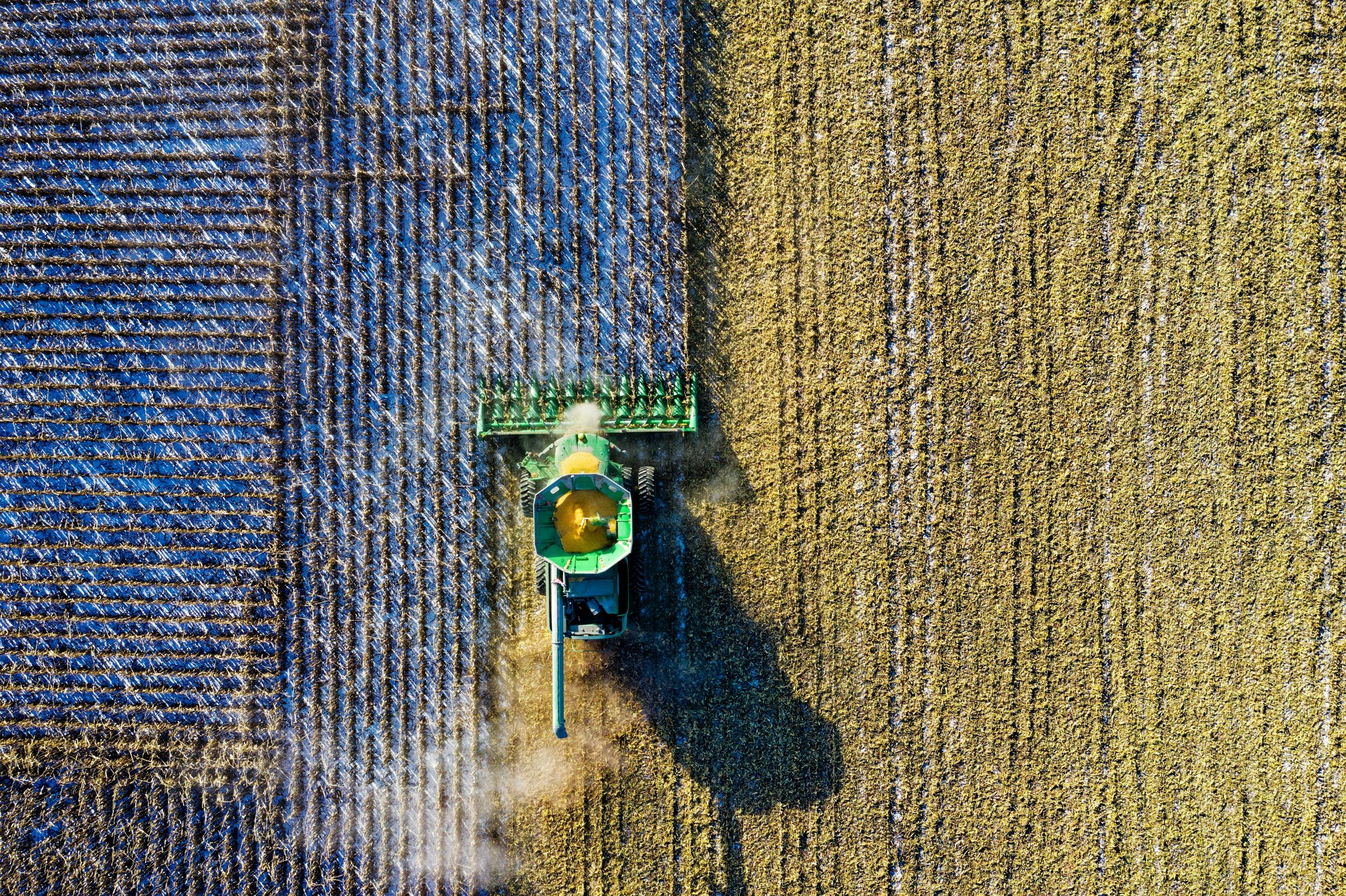
On 30 March, the Commission proposed a regulation to facilitate the use of non-road mobile machinery such as cranes, harvesters, forklift trucks and snow ploughs. These rules will eventually replace the various regulatory regimes that currently exist in the Member States.
As the new rules will harmonise the technical requirements for the type-approval of off-road vehicles in the EU, they will help to avoid fragmentation of the internal market and remove obstacles to the free movement of these machines, while ensuring a high level of road safety. The new rules will also reduce regulatory compliance and administrative burden, with cost savings of up to ¤846 million over ten years.
Currently, there are no harmonised requirements for the use of non-road mobile machinery on public roads in the EU. As a result, EU manufacturers are faced with a patchwork of legal frameworks that can be quite different from one Member State to another, and these differences lead to significant delays and costs. In addition, end-users such as rural contractors or construction companies may not be able to use their non-road mobile machinery in some Member States.
European Council adopts regulation on CO2 emissions from new passenger cars and vans |
This initiative fills a gap in the single market, which celebrates its 30th anniversary this year. The new regulation is an example of how the Commission continues to launch innovative initiatives to reduce barriers and costs, improve standards and increase the competitiveness of EU industries.
The proposed Regulation will:
– Complete the single market for non-road mobile machinery: The proposal creates a harmonised regulatory framework for the road type-approval of non-road mobile machinery in a way that ensures its free circulation and facilitates its use in all EU countries.
– Reducing the administrative burden and costs for stakeholders: Manufacturers and distributors will only be able to apply for road type-approval once in a single EU country, after which the machine can be used on the roads of all EU countries. This will facilitate market entry of new models, eliminate delays related to multiple approvals and reduce compliance costs for the industry. Users, such as rental companies, will benefit from lower compliance costs, will use and resell machinery more easily across EU borders, and will have a wider range of non-road mobile machines and more innovative design options at their disposal. Drivers, in turn, will benefit from harmonised rules ensuring a high level of road safety across the EU.
– Ensuring proportionality and legal certainty: The new rules, which will apply uniformly across the EU, only regulate the most important technical aspects and propose a simplified one-step procedure that is proportionate and takes into account the characteristics of these mobile machines, especially the fact that they do not regularly circulate on the road.
– Establishing more effective market surveillance: The Regulation contains market surveillance procedures, including safeguards against non-compliant machinery and its parts or accessories, and these safeguards are harmonised with those used in the general EU product legislation framework.
Next steps
The European Parliament and the Council of the European Union will discuss and agree on the proposed Regulation before it is adopted and enters into force.
In parallel, the Commission, in close cooperation with Member States and other stakeholders, will carry out preparatory work on the delegated acts provided for in this Regulation, which should contain the detailed technical requirements and tests to be requested for certain characteristics of machinery (braking, steering, lighting, field of vision, masses, dimensions, etc.).
Background
Non-road mobile machinery is used, inter alia, for construction, agriculture, gardening, forestry, material handling, and also has multiple municipal uses (such as harvesters, sprayers, loaders, excavators, mobile cranes, lawn tractors, forklift trucks, telehandlers, sweepers, lifting platforms or snow ploughs).
There are large and small companies involved in the manufacture of non-road mobile machinery in the EU, and their production has a total value of approximately EUR 12.5 billion per year. As in other segments of the machinery sector, there are a small number of large companies with significant market shares, while SMEs tend to be more specialised in certain niche markets. It is estimated that SMEs account for 98% of all registered companies and contribute up to 18% of industry revenues and 30% of industry employment.
The EU non-road mobile machinery sector is a major global producer and exporter of non-road mobile machinery. Of the annual production value, 42% is exported to non-EU countries, 54% is traded within the EU and only 4% is sold in the EU country where the machine is manufactured. Therefore, manufacturers of non-road mobile machinery are highly dependent on road type-approval in other Member States or third countries.
Currently, non-road mobile machinery already has to comply with certain harmonised standards, such as Directive 2006/42/EC on the safety of the design and construction of machinery, Directive 2014/30/EU on electromagnetic compatibility and Regulation (EU) 2016/1628 on pollutant emission limits.
More information
Publicaciones relacionadas:
 Agriculture: Commission approves new geographical indication for Spain
 AU-EU agrifood platform: reinforcing the link between the EU and African private sectors
 Long-term vision for rural areas: stronger, connected, resilient, and prosperous
Fisheries: EU and Norway strengthen cooperation for sustainable fishing in the Northeast Arctic
Long-term vision for rural areas: stronger, connected, resilient, and prosperous
Fisheries: EU and Norway strengthen cooperation for sustainable fishing in the Northeast Arctic
 Antitrust: Commission confirms unannounced inspections in the online food delivery sector
Leave a Reply