
The extreme heat, drought, forest fires and floods experienced in recent years will worsen in Europe, even under optimistic global warming scenarios, and will affect living conditions across the continent.

The EEA is publishing for the first time the European Climate Risk Assessment (EUCRA), which will help identify policy priorities for climate change adaptation and climate change sensitive sectors.
According to the assessment, Europe’s adaptation policies and measures are not keeping pace with rapidly increasing risks. In many cases, incremental adaptation will not be sufficient. As many of the measures implemented to improve climate resilience are long-term, urgent action may be needed even for risks that are not yet critical.
Certain regions of Europe are at the centre of multiple climate risks. Southern Europe is particularly threatened by forest fires and the effects of heat and water scarcity on agriculture, outdoor work and human health. Flooding, erosion and saline intrusion threaten Europe’s low-lying coastal regions, in particular many densely populated cities.
Many climate risks in Europe require urgent and immediate action
This assessment identifies 36 major climate risks for Europe, divided into five broad groups: ecosystems, food, health, infrastructure, and economy and finance. More than half of the major climate risks identified in the report require immediate additional action, and eight are particularly urgent, mainly to conserve ecosystems, to protect people from heat, to protect people and infrastructure from floods and forest fires, and to ensure the viability of European solidarity mechanisms such as the EU Solidarity Fund.
Ecosystems: Almost all risks in the ecosystems group require urgent or enhanced action, and risks to marine and coastal ecosystems are considered particularly serious. The EEA report recalls that ecosystems provide multiple services to people and therefore these risks have a high potential to cascade into other areas, such as food, health, infrastructure and the economy.
Food: Risks to crops from heat and drought have already reached a critical level in southern Europe and central European countries are also at risk. In particular, prolonged droughts affecting large geographical areas pose a significant threat to crops, food security and drinking water supplies. As part of the solution, a partial substitution of animal-based proteins with sustainably grown plant-based proteins would reduce water consumption in agriculture and dependence on imported feed.
Health: Heat is the most serious and urgent climate risk factor for human health. The population most at risk are specific groups such as outdoor workers exposed to extreme heat, the elderly and people living in substandard housing, in areas with a strong urban heat island effect or with inadequate access to cooling. Many tools to reduce climate-related health risks are outside the scope of traditional health policies, such as urban planning, building standards and labour legislation.
Infrastructure: More frequent and extreme weather events increase risks to Europe’s built environment and critical services such as energy, water and transport. Although coastal flood risks have been relatively well managed in Europe, rising sea levels and changing storm patterns can have devastating impacts on people, infrastructure and economic activities. In southern Europe, heat and droughts create significant risks for energy production, transmission and demand. Residential buildings must also adapt to rising temperatures.
Economy and finance: Europe’s economy and financial system face many climate risks. For example, extreme weather events can increase insurance premiums, jeopardise real estate assets and mortgage payments, and increase public spending and borrowing costs. The viability of the EU Solidarity Fund is already seriously threatened by the cost of floods and forest fires in recent years. Worsening climate impacts may also increase the spreads that private insurance has to cover and contribute to making low-income households more vulnerable.
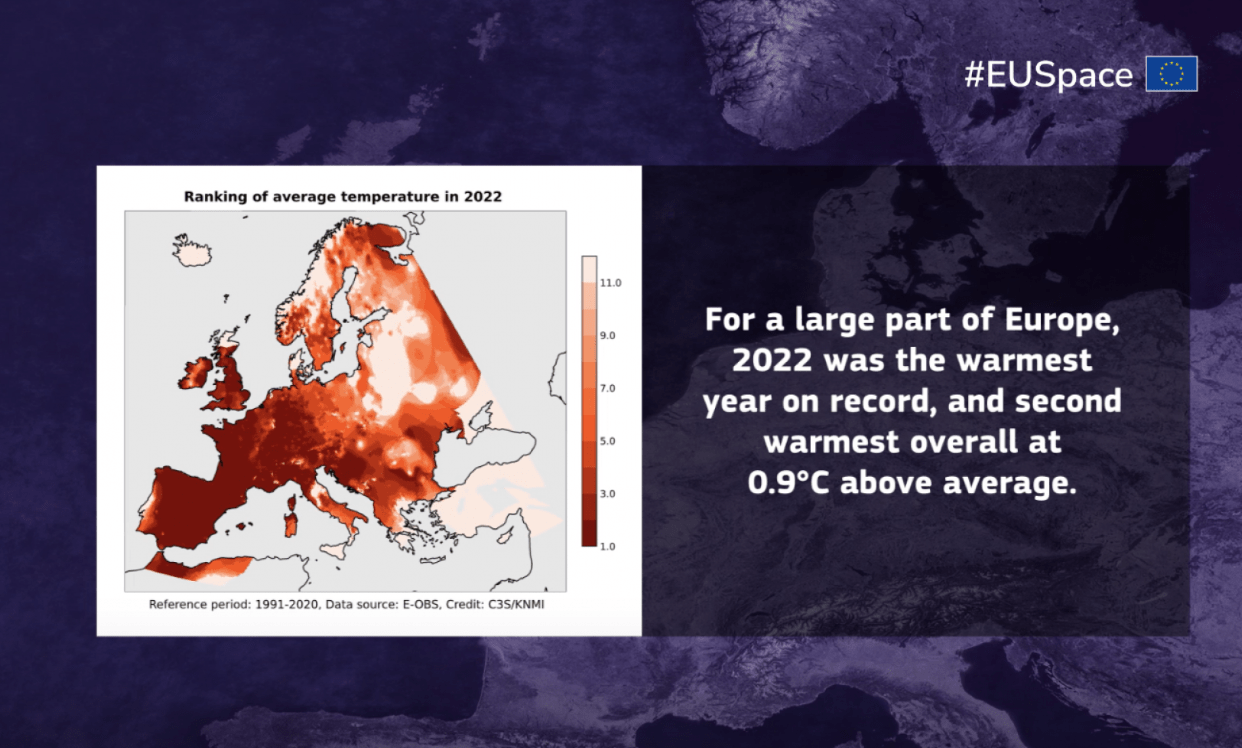
Another year of climate extremes for Europe
|
Closer cooperation is essential
The EU and its Member States have made considerable progress in understanding the climate risks they face and in preparing for them. National climate risk assessments are increasingly used to inform the development of adaptation policies. However, societies’ preparedness is insufficient, as policy implementation lags behind rapidly increasing levels of risk.
Most of the major climate risks identified in the report are considered to be “co-owned” by the EU, its Member States or other levels of government. In order to address and reduce climate risks in Europe, the EEA assessment stresses that the EU and its Member States must work together and also ensure that regional and local administrations are involved, where urgent and coordinated action is required.
Numerous gaps remain in the knowledge of the main climate risks identified in the EEA report. The EU can play a key role in improving knowledge on climate risks and risk ownership, and on how to address them through legislation, appropriate governance structures, monitoring, financing and technical support, the report says. This new knowledge would also be a key input for the follow-up of the European Climate Risk Assessment.
More information: European Environment Agency
Publicaciones relacionadas:
 Lessons in managing the risk of floods and droughts
 European Commission publishes new tools for anticipating and adapting to the sectoral consequences of droughts
 Thanks to COVID-19, it’s time to flatten the curve on climate change
 EU greenhouse gas emissions kept decreasing in 2018, largest reductions in energy sector
 Emissions of most harmful air pollutants dropped in 2018, marking EU progress under UN Convention
Leave a Reply