
According to the latest edition of the European State of the Climate Report (ESOTC), 2022 was yet another year of extremes. Not only did Europe see its hottest summer ever recorded, with temperatures reaching 1.4°C above average, much of Europe experienced prolonged and intense heatwaves.
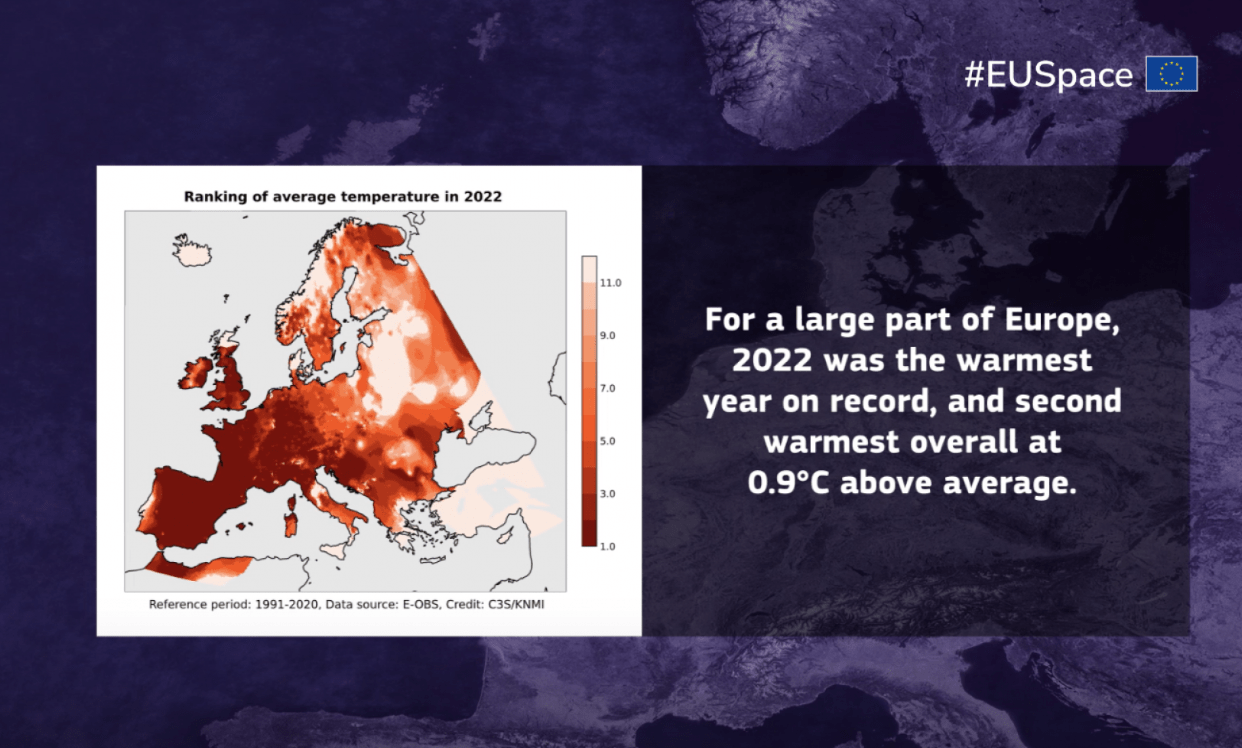
Europe’s lakes and seas also saw increasing surface temperatures. While 73% of Europe’s lakes recorded warmer-than-average temperatures, average sea surface temperatures were the warmest on record.
Exacerbated by low precipitation, which continued through spring and summer for most regions in Europe, together with the exceptional heatwaves, Europe also experienced a widespread and prolonged drought in 2022. On the whole, the year was 10% drier than average. This lack of precipitation, including winter snow, combined with the exceptional summer heatwaves, contributed to a record loss of ice from glaciers in the Alps.
The European State of the Climate Report, which is published annually by the Copernicus Climate Change Service (C3S), provides key climate indicators plus insights and in-depth analysis on climate conditions during the previous calendar year. The Report’s findings are based largely on an analysis of the data and services provided by the Copernicus Earth Observation programme.
Meaningful action starts with critical data
By providing authoritative information about the rapidly changing climate in Europe, Copernicus helps climate researchers and authorities make informed decisions and take effective action. It is also providing entrepreneurs with data and information to face these changes and adapt their activities.
Copernicus is particularly useful for helping local authorities be more proactive to climate-related risks. For example, national and local authorities use C3S-produced heat stress predictions to implement heat-related action plans. These actions can include things as simple as limiting outside activities and drinking plenty of fluids to actively monitoring at-risk populations or designing cities in a way that could help mitigate heat-related risks. It is also providing entrepreneurs opportunities to prepare the future and develop applications.
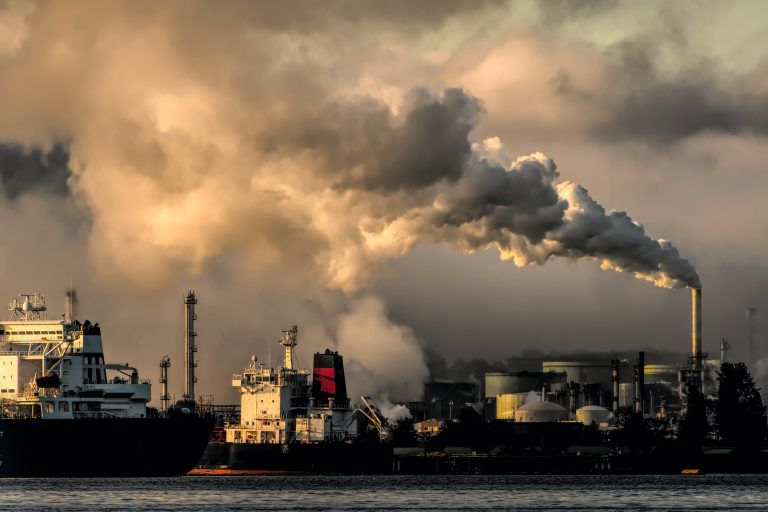
European Parliament approves 5 key new laws to reach the 2030 climate target |
ESOTC: an instrumental publication for EUSPA
“For us at EUSPA, the European State of the Climate (ESOTC) report is an instrumental publication for various reasons. Firstly, because it’s a confirmation that Union must accelerate its green transformation, and secondly because our agency has a role to play in the delivery of the EU Green Deal by providing space-based solutions,” says EUSPA Executive Director, Rodrigo da Costa.
Since its creation in 2021, EUSPA has been entrusted with the promotion and market uptake of Copernicus services and products such as those of the Copernicus Climate Service (C3S).
According to the EUSPA EO and GNSS Market Report, the total revenues from the sale of both EO data and services in the Climate services sector in 2021 amounted to €318 m and will grow by almost 50% over the next decade to reach €451 m in 2031.
“It is therefore crucial for the EUSPA Market Development team to have up-to-date information and data about the state of the climate to support accordingly innovators and creators to propose the appropriate solutions” adds Fiammetta Diani, EUSPA Head of Market, Downstream and Innovation.
EUSPA has been actively utilizing various funding streams to promote innovation and entrepreneurship in climate-related products, services, and applications. This effort includes initiatives like Horizon Europe calls and innovation competitions such as the myEUspace competition, which is part of the CASSINI Initiative. As a result of these efforts, projects like 100KTREEs, SWIFTT, and MAGDA have been able to receive support.

Council and European Parliament agree to decarbonise aviation sector |
- 100KTREEs is a Decision Toolbox designed to help cities improve air quality, biodiversity, human well-being, and reduce climate risks (such as urban heat islands and heatwaves) by planting more trees in urban areas.
- SWIFTT is an early warning system that uses EU space data and Artificial Intelligence to protect forest health and production by detecting forest threats such as forest bugs, heatwaves, fires, windthrow, and other climate-related events.
- Project MAGDA leverages GNSS (including Galileo) and drones to provide the agricultural sector with precise atmosphere monitoring. This project utilizes EU Space to predict and prepare for the future of weather, climate, and water.
A clear path forward
While the ESOTC report leaves no room for doubt that the climate is changing and that these changes are having extreme consequences here in Europe, it also gives us hope. If we fully leverage the wealth of data that Copernicus provides free of charge – and then act on it – there can be a clear path forward to a liveable future.
More information: EUSPA
Publicaciones relacionadas:
 What is carbon neutrality and how can it be achieved by 2050?
 Thanks to COVID-19, it’s time to flatten the curve on climate change
 Climate change adaptation: key to the future of EU agricultural imports
 Global emissions cuts in line with Paris Agreement mean near-term benefits for Earth
 CJEU upholds the inadmissibility of the appeal against the climate package
Leave a Reply