
The EU’s Rapid Deployment Capacity (EU RDC) is now operational. This marks a significant step in the EU’s ability to act quickly and decisively whenever a crisis erupts.
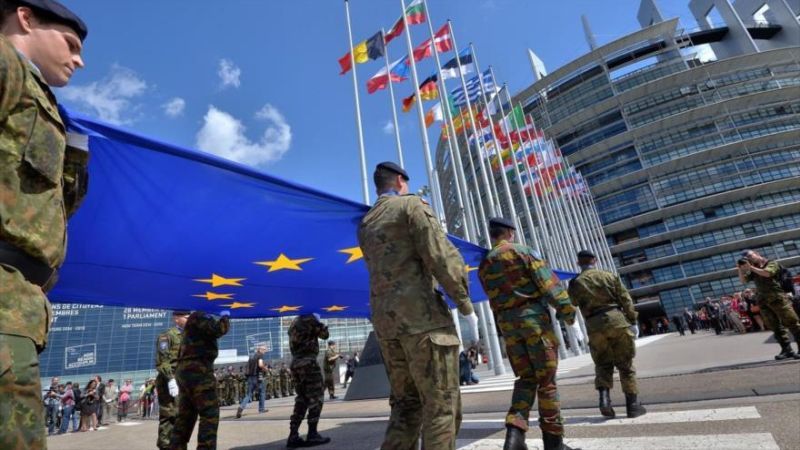
The EU RDC provides a robust, flexible and scalable military instrument of up to 5,000 troops that can be deployed in a swift manner, enabling the EU to respond to different crisis scenarios. The EU RDC is designed for a variety of missions, such as: stabilisation; rescue and evacuation; humanitarian assistance and disaster relief; peace enforcement; as well as conflict prevention and capacity building. The use of the EU RDC is subject to a unanimous decision by the EU Member States.
With the EU RDC operational, the EU is delivering on the level of ambition set out in the Strategic Compass for Security and Defence. This achievement reflects the EU’s commitment to becoming a stronger and more capable security provider, prepared to protect its values, citizens and international peace and security. Training and preparations will continue to assure continued operational readiness and to further improve the EU RDC’s ability to deal with more demanding scenarios.
Background
The Strategic Compass sets out the EU’s ambition to be a stronger and more capable security provider in its neighbourhood and beyond. The EU needs to be able to protect its citizens and to contribute to international peace and security, including by stepping up its ability to react quickly, robustly and effectively to conflicts and crises outside its borders.
The EU RDC framework allows for the deployment of up to 5,000 troops, consisting of modified EU Battlegroups on stand-by, as well as of EU Member States’ additional forces and capabilities, including land, air, maritime, space and cyber components. The Military Planning and Conduct Capability is the preferred EU command and control structure for the EU RDC. The strengthening of this structure is ongoing.
Regular live exercises involving EU Battlegroups and Member States additional forces play a vital role in enhancing preparedness, improving interoperability, and testing the Capacity under realistic scenarios. The EU has so far held live exercises in Spain, Germany and Hungary.
Under the Strategic Compass, EU Member States agreed that the EU Rapid Deployment Capacity should be fully operational by 2025. The key areas of work included:
- Securing the necessary forces, capabilities, and strategic enablers;
- Preparing operational scenarios to enhance readiness and facilitate decision-making;
- Conducting regular live exercises to strengthen interoperability and test readiness;
- Defining the scope of common costs for the EU RDC and its exercises;
- Enhancing the Military Planning and Conduct Capability to serve as the preferred command structure for EU RDC operations.
More information: European External Action Service (EEAS)
Publicaciones relacionadas:
 Feasibility of a future European army
 Russian military control of Ukraine nuclear plants cause for grave concern, nuclear energy agency warns
 Eurobarometer: Europeans approve EU’s response to the war in Ukraine
 EU launches the Support Hub for Internal Security and Border Management in Moldova
 Defence and security of the European Union
Leave a Reply