• Skip to primary navigation
  • Skip to main content
  • Skip to primary sidebar
  • Skip to footer
  • Bluesky
  • Facebook
  • Instagram
  • Twitter
  • YouTube
CDE Almería – Centro de Documentación Europea – Universidad de Almería

CDE Almería - Centro de Documentación Europea - Universidad de Almería

Centro de Documentación Europea de la Universidad de Almería

  • HOME
  • WHAT´S ON
    • EU NEWS
    • Activities
    • EU Calls and Awards
    • Radio Program «Europe with You»
  • DOCUMENTATION
    • EU Media Collection
      • Web Space
      • MEDIATHEQUE REPOSITORY
  • Europe on the net
    • Institutions
    • EU Representation in Spain
    • European information network of Andalusia
  • ABOUT US
    • Presentation
    • Services
    • People
    • Contact
  • Spanish
  • English

EU and Switzerland launch negotiations to deepen bilateral relations

Inicio » Noticias UE » Asuntos Institucionales » International Politics and Cooperation » EU and Switzerland launch negotiations to deepen bilateral relations

20 de March de 2024

President Ursula von der Leyen and President of the Swiss Confederation Viola Amherd launched the negotiations on a broad package of measures to deepen and expand the EU-Switzerland relationship.
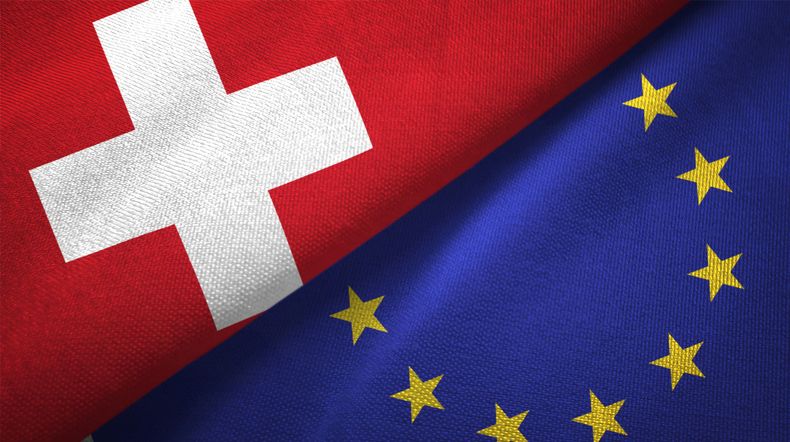
This follows the adoption of the Swiss and EU negotiating mandates on 8 and 12 March 2024, respectively. The two mandates authorise the Commission and Switzerland to negotiate the package outlined in the Common Understanding, endorsed by the Swiss Federal Council and the European Commission in November 2023.

The Common Understanding confirms both sides’ ambition to conclude the negotiation this year. The negotiating teams will meet tomorrow.

Mutual benefits of European and Swiss citizens and businesses

The negotiations aim at ensuring a level playing field for competition between EU and Swiss companies operating within the EU internal market and guarantee the protection of the rights of EU citizens working in Switzerland, including non-discrimination between citizens of different Member States.

Key elements of the package include:

  • Institutional provisions to be included in existing and future agreements with Switzerland related to the EU internal market, providing for dynamic alignment with EU law, its uniform interpretation and application, and dispute settlement;
  • State aid provisions in several existing and in future agreements with Switzerland related to the internal market;
  • An agreement allowing for Switzerland’s participation in EU programmes, including Horizon Europe;
  • An agreement on Switzerland’s regular and permanent financial contribution to social and economic cohesion in the EU as a counterpart to its participation in the internal market;
  • A relaunch of negotiations towards agreements on electricity, food safety and health and on the participation of Switzerland in the European Union Agencies for the Space Programme and for Railways.

Moreover, following the launch of the negotiations, the Commission opens the possibility to Swiss entities to apply for the European Research Council calls opening in 2024. Swiss applicants will be treated as if Switzerland is an associated country from admissibility and eligibility to evaluation, up until the preparation of grant agreements.
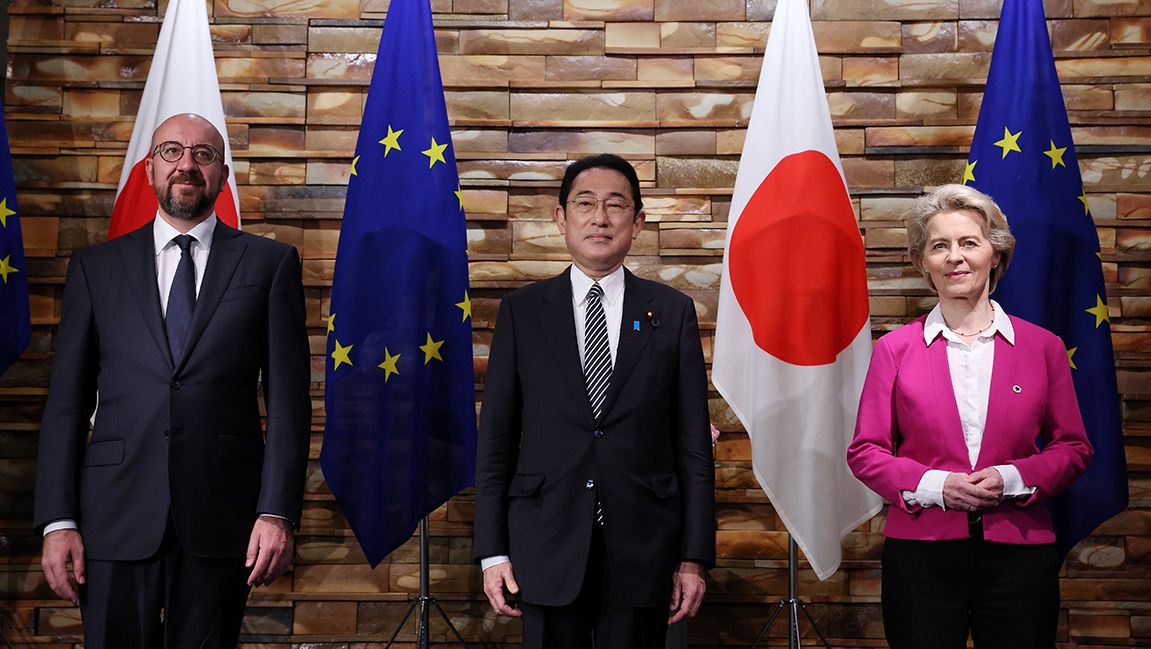
Deeper cooperation between EU and Japan is a vital necessity

Background

The EU and Switzerland are close neighbours with strong cross border links. The EU is Switzerland’s first trading partner, while Switzerland is the fourth largest partner for the EU. About one and a half million EU citizens live in Switzerland, and around 450 000 Swiss citizens live in the EU. A few hundred thousand of EU citizens cross the border daily to work.

Between March 2022 and November 2023, the EU and Switzerland were engaged in exploratory discussions on the future of their bilateral relations. On 15 December 2023, the Commission and the Federal Council published the Common Understanding that provides a written record of the outcome of the exploratory talks.

The EU mandate has been agreed in line with this Common Understanding, reflected in the Commission’s recommendation for a mandate, presented on 20 December 2023.

The mandate builds on the 2014 mandate for an institutional framework agreement as well as earlier mandates for agreements on electricity, health, food safety and the participation of Switzerland in the European Union Agencies for the Space Programme and for Railways.

More information: European Commission
Publicaciones relacionadas:

EU-UK talks: MEPs display unwavering support for the EU position SOTEU Ursula Von der Leyen EuropaSOTEU 2020: President Von der Leyen sets the course for Europe EU-US: A new transatlantic agenda for global change Nearly 70 billion euros in Spain’s Recovery Plan Afghanistan: EU’s position and next steps

EU News,  Institutional Affairs,  International Politics and Cooperation bilateral relations,  EU-Switzerland,  European Union,  negotiations,  relationship,  switzerland

“This is a space for debate. All comments, for or against publication, that are respectful and do not contain expressions that are discriminatory, defamatory or contrary to current legislation will be published”.

Reader Interactions

Leave a Reply Cancel reply

Your email address will not be published. Required fields are marked *

This site uses Akismet to reduce spam. Learn how your comment data is processed.

Primary Sidebar

Footer

  • CDE Almería
  • Biblioteca Nicolás Salmerón – Universidad de Almería
  • Planta: 1ª, Despacho: 1.05.0B.
  • Ctra. Sacramento s/n. Almería (Spain)
  • Teléfono: (+34) 950 015266

HOME
NEWS
DOCUMENTATION
EUROPE ON THE NET
ABOUT US

  • LEGAL NOTICE
  • PRIVACY POLICY
  • COOKIE POLICY
  • ACCESSIBILITY
  • SITEMAP

Copyright © 2026 CDE Almería · Creative Commons LicenseThis work is licensed under a Creative Commons Attribution-NonCommercial 4.0 International License.

<p>El Centro de Documentación Europea de la Universidad de Almería utiliza cookies propias y de terceros para facilitar al usuario la navegación en su página Web y el acceso a los distintos contenidos alojados en la misma. Asimismo, se utilizan cookies analíticas de terceros para medir la interacción de los usuarios con el sitio Web. Pinche el siguiente enlace si desea información sobre el uso de cookies y como deshabilitarlas. </p>

Politica de privacidad

El Centro de Documentación Europea de la Universidad de Almería utiliza cookies propias y de terceros para facilitar al usuario la navegación en su página Web y el acceso a los distintos contenidos alojados en la misma. Asimismo, se utilizan cookies analíticas de terceros para medir la interacción de los usuarios con el sitio Web. Pinche el siguiente enlace si desea información sobre el uso de cookies y como deshabilitarlas. <a href="/politica-de-cookies" rel="noopener" target="_blank">Más información</a>

Cookies estrictamente necesarias

Las cookies estrictamente necesarias tiene que activarse siempre para que podamos guardar tus preferencias de ajustes de cookies.

Básicamente la web no funcionara bien si no las activas.

Estas cookies son:

  • Comprobación de inicio de sesión.
  • Cookies de seguridad.
  • Aceptación/rechazo previo de cookies.
Cookies de terceros

Esta web utiliza Google Analytics, Google Tag Manager y Yandex Metrika para recopilar información anónima tal como el número de visitantes del sitio, o las páginas más populares.

Dejar estas cookies activas nos permite mejorar nuestra web.

Política de cookies

Pinche el siguiente enlace si desea información sobre el uso de cookies y como deshabilitarlas. Más información