
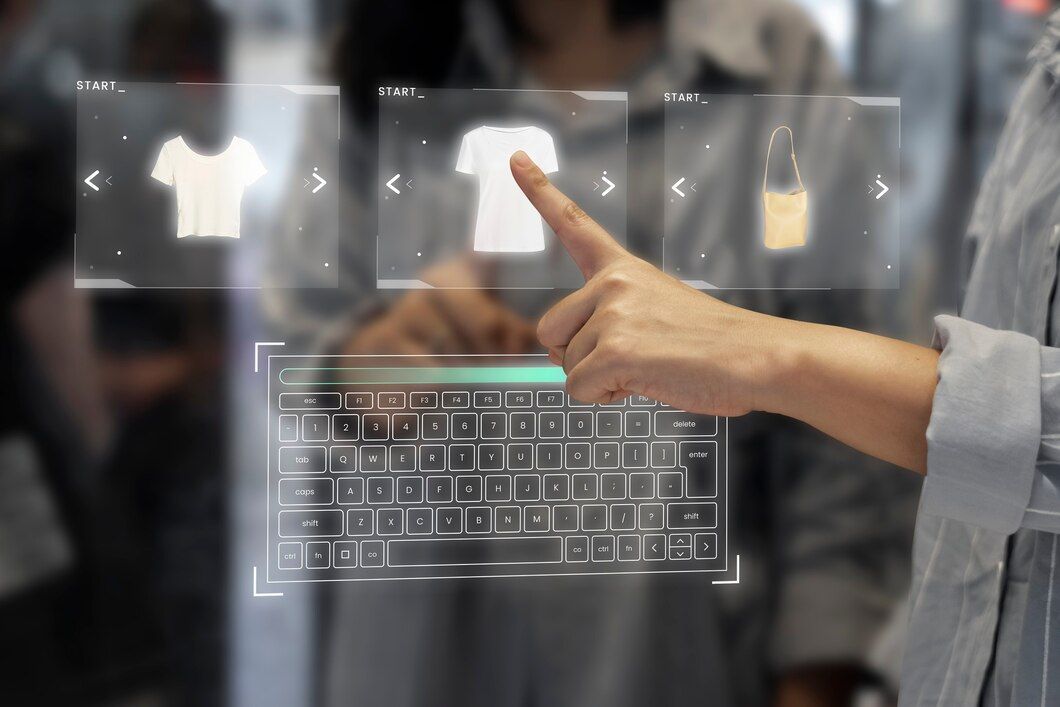
The EU and the Republic of Korea have concluded negotiations for a landmark Digital Trade Agreement (DTA), underscoring their commitment to a strong and reliable partnership that is fit to face the fast-paced digital developments of today. During the 12th Trade Committee under the EU-South Korea Free Trade Agreement (FTA), Commissioner for Trade and Economic Security Maroš Šefčovič and Korean Trade Minister Cheong In-kyo emphasised the importance of mutually beneficial rules around the data and digital technologies, which increasingly permeate every sphere of life.
This ambitious Agreement reflects the EU’s commitment to setting high-standard digital trade rules, while connecting further the digital economies of the EU and Korea. The deal provides binding rules that build consumer trust; ensure predictability and legal certainty for businesses, as well as trusted data flows; while removing and preventing the emergence of unjustified barriers to digital trade.
The DTA promotes an approach for building digital and data rules with individuals and their rights at its core. It ensures the EU and Korea preserve policy space to develop and implement the policies required to address new challenges in the digital economy.
The provisions cover cross-border data flows, privacy and personal data protection, customs duties on electronic transmissions, electronic contracts, authentication and trust services, source code protection, online consumer trust, unsolicited direct marketing communications, open government data and regulatory cooperation on digital trade.
In addition, this Agreement seeks to enhance digital trade in services and goods, by increasing legal certainty for European businesses in Korea. It recognises the legal validity and enforceability of electronic contracts and encourages the use of electronic signatures. This will enable European companies to serve their South Korean customers directly from Europe more efficiently. European consumers will benefit from improved consumer protection regulations and measures addressing unsolicited communications.
The EU and the Republic of Korea also agreed to deepen their 2010 FTA, by establishing a new specialised committee on emerging trade and economic issues. This committee will provide a dedicated platform for the EU and Korea to cooperate on topics of strategic importance such as economic security, overcapacity, and supply chains resilience.
Next steps
The political conclusion marks the end of the negotiations for the EU-Korea Digital Trade Agreement. The Commission and Korea will now follow their respective procedures to work towards the formal signature and conclusion of the EU-Korea DTA. On the EU side, this will include legal scrubbing and translations into all EU languages, before the proposal can be sent to the Council and European Parliament.
Background
The Digital Trade Agreement complements the 2010 EU-Korea FTA, which underpins the robust and continuously growing economic ties between the two partners. Since its application in 2011, bilateral trade has grown to record levels, reaching €132 billion in 2022.
The DTA also complements the EU-Korea Digital Partnership. It sets high standards for digital trade rules in the Indo-Pacific region, and beyond, reflecting the EU’s approach on digital and data policies, which puts people and their rights at the center.
Examples of digital trade range from cloud services, financial services, and digitally ordered services or products, to everyday actions such as downloading an application on a smartphone, booking a ride through an app, or purchasing a book online.
The Specialised Committee on emerging trade and economic issues will further contribute to strengthening these ties; it will meet once a year and will report on its work to the Trade Committee.
For More Information European Comission.
Publicaciones relacionadas:
 Negotiations on the future EU-Mexico trade agreement
 The European Union and the Republic of Korea advance their strategic partnership at annual Joint Committee meeting
 EU and Chile strengthen a comprehensive political and trade partnership
 La UE y los EE. UU. acuerdan reforzar su cooperación en tecnologías emergentes, comercio sostenible y seguridad económica
 EU reaffirms trade support for Ukraine and Moldova
Leave a Reply