
The EU and Australia signed a Memorandum of Understanding (MoU) for a bilateral partnership to cooperate on sustainable critical and strategic minerals.
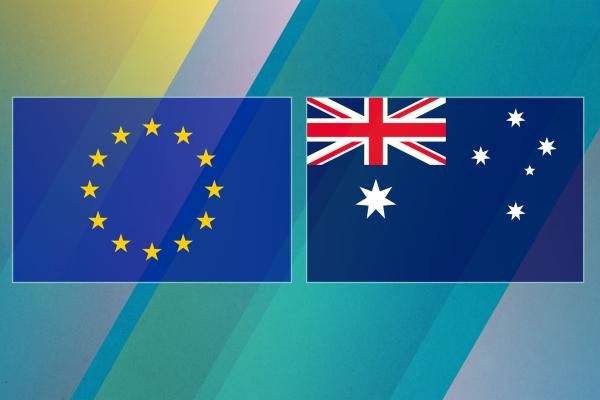
The MoU was signed on behalf of the EU by Executive Vice-President and Commissioner for Trade Valdis Dombrovskis, and Commissioner for Internal Market, Thierry Breton. The signatories for Australia were Resources and Northern Australia Minister Madeleine King, and Minister for Trade and Tourism Don Farrell.
This partnership aims to support several common objectives, while based on mutual benefits. In particular, it seeks to enable the EU to diversify its supplies of materials necessary for the green and digital transitions, whilst contributing to the development of Australia’s domestic critical minerals sector. The partnership covers the entire critical and strategic minerals value chain: exploration, extraction, processing, refining, recycling, and processing of extractive waste.
In addition to jointly developing projects along the entire value chain in the EU and in Australia, the partnership will also explore cooperation in countries where the EU and Australia have mutual interests, focusing on reducing environmental impacts and benefiting local communities. Additionally, it promotes innovative and digital technologies and services for mining, and other projects along the critical minerals value chain.
Areas of cooperation
This MoU enhances cooperation between Australia and the EU in the following areas:
- Integration of sustainable raw materials value chains, including networking, joint facilitation of projects (e.g., via joint ventures), creation of new business models and promotion and facilitation of trade and investment linkages, ensuring the well-functioning, sustainability, and resilience of these critical supply chains.
- Cooperation on research and innovation along the raw materials value chains, including on minerals knowledge and the minimisation of environmental and climate footprint.
- Cooperation to promote high environmental, social, and governance standards and practices, as well as improved policy alignment, driven by full respect of worker’s conditions and safety, and by the need of a sustainable and secure production of critical minerals.
The signature of the MoU provides a framework to build secure and sustainable critical and strategic minerals value chains between the EU and Australia. These value chains will support the clean energy and digital transitions and are relevant for other key industrial sectors such as defence and aerospace.
The EU also makes use of its bilateral free trade agreements to deepen trade and investment links, diversify supply chains, and enhance the resilience of its economy, particularly in the context of critical raw materials supply chains. The EU already has the largest network of trade agreements in the world, with a total of 74 countries. The latest agreements with the United Kingdom, New Zealand and Chile contain a dedicated chapter on Energy and Raw Materials. Negotiations for an EU-Australia free trade agreement are currently on-going.

European Critical Raw Materials Act: law to ensure access to a diversified, affordable and sustainable supply enters into force |
Next Steps
Following the signature of the MoU, a roadmap with concrete actions will be jointly developed to put the Strategic Partnership into practice, over the next six months.
Background
With critical raw materials being an essential prerequisite for delivering on the green and digital transitions, the Commission has started to build a series of partnerships on raw materials, following the Action Plan on Critical Raw Materials and the Critical Raw Materials Act. Such agreements were signed with Canada and Ukraine in 2021, with Kazakhstan and Namibia in 2022, with Argentina, Chile, Zambia, the Democratic Republic of Congo and Greenland in 2023, and with Rwanda, Norway and Uzbekistan in 2024.
More information: European Commission
Publicaciones relacionadas:
 EU requests consultations under the Trade and Cooperation Agreement on UK permanent closure of sandeel fisheries
 EU exports under Free Trade Agreements surpass €1 trillion
 Commission sends request for information to AliExpress under the Digital Services Act
 Commission and India sign agreement on semiconductors
 EU-New Zealand trade agreement enters into force, opening up new opportunities for EU exporters
Leave a Reply