• Skip to primary navigation
  • Skip to main content
  • Skip to primary sidebar
  • Skip to footer
  • Bluesky
  • Facebook
  • Instagram
  • Twitter
  • YouTube
CDE Almería – Centro de Documentación Europea – Universidad de Almería

CDE Almería - Centro de Documentación Europea - Universidad de Almería

Centro de Documentación Europea de la Universidad de Almería

  • HOME
  • WHAT´S ON
    • EU NEWS
    • Activities
    • EU Calls and Awards
    • Radio Program «Europe with You»
  • DOCUMENTATION
    • EU Media Collection
      • Web Space
      • MEDIATHEQUE REPOSITORY
  • Europe on the net
    • Institutions
    • EU Representation in Spain
    • European information network of Andalusia
  • ABOUT US
    • Presentation
    • Services
    • People
    • Contact
  • Spanish
  • English

EMA advises on intradermal use of Imvanex / Jynneos against monkeypox

Inicio » EU News » Health » Diseases » EMA advises on intradermal use of Imvanex / Jynneos against monkeypox

22 de August de 2022

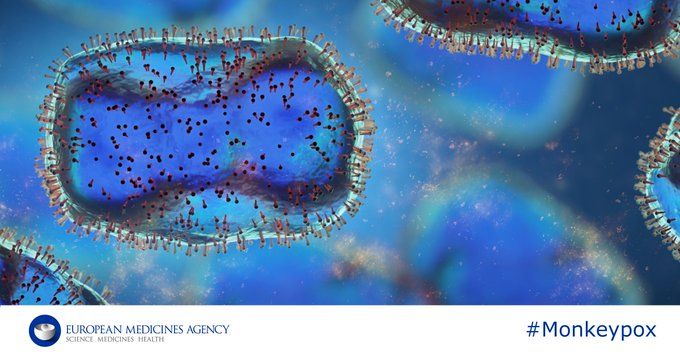
The European Medicines Agency (EMA) has advised on intradermal use of monkeypox vaccine. EMA’s Emergency Task Force (ETF) has reviewed data showing that people who receive the monkeypox vaccine as an intradermal injection (injection into the skin) produce similar levels of antibodies to those who receive it as a subcutaneous injection (injection under the skin). As only one fifth of a dose is necessary for intradermal vaccination compared to subcutaneous injection, this new recommendation will help to protect many more people with the available doses.
More about the medicine

Imvanex prepares the body to defend itself against infection with the variola (smallpox), monkeypox and vaccinia viruses. It contains an attenuated form of the vaccinia virus called ‘modified vaccinia virus Ankara’ (MVVA), which is closely related to the smallpox and monkeypox viruses but does not cause disease in humans and cannot reproduce in human cells. Because of the similarity between these viruses and MVVA, antibodies produced against MVVA, together with other components of the immune system, are expected to protect against monkeypox, smallpox and vaccinia.

When a person is given the vaccine, the immune system recognises the virus in the vaccine as ‘foreign’ and makes antibodies against it. When the person later comes into contact with similar viruses, the antibodies and other components of the immune system will be able to kill those viruses and help protect against disease.

The marketing authorisation holder for Imvanex is Bavarian Nordic A/S.

More about monkeypox

Monkeypox is a rare disease caused by infection with the monkeypox virus, which causes symptoms similar to those of smallpox. Monkeypox begins with fever, headache, muscle aches, exhaustion and lymph node swelling. A rash commonly develops one to three days after the onset of fever, first appearing on the face and spreading to other parts of the body, including hands and feet.

Monkeypox can be fatal, even though it is typically milder than smallpox. It is transmitted to people from various wild animals, such as rodents and primates, but can also be transmitted between people following direct or indirect contact. Current outbreaks reported since May 2022 are the first reported outside of Africa with no links to endemic areas. On 23 July 2022, the World Health Organisation (WHO) declared the monkeypox outbreak a public health emergency of international concern.

More information: EMA- Press release

Publicaciones relacionadas:

EMA receives application for conditional marketing authorisation of COVID-19 Vaccine AstraZeneca Europe recommends Covid-19 vaccination for children 5 to 11 years of age Spain to receive vaccines and antivirals against monkeypox EMA and ECDC recommend fourth dose vaccination for those over 60 years of age European Commission unveils EU vaccines strategy

Diseases,  EU News,  Health EMA,  intradermal use,  monkeypox,  vaccine

“This is a space for debate. All comments, for or against publication, that are respectful and do not contain expressions that are discriminatory, defamatory or contrary to current legislation will be published”.

Reader Interactions

Leave a Reply Cancel reply

Your email address will not be published. Required fields are marked *

This site uses Akismet to reduce spam. Learn how your comment data is processed.

Primary Sidebar

Footer

  • CDE Almería
  • Biblioteca Nicolás Salmerón – Universidad de Almería
  • Planta: 1ª, Despacho: 1.05.0B.
  • Ctra. Sacramento s/n. Almería (Spain)
  • Teléfono: (+34) 950 015266

HOME
NEWS
DOCUMENTATION
EUROPE ON THE NET
ABOUT US

  • LEGAL NOTICE
  • PRIVACY POLICY
  • COOKIE POLICY
  • ACCESSIBILITY
  • SITEMAP

Copyright © 2026 CDE Almería · Creative Commons LicenseThis work is licensed under a Creative Commons Attribution-NonCommercial 4.0 International License.

<p>El Centro de Documentación Europea de la Universidad de Almería utiliza cookies propias y de terceros para facilitar al usuario la navegación en su página Web y el acceso a los distintos contenidos alojados en la misma. Asimismo, se utilizan cookies analíticas de terceros para medir la interacción de los usuarios con el sitio Web. Pinche el siguiente enlace si desea información sobre el uso de cookies y como deshabilitarlas. </p>

Politica de privacidad

El Centro de Documentación Europea de la Universidad de Almería utiliza cookies propias y de terceros para facilitar al usuario la navegación en su página Web y el acceso a los distintos contenidos alojados en la misma. Asimismo, se utilizan cookies analíticas de terceros para medir la interacción de los usuarios con el sitio Web. Pinche el siguiente enlace si desea información sobre el uso de cookies y como deshabilitarlas. <a href="/politica-de-cookies" rel="noopener" target="_blank">Más información</a>

Cookies estrictamente necesarias

Las cookies estrictamente necesarias tiene que activarse siempre para que podamos guardar tus preferencias de ajustes de cookies.

Básicamente la web no funcionara bien si no las activas.

Estas cookies son:

  • Comprobación de inicio de sesión.
  • Cookies de seguridad.
  • Aceptación/rechazo previo de cookies.
Cookies de terceros

Esta web utiliza Google Analytics, Google Tag Manager y Yandex Metrika para recopilar información anónima tal como el número de visitantes del sitio, o las páginas más populares.

Dejar estas cookies activas nos permite mejorar nuestra web.

Política de cookies

Pinche el siguiente enlace si desea información sobre el uso de cookies y como deshabilitarlas. Más información