
On 29 May, the Council adopted a Recommendation on the development of a new European Union framework for science diplomacy. The framework aims to strengthen the Union’s position as a global leader in science and technology and to use scientific cooperation to advance its foreign policy objectives.
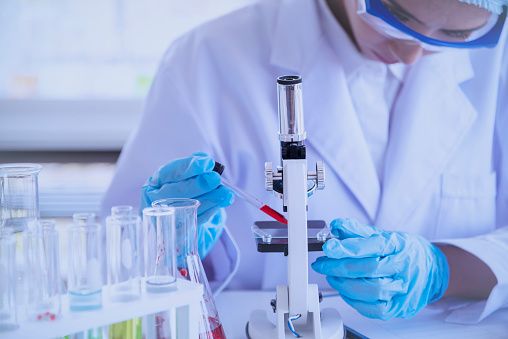
Science as a diplomatic tool
The Recommendation emphasises that science is a global public good and that scientific collaboration can build trust and facilitate dialogue with third countries. It highlights the importance of open and secure international cooperation in the field of research and innovation, based on the association of third countries with Horizon Europe and other initiatives, such as ‘Choose Europe for Science’.
The new framework calls for maximising the impact of science diplomacy in terms of safeguarding and promoting the Union’s values, such as freedom, democracy, equality, the rule of law and respect for human rights. The framework recognises its role in advancing the EU’s competitiveness interests and the need to balance scientific objectives with foreign and security policy interests. This includes assessing risks and seizing opportunities in areas such as artificial intelligence and quantum technologies.
Stronger partnerships
The Recommendation highlights the Council’s determination to strengthen partnerships with the Global South to support research capacity and address common global challenges. Specifically, the Recommendation calls for the creation of a Mediterranean Centre for Science Diplomacy.
It also encourages Member States to establish appropriate support arrangements for the coordination of science diplomacy across government and with stakeholders, and to foster links between diplomatic services and research organisations, universities and other higher education institutions, including alliances of European universities.
The text adopted today emphasises the integration of science diplomacy into education and training programmes to raise awareness among future generations.
It also calls on the Commission to strengthen the monitoring of pioneering developments in research, technology and innovation, such as the increased use of AI in science, and to assess their implications
The framework also highlights the importance of maintaining research security and ensuring that science diplomacy initiatives are consistent with the Union’s external action.
Background
Science diplomacy refers to the direct or indirect use of science, scientific data and scientific cooperation to underpin and support foreign policy at various levels, as well as the practice of diplomacy with a view to supporting and promoting international cooperation and scientific progress. It is a powerful tool for projecting non-coercive power and pursuing the EU’s economic interests and fundamental values more effectively, responding to the demands and interests of partner countries and capitalising on the EU’s strengths as a research and innovation powerhouse. Some Member States have developed or are developing their own science diplomacy strategies, which may include the creation of specific roles within ministries, such as scientific advisers, directors of science, special envoys for science diplomacy and technology ambassadors.
In its Conclusions on the comprehensive approach to research and innovation, the Council urged the Commission and the European External Action Service to draw up a European Agenda for Science Diplomacy.
On 27 February 2026, the Commission presented the Council Recommendation on an EU framework for science diplomacy as part of a broader package on open and secure international cooperation in research and innovation.
Recommendations are non-binding EU acts provided for in Article 288 of the Treaty on the Functioning of the European Union. Although recommendations have no legal effect, they provide guidance on the interpretation or content of EU law.
For more information: Council of the European Union
Publicaciones relacionadas:
 Commission launches strategy to make Europe Quantum leader by 2030
 New strategy to strengthen Europe’s research and technology infrastructures
 Commission launches ‘Resource for AI Science in Europe’
Council paves the way for creation of AI gigafactories
Commission launches ‘Resource for AI Science in Europe’
Council paves the way for creation of AI gigafactories
 The Council supports the move to take bio-based innovations from the laboratory to production
Leave a Reply