
Egypt and the European Union are strengthening their strategic partnership in the field of renewable energy with a funding package of up to €690 million to upgrade and expand Egypt’s electricity grid. The package combines a €600 million loan from the European Investment Bank’s development arm, EIB Global, with up to €90 million in grants from the European Commission.
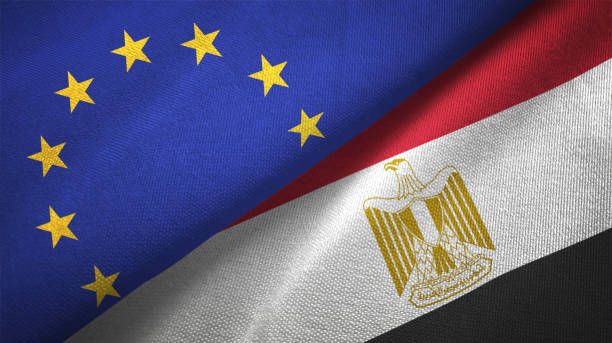
Led by the state-owned Egyptian Electricity Transmission Company (EETC), this project aims to integrate a total of 22 gigawatts (GW) of renewable energy capacity into the grid by 2030, enough to supply around 10 million households with electricity.
The investment supports national energy priorities and the ambition to expand renewable energy, strengthen the electricity infrastructure and reinforce the country’s role as a regional energy hub. It also promotes the objectives of the EU-Egypt Strategic and Comprehensive Partnership, including the mobilisation of investment, cooperation on renewable energy and the transition to a more sustainable, secure and competitive energy system.
“This agreement reflects the strength of the partnership between Egypt and the European Union and our shared determination to advance the green transition,” said the Minister of Foreign Affairs, International Cooperation and Egyptian Expatriates, Mr. “Together with the EIB and the EU, we are taking an important step towards modernising our electricity grid, strengthening energy security and creating new opportunities for sustainable growth. This is the kind of practical cooperation that brings real benefits to our economy and our citizens.”
The project is one of the first concrete operations under the Trans-Mediterranean Initiative for Cooperation on Renewable Energy and Clean Technologies (T-MED), a flagship initiative of the Pact for the Mediterranean, designed to support cooperation on renewable energy and clean technologies between the European Union and its southern Mediterranean partners.
“The Pact for the Mediterranean continues to deliver results,” said the European Commissioner for the Mediterranean, Dubravka Šuica. “As part of its recently launched flagship initiative, T-MED, we are today presenting a major EU-supported project to strengthen and expand Egypt’s electricity infrastructure. This will reinforce Egypt’s role in regional energy markets and create significant business opportunities for local and European companies. It is further proof of our shared commitment to sustainable growth, energy security and long-term prosperity in the Mediterranean.”
“This project is a very concrete example of what the partnership between Egypt and the European Union can achieve,” said EIB Vice-President Gelsomina Vigliotti. “By working together, Egypt, the EU and the EIB are supporting the expansion and modernisation of the electricity grid, unlocking more renewable energy and strengthening the country’s role as a regional energy hub. For the EIB, this is about supporting sustainable growth, greater energy resilience and better opportunities for people and businesses across the country.”
The programme includes the construction of state-of-the-art substations and the installation of advanced transmission lines to integrate solar and wind energy generated in the Red Sea and Gulf of Suez regions into the national grid. The investments are expected to reduce transmission losses, improve electricity reliability, strengthen energy security and support sustainable economic development. They will also contribute to regional cooperation on electricity and to the future trade and integration of clean energy across the Mediterranean.
The EU funding package accounts for 44% of the programme’s total cost, with the remaining funding coming from the EETC’s own resources. This shared financing structure reflects the joint commitment of Egypt and its European partners to making long-term investments in clean, reliable and resilient energy infrastructure. The phase supported by the EIB will be implemented between 2027 and 2030. The government will act as the borrower through the Central Bank of Egypt, whilst the EETC will lead the implementation as part of wider efforts to modernise the national electricity system.
Background information
The EIB Group
The European Investment Bank (EIB) Group is the financial arm of the European Union, owned by the 27 Member States, and one of the world’s largest multilateral development banks. In 2025, the EIB Group signed up to €100 billion in new financing and advisory services for more than 870 high-impact projects. across eight key priorities supporting the EU’s policy objectives: climate action and the environment, digitalisation and technological innovation, security and defence, territorial cohesion, agriculture and the bioeconomy, social infrastructure, strong global partnerships, and the union of savings and investment.
Beyond long-term loans for major infrastructure projects, the EIB Group leverages private investment for innovative, high-risk projects and companies, playing an increasingly important role in European markets for risk debt, venture capital, guarantees and securitisation.
The European Investment Fund (EIF) is the EIB Group’s subsidiary specialising in providing guarantees and capital to improve access to finance for small and medium-sized enterprises and start-ups across Europe. Acting as a lead investor, through its extensive network of partner banks and investment funds, the EIF mobilises private investment and nurtures the venture capital fund ecosystem to support innovative European entrepreneurs.
EIB Global
EIB Global is the EIB Group’s specialised arm dedicated to increasing the impact of win-win international partnerships and development finance, and a key partner of Team Europe and the Global Gateway strategy. EIB Global brings the EIB Group closer to people, businesses and institutions through some 30 offices worldwide outside the EU.
Global Gateway
Global Gateway is the EU’s strategy to promote smart, clean and secure connections in the digital, energy and transport sectors, whilst strengthening health, education and research systems worldwide. It is the EU’s contribution to bridging the global investment gap that accompanies just social, green and digital transitions beyond Europe’s borders, and it boosts the competitiveness and security of global supply chains.
Global Gateway is a way of connecting Europe and its partners around the world, based on trust, sustainability and mutual interest. It provides investment for large-scale transformative projects, whilst offering a respectful and high-quality partnership to our partner countries in line with the Sustainable Development Goals and the Paris Agreement.
By 2027, Global Gateway aims to mobilise up to €400 billion in investments worldwide by pooling the resources of Team Europe, which brings together the EU, its Member States, financial and development institutions, and European businesses. All Global Gateway projects are designed in collaboration with our partners to determine how best to leverage our investment offer, ensuring that the outcomes improve the necessary infrastructure and connectivity.
The Trans-Mediterranean Initiative for Cooperation on Renewable Energy and Clean Technologies (T-MED) will be a major contribution to the Global Gateway in the Mediterranean in the field of renewable energy and cooperation on clean technologies. It will support clean, secure and affordable energy, strengthen industrial competitiveness and create new investment opportunities, skills and jobs on both sides of the Mediterranean.
More information: European Commission
Publicaciones relacionadas:
 Europe-Japan cooperation in AI-based manufacturing technologies
 EU-US trade deal
 The EU and Vietnam are strengthening their cooperation in science, technology and innovation
 Commission presents EU-Chile agreement to Council for signature authorisation
 Brazil: EIB lends €300 million to Banco Santander Brasil for small-scale solar energy investments
Leave a Reply