
The modernised EU-Chile agreement has today taken a step towards ratification, with the Commission sending the Advanced Framework Agreement (AFA) and the Interim Trade Agreement (iTA) to the Council for authorising its signature. Once the Council gives its green light, the EU would sign the agreement with Chile.
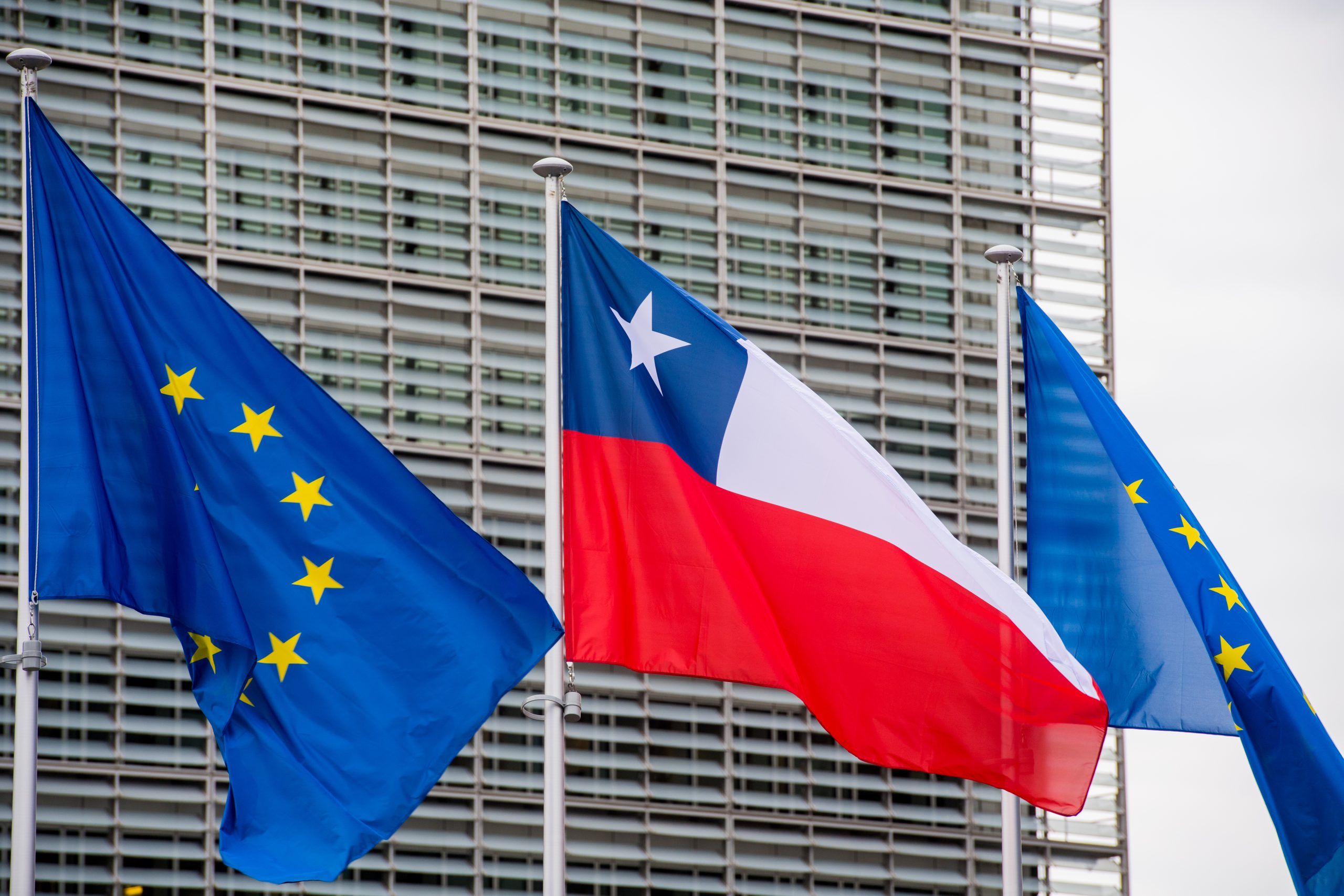
As highlighted during the recent visit of President von der Leyen to Chile, this landmark agreement is of key geopolitical importance. It is also a crucial element of the reinforcement and renewal of relations between the EU and Latin American and the Caribbean, as reflected in the Joint Communication of the Commission and the High Representative ‘A New Agenda for Relations between the EU and Latin America and the Caribbean’ and the forthcoming EU- Community of Latin American and Caribbean States (CELAC) Summit that will gather the leaders of the two regions on 17-18 July in Brussels.
Closer economic ties between the EU and Chile will allow both parties to diversify and strengthen their economic security, while increasing opportunities for exports and investments. Better access and sustainable investment in critical raw materials such as lithium will contribute to advancing our shared ambition for a green transition.
The European Union and Chile are taking their partnership to the next level with the modernisation of the EU-Chile agreement, aimed at strengthening political dialogue, deepening cooperation and improving trade and investment opportunities. In particular, the agreement puts shared values such as human rights, sustainable trade, gender equality and the fight against climate change at the core of EU-Chile relations.
Trade agreements are part of the ‘partnering’ approach, one of the three pillars of the European Economic Security Strategy presented on 20 June 2023. Once in force, it will help make the EU economy more resilient, greener, and more competitive.

EU deploys more than 250 emergency responders to Chile |
New trade and investment opportunities for businesses, big and small
The agreement will deepen EU-Chile trade and investment relations and provide new opportunities for EU businesses in Latin America’s fifth largest economy:
- 99,9% of EU exports will be tariff free, which is expected to increase EU exports to Chile by up to €4,5 billion.
- Greater access to raw materials and clean fuel crucial for the transition to the green economy, such as lithium, copper, and hydrogen.
- Easier for EU companies to provide their services in Chile, including in delivery, telecommunications, maritime transport and financial services.
- Same treatment for EU investors in Chile as for Chilean investors, including in the energy and raw material sector, and vice versa.
- Improved access for EU companies to Chilean government procurement contracts for goods, services, works and works concessions, and vice versa.
- A dedicated chapter on small and medium enterprises to help ensure that smaller businesses fully benefit from the agreement, including by cutting red tape.
A strong commitment to human rights, sustainability and innovation
The agreement will contribute to the EU and Chile’s shared ambition of developing a fruitful partnership based on sustainability and shared values, through:
- new full-fledged articles on democratic principles, human rights and rule of law which enshrine core European values at the heart of EU-Chile cooperation;
- extending the political dialogue to include international peace, justice and security;
- a renewed focus on science, technology, research and innovation;
- an ambitious Trade and Sustainable Development chapter confirming the Parties’ commitment to International Labour Organization standards and to the Paris Agreement;
- a dedicated Trade and Gender chapter, with commitments to eliminate discrimination against women;
- a chapter on Sustainable Food Systems, with the objective of making food supply chains more sustainable and resilient.
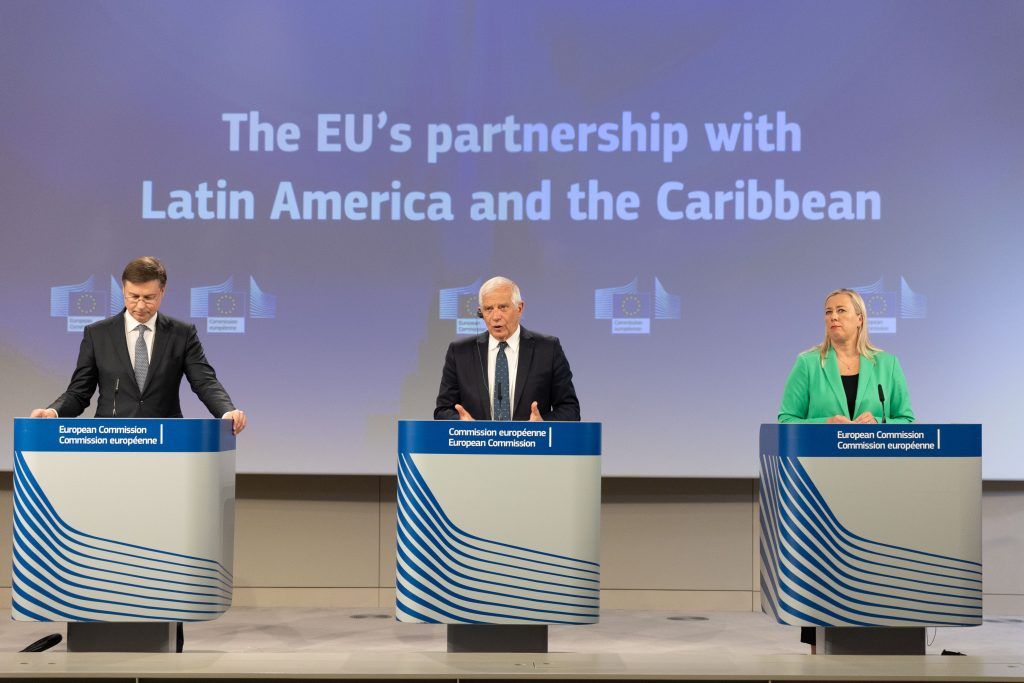
New Agenda to strengthen EU’s partnership with Latin America and the Caribbean |
Sustainable access to mineral resources and renewable energy
The modernised Agreement will provide a framework for the EU to access raw materials in Chile in a sustainable and reliable manner.
Given the important role of raw materials to ensure the green transition and the Green Deal ambitions, this is critical to ensure the EU non-discriminatory and environmentally sustainable access to these resources.
The agreement includes several commitments to:
- ensure the EU non-discriminatory access to Chile’s raw materials, such as lithium;
- carry out environmental impact assessments for any raw materials project that may have environmental impacts;
- cooperate on responsible mining practices and raw materials value chains sustainability, including the contribution of the raw materials value chains to the fulfilment of the UN Sustainable Development Goals.
The Agreement provides a framework for trade and investment in hydrogen and renewable electricity production, another novelty of this agreement.
- Hydrogen will be able to flow freely across borders, as the agreement ensures non-discriminatory access to the Chilean hydrogen market.
- EU companies will be able to invest in renewable electricity or hydrogen production capacity, and they will benefit from non-discriminatory access to electricity grids.
- Hydrogen trade will be facilitated by working on harmonisation of certification schemes for renewable fuels, addressing trade barriers for hydrogen and promoting hydrogen production.
More information: European Commission
Publicaciones relacionadas:
 Ministers and Vice-Ministers from seven Latin American countries set up the Latin American Internal Security Committee
 EU-Mexico cooperation in the fight against inequality
 European Peace Facility backs African Union with 600 million euros
 Biodiversity and peace: joint EU cooperation priorities with Colombia
 Chile and Europe united for the development of Green Hydrogen
Leave a Reply