• Skip to primary navigation
  • Skip to main content
  • Skip to primary sidebar
  • Skip to footer
  • Bluesky
  • Facebook
  • Instagram
  • Twitter
  • YouTube
CDE Almería – Centro de Documentación Europea – Universidad de Almería

CDE Almería - Centro de Documentación Europea - Universidad de Almería

Centro de Documentación Europea de la Universidad de Almería

  • HOME
  • WHAT´S ON
    • EU NEWS
    • Activities
    • EU Calls and Awards
    • Radio Program «Europe with You»
  • DOCUMENTATION
    • EU Media Collection
      • Web Space
      • MEDIATHEQUE REPOSITORY
  • Europe on the net
    • Institutions
    • EU Representation in Spain
    • European information network of Andalusia
  • ABOUT US
    • Presentation
    • Services
    • People
    • Contact
  • Spanish
  • English

Discrimination in the workplace: reasonable accommodation into practice

Inicio » EU News » Discrimination in the workplace: reasonable accommodation into practice

21 de February de 2020

EU law bans workplace discrimination on the grounds of age, sex, disability, ethnic or racial origin, religion or belief, or sexual orientation. Equal treatment legislation at EU level sets out minimum levels of protection for everyone working in the EU.

You are entitled to equal treatment in recruitment, working conditions, promotion, pay, access to vocational training, occupational pensions and dismissal.

EU laws mean employers should not discriminate at work, and employees have the right not to be discriminated against.

Types of workplace discrimination

Several situations are covered by EU law:

Direct discrimination is when an employer treats you worse than someone else in a comparable situation, in relation to the six grounds mentioned above. An example would be to refuse to recruit someone because they are over 35 years old.

Indirect discrimination is where a practice, policy or rule that applies to everyone has a negative effect on some people. These measures seem neutral at first sight, but actually discriminate against certain people. For example, implementing rules that are unfavourable for part-time workers may indirectly discriminate against women as most part-time workers are women.

Harassment is another form of workplace discrimination. This is unwanted conduct, bullying or other behaviour that has the purpose or effect of creating an intimidating, hostile, degrading, humiliating or offensive environment. For example, if a boss or colleagues tell jokes based on sexual orientation to one of their gay/lesbian colleagues.

Instruction to discriminate is when a person incites another to discriminate against someone else. For example, if an employer asks a temporary work agency to find only workers aged under 40.

Victimisation is where people suffer negative consequences in reaction to a complaint about discrimination. For example, if someone has been dismissed or refused promotion because they filed a discrimination complaint against their boss.

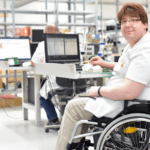
Workshop for employers on reasonable accommodation for people with disabilities

The European Commission is organising a half-day workshop for employers on reasonable accommodation for people with disabilities.

This workshop is part of the European Commission’s Anti-Discrimination campaign. Employers will learn more about

  • reasonable accommodation for persons with disabilities
  • best practices
  • possible local difficulties in implementing those accommodations

More information

Workshop

Publicaciones relacionadas:

peones de ajedrez en grupo y peón solitarioJudgment of the CJEU on homophobic discrimination in the workplace New ambitious EU Disability Strategy  Union of Equality for pride not prejudice “The Hungarian bill is a shame”, Von der Leyen EU must tackle inequality

EU News Disability,  Discrimination

“This is a space for debate. All comments, for or against publication, that are respectful and do not contain expressions that are discriminatory, defamatory or contrary to current legislation will be published”.

Reader Interactions

Leave a Reply Cancel reply

Your email address will not be published. Required fields are marked *

This site uses Akismet to reduce spam. Learn how your comment data is processed.

Primary Sidebar

Footer

  • CDE Almería
  • Biblioteca Nicolás Salmerón – Universidad de Almería
  • Planta: 1ª, Despacho: 1.05.0B.
  • Ctra. Sacramento s/n. Almería (Spain)
  • Teléfono: (+34) 950 015266

HOME
NEWS
DOCUMENTATION
EUROPE ON THE NET
ABOUT US

  • LEGAL NOTICE
  • PRIVACY POLICY
  • COOKIE POLICY
  • ACCESSIBILITY
  • SITEMAP

Copyright © 2026 CDE Almería · Creative Commons LicenseThis work is licensed under a Creative Commons Attribution-NonCommercial 4.0 International License.

<p>El Centro de Documentación Europea de la Universidad de Almería utiliza cookies propias y de terceros para facilitar al usuario la navegación en su página Web y el acceso a los distintos contenidos alojados en la misma. Asimismo, se utilizan cookies analíticas de terceros para medir la interacción de los usuarios con el sitio Web. Pinche el siguiente enlace si desea información sobre el uso de cookies y como deshabilitarlas. </p>

Politica de privacidad

El Centro de Documentación Europea de la Universidad de Almería utiliza cookies propias y de terceros para facilitar al usuario la navegación en su página Web y el acceso a los distintos contenidos alojados en la misma. Asimismo, se utilizan cookies analíticas de terceros para medir la interacción de los usuarios con el sitio Web. Pinche el siguiente enlace si desea información sobre el uso de cookies y como deshabilitarlas. <a href="/politica-de-cookies" rel="noopener" target="_blank">Más información</a>

Cookies estrictamente necesarias

Las cookies estrictamente necesarias tiene que activarse siempre para que podamos guardar tus preferencias de ajustes de cookies.

Básicamente la web no funcionara bien si no las activas.

Estas cookies son:

  • Comprobación de inicio de sesión.
  • Cookies de seguridad.
  • Aceptación/rechazo previo de cookies.
Cookies de terceros

Esta web utiliza Google Analytics, Google Tag Manager y Yandex Metrika para recopilar información anónima tal como el número de visitantes del sitio, o las páginas más populares.

Dejar estas cookies activas nos permite mejorar nuestra web.

Política de cookies

Pinche el siguiente enlace si desea información sobre el uso de cookies y como deshabilitarlas. Más información