• Skip to primary navigation
  • Skip to main content
  • Skip to primary sidebar
  • Skip to footer
  • Bluesky
  • Facebook
  • Instagram
  • Twitter
  • YouTube
CDE Almería – Centro de Documentación Europea – Universidad de Almería

CDE Almería - Centro de Documentación Europea - Universidad de Almería

Centro de Documentación Europea de la Universidad de Almería

  • HOME
  • WHAT´S ON
    • EU NEWS
    • Activities
    • EU Calls and Awards
    • Radio Program «Europe with You»
  • DOCUMENTATION
    • EU Media Collection
      • Web Space
      • MEDIATHEQUE REPOSITORY
  • Europe on the net
    • Institutions
    • EU Representation in Spain
    • European information network of Andalusia
  • ABOUT US
    • Presentation
    • Services
    • People
    • Contact
  • Spanish
  • English

COVID-19: Council updates recommendation on measures affecting free movement

Inicio » EU News » COVID-19: Council updates recommendation on measures affecting free movement

15 de February de 2021

COVID-19: Council updates recommendation on measures affecting free movement

The Council adopted a recommendation amending the recommendation on a coordinated approach to the restrictions of free movement in response to the COVID-19 pandemic.

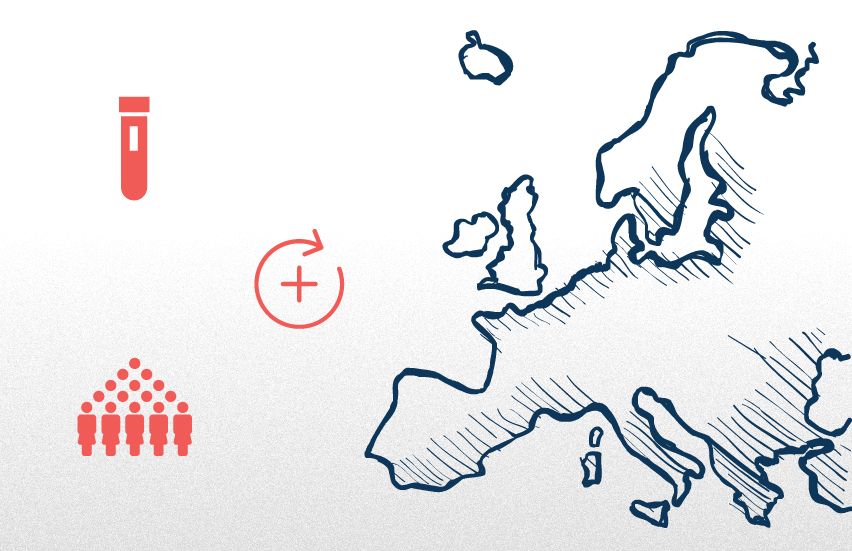
Under the updated recommendation, a new colour (dark red) is added to the existing categories of green, orange, red and grey in the weekly map published by the ECDC. This colour will apply to areas where the virus is circulating at very high levels, including because of more infectious variants of concern. These are defined as areas where the 14-day cumulative COVID-19 case notification rate is 500 per 100 000 people or more.

Member states should discourage all non-essential travel to red and dark red areas, while at the same time seeking to avoid disruptions to essential travel.

Member states should require persons travelling from an area classified as dark red to:

– undergo a test for COVID-19 infection prior to arrival

– undergo quarantine/self-isolation

Similar measures could apply to areas with a high prevalence of variants of concern.

Given the increase in COVID-19 testing capacity, the recommendation is also amended to give member states the option to require travellers coming from orange, red and grey areas to do a test before departure.

Transport workers and transport service providers should in principle not be required to undergo a test. Where a member states requires them to undergo a test, rapid antigen tests should be used.

People who live in border regions and cross the border daily or frequently, for instance for work, study or family reasons, should not be required to undergo testing or quarantine/self isolation. If a testing requirement is introduced, the frequency of tests on such persons should be proportionate.

These updated measures are a coordinated response to the rise of infections and the risks posed by the more transmissible new variants of the virus within and outside the EU. They follow the recommendation by the European Centre for Disease Prevention and Control (ECDC) to avoid non-essential travel, in order to slow down the importation and spread of the new variants of concern.

By acting in a coordinated manner, member states aim to prevent the reintroduction of internal border controls and to ensure the free movement of goods and services is not disrupted.

More information

European Council

Publicaciones relacionadas:

Conclusions of the President of the European Council following the video conference of the members of the European Council, 23 April 2020 Main results of the European Council meeting, 15-16 October 2020 Capital Markets Union: Council adopts legislative reforms 2020 EU budget: Council and Parliament reach agreement monedas y billetesThe EU is taking steps to deliver on its comprehensive strategy to deal with banks’ bad loans.



EU News covid-19,  European Council,  free movement

“This is a space for debate. All comments, for or against publication, that are respectful and do not contain expressions that are discriminatory, defamatory or contrary to current legislation will be published”.

Reader Interactions

Leave a Reply Cancel reply

Your email address will not be published. Required fields are marked *

This site uses Akismet to reduce spam. Learn how your comment data is processed.

Primary Sidebar

Footer

  • CDE Almería
  • Biblioteca Nicolás Salmerón – Universidad de Almería
  • Planta: 1ª, Despacho: 1.05.0B.
  • Ctra. Sacramento s/n. Almería (Spain)
  • Teléfono: (+34) 950 015266

HOME
NEWS
DOCUMENTATION
EUROPE ON THE NET
ABOUT US

  • LEGAL NOTICE
  • PRIVACY POLICY
  • COOKIE POLICY
  • ACCESSIBILITY
  • SITEMAP

Copyright © 2026 CDE Almería · Creative Commons LicenseThis work is licensed under a Creative Commons Attribution-NonCommercial 4.0 International License.

<p>El Centro de Documentación Europea de la Universidad de Almería utiliza cookies propias y de terceros para facilitar al usuario la navegación en su página Web y el acceso a los distintos contenidos alojados en la misma. Asimismo, se utilizan cookies analíticas de terceros para medir la interacción de los usuarios con el sitio Web. Pinche el siguiente enlace si desea información sobre el uso de cookies y como deshabilitarlas. </p>

Politica de privacidad

El Centro de Documentación Europea de la Universidad de Almería utiliza cookies propias y de terceros para facilitar al usuario la navegación en su página Web y el acceso a los distintos contenidos alojados en la misma. Asimismo, se utilizan cookies analíticas de terceros para medir la interacción de los usuarios con el sitio Web. Pinche el siguiente enlace si desea información sobre el uso de cookies y como deshabilitarlas. <a href="/politica-de-cookies" rel="noopener" target="_blank">Más información</a>

Cookies estrictamente necesarias

Las cookies estrictamente necesarias tiene que activarse siempre para que podamos guardar tus preferencias de ajustes de cookies.

Básicamente la web no funcionara bien si no las activas.

Estas cookies son:

  • Comprobación de inicio de sesión.
  • Cookies de seguridad.
  • Aceptación/rechazo previo de cookies.
Cookies de terceros

Esta web utiliza Google Analytics, Google Tag Manager y Yandex Metrika para recopilar información anónima tal como el número de visitantes del sitio, o las páginas más populares.

Dejar estas cookies activas nos permite mejorar nuestra web.

Política de cookies

Pinche el siguiente enlace si desea información sobre el uso de cookies y como deshabilitarlas. Más información