• Skip to primary navigation
  • Skip to main content
  • Skip to primary sidebar
  • Skip to footer
  • Bluesky
  • Facebook
  • Instagram
  • Twitter
  • YouTube
CDE Almería – Centro de Documentación Europea – Universidad de Almería

CDE Almería - Centro de Documentación Europea - Universidad de Almería

Centro de Documentación Europea de la Universidad de Almería

  • HOME
  • WHAT´S ON
    • EU NEWS
    • Activities
    • EU Calls and Awards
    • Radio Program «Europe with You»
  • DOCUMENTATION
    • EU Media Collection
      • Web Space
      • MEDIATHEQUE REPOSITORY
  • Europe on the net
    • Institutions
    • EU Representation in Spain
    • European information network of Andalusia
  • ABOUT US
    • Presentation
    • Services
    • People
    • Contact
  • Spanish
  • English

CORDIS: The secrets of sustainable plant nutrition and agriculture

Inicio » Noticias UE » Research and Innovation » CORDIS: The secrets of sustainable plant nutrition and agriculture

15 de February de 2024

Revealing plant responses to nutrient stress can reshape sustainable agriculture, fostering ecological balance for a resilient future.

As the world’s population increases, the pressing need for sustainable food production within the next 30 years poses a formidable challenge. Plant growth depends on nutrient availability and understanding how they adapt to nutrient deficiencies is crucial.

Mineral nutrients such as nitrogen and iron also play a role in atmospheric CO2 fixation, since photosynthesis serves as the primary entry point for carbon in ecosystems. Therefore, unravelling these biological processes is essential for developing new strategies to enhance crop resilience and productivity, ensuring food security and environmental preservation.

Assessing nutrient deficiencies in plants

Undertaken with the support of the Marie Skłodowska-Curie Actions (MSCA) programme, the ExuNutriStress project has made significant steps in understanding how trees respond to nutrient deficiencies. The research was conducted in poplar, which serve as an excellent model for forest tree research due to their rapid growth, maturation and wide geographic distribution.

The project’s emphasis on nitrogen and iron deficiencies stems from the critical roles these elements play in numerous plant molecules and processes, including photosynthesis and biosynthetic pathways. As agriculture contributes to 60 % of the projected increase in nitrogen pollution, understanding how poplar trees mobilise nitrogen from the soil provides potential solutions to lower nitrogen input.

Root exudates are organic compounds released by plants in the soil. They improve nutrient bioavailability and plant growth by altering rhizosphere physical and chemical properties and its microbiota. Root exudates are intricately involved in biogeochemical nutrient cycles. It is therefore important to understand how root exudates are affected by nutrient deficiencies. Exudates also play a crucial role in carbon sequestration in soils, which could be affected by the nutrient status of plants.

“ExuNutriStress has the potential to improve sustainable agriculture by offering alternatives to synthetic fertilisers” outlines principal investigator Sébastien Thomine.

How does nutrient deficiency affect plant metabolism?

Researchers undertook a series of hydroponic experiments conducted under controlled conditions. These experiments assessed the effects of nitrogen and iron deficiencies – both individually and in combination – on the root exudates of poplar trees. Researchers monitored parameters such as chlorophyll levels and pH and analysed micro and macronutrients in different parts of the plants.

Project findings indicate that poplar roots accumulate specific metabolites under nutrient stress, including flavonoids. Under nitrogen deficiency, the imbalance in both nitrogen and carbon metabolism affects flavonoid production, while iron deficiency impacts fatty acid and amino acid pathways.

“These insights are critical in understanding plant responses to nutrient stress,” highlights MSCA research fellow María Teresa Cieschi.

Societal and environmental impact

The ExuNutriStress project represents a significant step forward in our understanding of plant physiology under nutrient stress. Its findings not only contribute to the scientific community but also have far-reaching implications for sustainable agriculture. The knowledge generated about the role of root exudates in plant nutrition promises to pave the way for more effective and environmentally friendly agricultural practices, including sustainable fertilisers.

The project has actively disseminated its findings through its website, social media and at the researcher’s night event in Paris, furthering its outreach and impact. As the project continues, its ongoing research promises to uncover more groundbreaking insights into plant nutrient management and ecological balance.
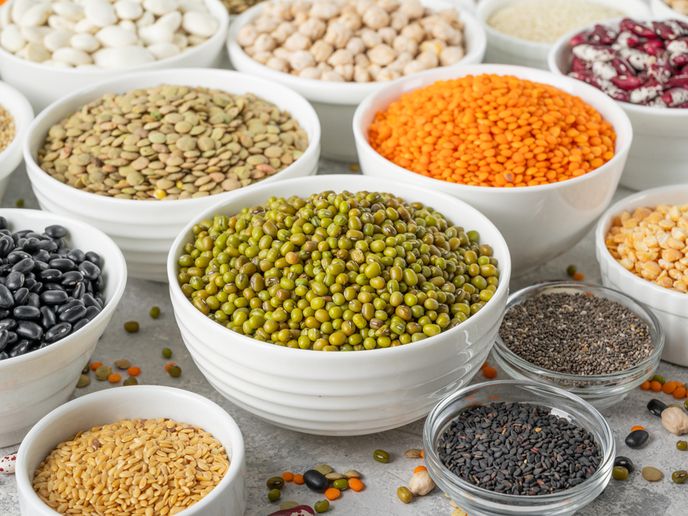
Protein-rich legumes and quinoa in the plant-based food alternatives spotlight

More information: CORDIS

Publicaciones relacionadas:

Campo de fútbolThe huge impact of air pollution on football Sustancia negra magnéticaReducing Europe’s reliance on rare earths New project to improve biological detection, identification & monitoring equipment Galileo Return Link Service delivers excellent performance Proyecto MEDIWARN CoronavirusMedical sensors boost response to Italy’s COVID-19 crisis

EU News,  Research and Innovation Contaminación,  Contaminación,  ExuNutriStress,  iron,  minerals,  nitrogen,  photosynthesis,  plant nutrition,  Pollution,  poplar trees,  root exudates,  sustainable agriculture

“This is a space for debate. All comments, for or against publication, that are respectful and do not contain expressions that are discriminatory, defamatory or contrary to current legislation will be published”.

Reader Interactions

Leave a Reply Cancel reply

Your email address will not be published. Required fields are marked *

This site uses Akismet to reduce spam. Learn how your comment data is processed.

Primary Sidebar

Footer

  • CDE Almería
  • Biblioteca Nicolás Salmerón – Universidad de Almería
  • Planta: 1ª, Despacho: 1.05.0B.
  • Ctra. Sacramento s/n. Almería (Spain)
  • Teléfono: (+34) 950 015266

HOME
NEWS
DOCUMENTATION
EUROPE ON THE NET
ABOUT US

  • LEGAL NOTICE
  • PRIVACY POLICY
  • COOKIE POLICY
  • ACCESSIBILITY
  • SITEMAP

Copyright © 2026 CDE Almería · Creative Commons LicenseThis work is licensed under a Creative Commons Attribution-NonCommercial 4.0 International License.

<p>El Centro de Documentación Europea de la Universidad de Almería utiliza cookies propias y de terceros para facilitar al usuario la navegación en su página Web y el acceso a los distintos contenidos alojados en la misma. Asimismo, se utilizan cookies analíticas de terceros para medir la interacción de los usuarios con el sitio Web. Pinche el siguiente enlace si desea información sobre el uso de cookies y como deshabilitarlas. </p>

Politica de privacidad

El Centro de Documentación Europea de la Universidad de Almería utiliza cookies propias y de terceros para facilitar al usuario la navegación en su página Web y el acceso a los distintos contenidos alojados en la misma. Asimismo, se utilizan cookies analíticas de terceros para medir la interacción de los usuarios con el sitio Web. Pinche el siguiente enlace si desea información sobre el uso de cookies y como deshabilitarlas. <a href="/politica-de-cookies" rel="noopener" target="_blank">Más información</a>

Cookies estrictamente necesarias

Las cookies estrictamente necesarias tiene que activarse siempre para que podamos guardar tus preferencias de ajustes de cookies.

Básicamente la web no funcionara bien si no las activas.

Estas cookies son:

  • Comprobación de inicio de sesión.
  • Cookies de seguridad.
  • Aceptación/rechazo previo de cookies.
Cookies de terceros

Esta web utiliza Google Analytics, Google Tag Manager y Yandex Metrika para recopilar información anónima tal como el número de visitantes del sitio, o las páginas más populares.

Dejar estas cookies activas nos permite mejorar nuestra web.

Política de cookies

Pinche el siguiente enlace si desea información sobre el uso de cookies y como deshabilitarlas. Más información