• Skip to primary navigation
  • Skip to main content
  • Skip to primary sidebar
  • Skip to footer
  • Bluesky
  • Facebook
  • Instagram
  • Twitter
  • YouTube
CDE Almería – Centro de Documentación Europea – Universidad de Almería

CDE Almería - Centro de Documentación Europea - Universidad de Almería

Centro de Documentación Europea de la Universidad de Almería

  • HOME
  • WHAT´S ON
    • EU NEWS
    • Activities
    • EU Calls and Awards
    • Radio Program «Europe with You»
  • DOCUMENTATION
    • EU Media Collection
      • Web Space
      • MEDIATHEQUE REPOSITORY
  • Europe on the net
    • Institutions
    • EU Representation in Spain
    • European information network of Andalusia
  • ABOUT US
    • Presentation
    • Services
    • People
    • Contact
  • Spanish
  • English

Reducing Europe’s reliance on rare earths

Inicio » EU News » Research and Innovation » Technology » Reducing Europe’s reliance on rare earths

16 de January de 2023

A new approach to high-performance magnet manufacturing could make Europe less dependent on rare earth elements as it transitions towards a zero-carbon economy.

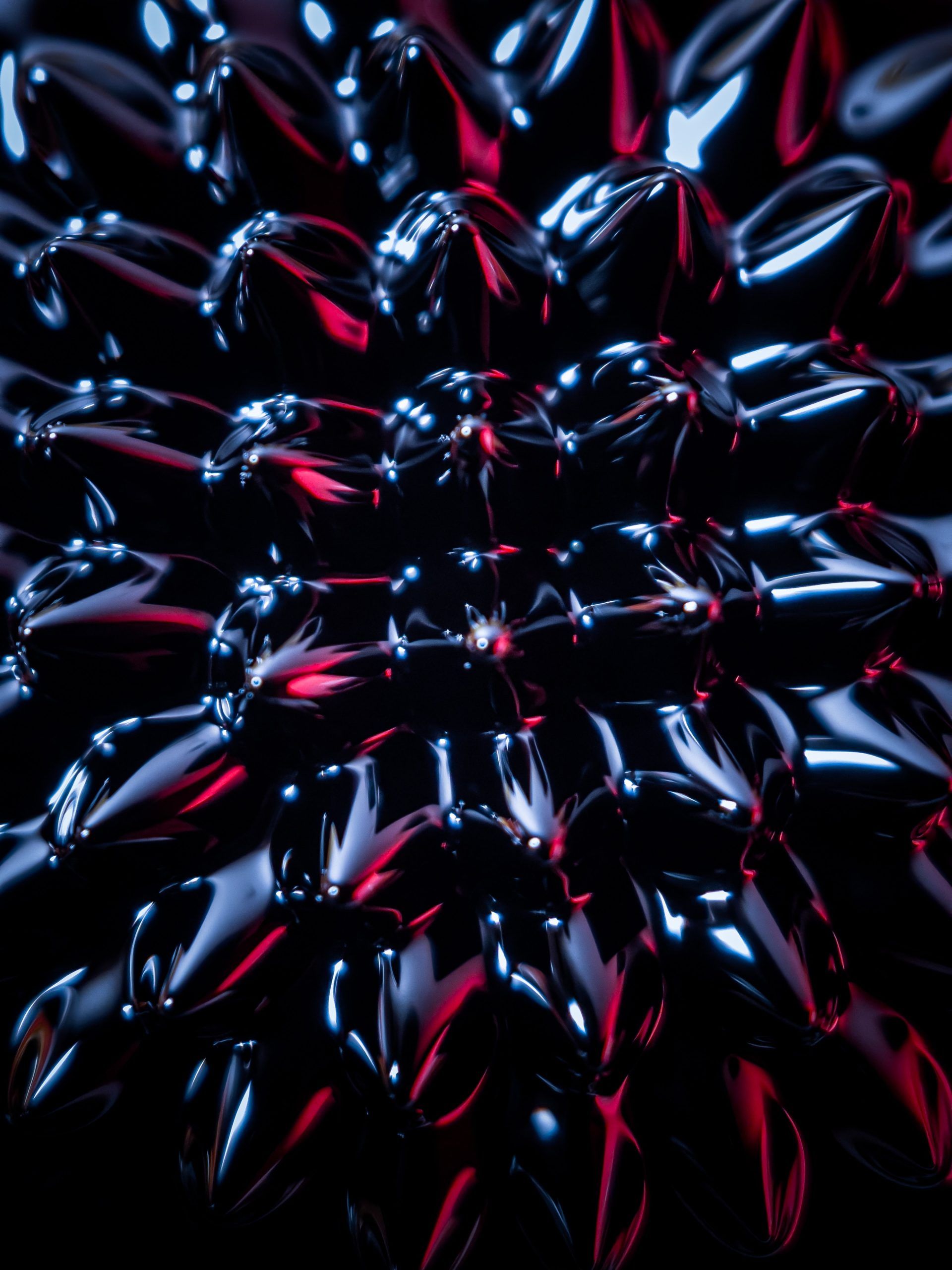
Sustancia negra magnética

Scientists supported by the EU-funded ExtendGlass project may have a found a new way to make the high-performance magnets we need for our low-carbon technologies. Described in a study published in the journal ‘Advanced Science’, this new approach eliminates the need for rare earth elements, for which Europe is currently almost exclusively dependent on China.

The best permanent magnets available today contain rare earth elements whose global production is dominated by China. This has led to concerns about continued rare earths supply as geopolitical tensions between China and the West grow. “Rare earth deposits exist elsewhere, but the mining operations are highly disruptive: you have to extract a huge amount of material to get a small volume of rare earths,” explains study senior author Prof. Lindsay Greer of ExtendGlass project host University of Cambridge in a news item posted on the university’s website. “Between the environmental impacts, and the heavy reliance on China, there’s been an urgent search for alternative materials that do not require rare earths.”

A very promising replacement for rare earths is an iron-nickel alloy called tetrataenite found in meteorites. Tetrataenite develops naturally over millions of years as a meteorite gradually cools. This gives the iron and nickel atoms time to form a particularly ordered structure that results in a material whose magnetic properties resemble those of rare earth magnets.

Since waiting for millions of years was not an option, in the 1960s scientists created tetrataenite artificially by bombarding iron-nickel alloys with neutrons to create the desired atomic structure. However, this method is not replicable on an industrial scale. “Since then, scientists have been fascinated with getting that ordered structure, but it’s always felt like something that was very far away,” observes Prof. Greer.

What can we expect from science in 2023?

Beauty in simplicity

That is, it felt very far away until now. The research team has found a potential solution that needs neither millions of years of cooling nor irradiation with neutrons. The discovery was made while investigating the mechanical properties of iron-nickel alloys containing small amounts of phosphorus.

As noted in the news item, phosphorus – also found in meteorites – “allows the iron and nickel atoms to move faster, enabling them to form the necessary ordered stacking without waiting for millions of years.” The team mixed iron, nickel and phosphorus in the right quantities to greatly speed up tetrataenite formation so that the material formed in just a few seconds.

“What was so astonishing was that no special treatment was needed: we just melted the alloy, poured it into a mould, and we had tetrataenite,” comments Prof. Greer. “The previous view in the field was that you couldn’t get tetrataenite unless you did something extreme, because otherwise, you’d have to wait millions of years for it to form. This result represents a total change in how we think about this material.”

While this approach supported by ExtendGlass (Extending the range of the glassy state: Exploring structure and property limits in metallic glasses) may show great promise, more work is needed to see if it is suitable for high-performance magnets. As reported in the news item, the researchers are hoping to collaborate with major magnet manufacturers to test their method.

Source: CORDIS

Publicaciones relacionadas:

New project to improve biological detection, identification & monitoring equipment Galileo Return Link Service delivers excellent performance Extension of deadline calls due to Covid-19 Cuidados con Compasión: A tool for heatlh professionals to face COVID-19 Catching up with ColRobot: a ready-to-use robotic device for industry



EU News,  Research and Innovation,  Technology ExtendGlass,  iron,  iron-nickel alloy,  magnet,  Nickel,  phosphorus,  rare earth,  tetrataenite

“This is a space for debate. All comments, for or against publication, that are respectful and do not contain expressions that are discriminatory, defamatory or contrary to current legislation will be published”.

Reader Interactions

Leave a Reply Cancel reply

Your email address will not be published. Required fields are marked *

This site uses Akismet to reduce spam. Learn how your comment data is processed.

Primary Sidebar

Footer

  • CDE Almería
  • Biblioteca Nicolás Salmerón – Universidad de Almería
  • Planta: 1ª, Despacho: 1.05.0B.
  • Ctra. Sacramento s/n. Almería (Spain)
  • Teléfono: (+34) 950 015266

HOME
NEWS
DOCUMENTATION
EUROPE ON THE NET
ABOUT US

  • LEGAL NOTICE
  • PRIVACY POLICY
  • COOKIE POLICY
  • ACCESSIBILITY
  • SITEMAP

Copyright © 2026 CDE Almería · Creative Commons LicenseThis work is licensed under a Creative Commons Attribution-NonCommercial 4.0 International License.

<p>El Centro de Documentación Europea de la Universidad de Almería utiliza cookies propias y de terceros para facilitar al usuario la navegación en su página Web y el acceso a los distintos contenidos alojados en la misma. Asimismo, se utilizan cookies analíticas de terceros para medir la interacción de los usuarios con el sitio Web. Pinche el siguiente enlace si desea información sobre el uso de cookies y como deshabilitarlas. </p>

Politica de privacidad

El Centro de Documentación Europea de la Universidad de Almería utiliza cookies propias y de terceros para facilitar al usuario la navegación en su página Web y el acceso a los distintos contenidos alojados en la misma. Asimismo, se utilizan cookies analíticas de terceros para medir la interacción de los usuarios con el sitio Web. Pinche el siguiente enlace si desea información sobre el uso de cookies y como deshabilitarlas. <a href="/politica-de-cookies" rel="noopener" target="_blank">Más información</a>

Cookies estrictamente necesarias

Las cookies estrictamente necesarias tiene que activarse siempre para que podamos guardar tus preferencias de ajustes de cookies.

Básicamente la web no funcionara bien si no las activas.

Estas cookies son:

  • Comprobación de inicio de sesión.
  • Cookies de seguridad.
  • Aceptación/rechazo previo de cookies.
Cookies de terceros

Esta web utiliza Google Analytics, Google Tag Manager y Yandex Metrika para recopilar información anónima tal como el número de visitantes del sitio, o las páginas más populares.

Dejar estas cookies activas nos permite mejorar nuestra web.

Política de cookies

Pinche el siguiente enlace si desea información sobre el uso de cookies y como deshabilitarlas. Más información